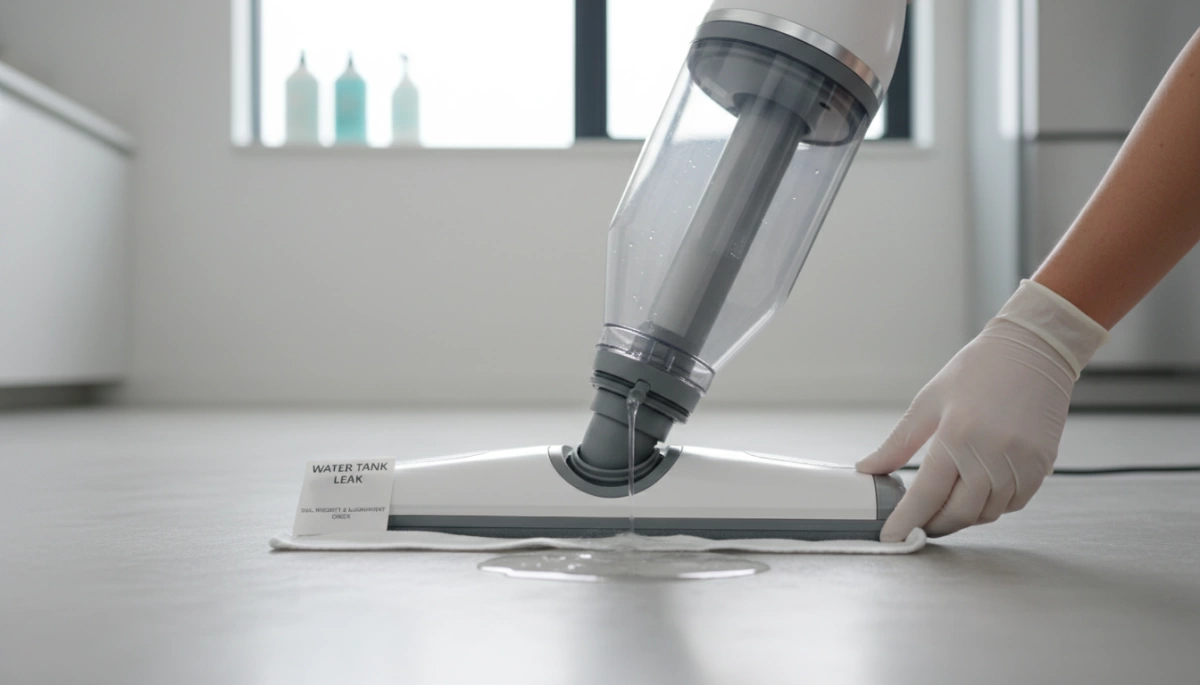
Common Causes of Water Tank Leaks in Steam Mops
Is your steam mop leaking water? One of the top reasons is overfilling the tank. When water heats up, it expands and can force leaks if the tank is too full. Make sure to fill only up to the max line to avoid this.
Another common cause is a loose or improperly tightened tank cap. If the cap isn’t sealed correctly, water can drip out during use or storage.
Worn, cracked, or degraded seals and gaskets often lead to leaks. These parts create watertight barriers, and when they fail, water escapes from the cap area or tank connections.
Tank misalignment or improper seating in the mop’s body can stop valves from closing properly, causing leaks around the base.
Physical damage like cracks or dents in the tank also causes water to leak. Inspect the tank closely for any visible signs of damage.
Mineral buildup, especially limescale from hard water, can clog valves and degrade seals, affecting the steam mop’s seal integrity and causing leaks.
Other less obvious factors include running the mop at high steam settings, which increases pressure inside the tank, or clogged nozzles that cause backpressure and leaks. Improper storage, such as leaving the tank filled and tilted, can also promote leaks over time.
Understanding these causes will help you catch steam mop leaks early and keep your cleaning routine leak-free.
Understanding Seal Integrity Issues
Seals and gaskets in steam mops are crucial because they create tight, watertight barriers at key points like the tank cap, valve connections, and where the water tank fits into the body. These barriers prevent water tank leaks in steam mops and keep steam pressure consistent during use.
When seal integrity is compromised, you’ll often notice leaks around the cap area, at the base of the tank, or even while the steam mop is running. These leaks can cause water drips or puddles and may also reduce steam output, impacting your cleaning performance. Sometimes, you might see water pooling on floors, which increases the risk of damage.
Seals typically fail due to a few common reasons: age and physical wear cause cracks or flattening; heat exposure can degrade rubber or silicone gaskets; and mineral deposits like limescale from hard water can make seals brittle or prevent them from sealing fully. Over time, these factors lead to steam mop seal problems that require attention.
If seals aren’t doing their job right, you’ll notice more than just leaks — steam pressure drops, meaning less effective cleaning power. Checking and maintaining seal integrity is key to avoiding water tank leaks and keeping your steam mop running smoothly. For more on how seals work and fail, you might find the detailed discussion on the role of door seals relevant to understanding how watertight barriers function under pressure.
Checking and Diagnosing Seal Integrity
Before you start, unplug your steam mop and let it cool down completely to avoid burns or electric shocks. Once it’s safe, you can begin checking for any water tank leaks caused by seal problems.
Step-by-step inspection:
- Remove the water tank from the mop body carefully.
- Examine the cap gasket or O-ring closely. Look for any cracks, flattened areas, or parts where the seal has come loose or detached. Worn O-rings are a common source of steam mop leaks.
- Inspect the tank valve at the bottom connection. Check if any components are stuck, damaged, or showing signs of wear, which can cause water to leak during use.
- To confirm leaks, fill the tank with water, secure the cap tightly, and tilt or invert the tank over a sink or towel. Watch closely for any drips or water escaping from the seals or connection points.
Tools for better inspection:
- A small flashlight helps you see inside dark recesses of the tank cap and valve area.
- A magnifying glass is useful for spotting fine cracks or tiny seal damage that might not be obvious at first glance.
Regularly checking the seal integrity helps prevent steam mop leaking water issues and keeps your cleaning routine smooth. For detailed safety guidelines related to electrical appliances, you can refer to the capacitor discharge protocol for home repairs.
Alignment Checks for the Water Tank
Proper tank alignment is crucial because a mis-seated water tank can prevent the valve from engaging correctly, causing leaks at connection points. If your steam mop is leaking water, one common culprit is that the tank isn’t sitting right.
Signs of tank misalignment:
- The water tank feels loose or wobbly.
- It doesn’t click or snap securely into place.
- You notice leaks around the base of the tank during use.
How to check and fix tank alignment:
- Remove the tank completely from the mop.
- Reinsert it firmly until you hear a solid snap or click, confirming full engagement.
- Make sure the tank is level and pushed into its compartment—don’t force it if it doesn’t fit smoothly.
- Inspect the docking area for debris or obstructions that might prevent proper seating. Clean out any dirt or buildup.
Performing these alignment checks regularly helps prevent common steam mop seal problems and water tank gasket issues that lead to leaks. For more tips on maintaining appliance parts, visit this tool checklist for home appliances.
Step-by-Step Fixes for Tank Leaks
If you notice your steam mop leaking water, there are simple fixes you can try before calling for help. Here’s a quick guide to solving common water tank leaks in steam mops by focusing on seal integrity and alignment checks.
Quick Fixes
- Adjust filling to the max line: Overfilled steam mop tanks often cause leaks because water expands when heated. Always fill only up to the max mark to prevent pressure buildup.
- Tighten the cap securely: A loose or improperly tightened tank cap can let water escape. Make sure it’s screwed on firmly but without forcing it.
- Realign and reseat the tank: Tank alignment issues are common causes of leaks. Remove and firmly reseat the tank until it clicks, ensuring the valves engage properly.
Intermediate Repairs
- Clean seals with vinegar solution: Mineral deposits like limescale can degrade seals and cause leaks. Wipe the tank gasket, cap O-ring, and valve seals with a vinegar-water mix to dissolve buildup.
- Descale the entire system: A full vinegar-water cycle helps remove stubborn mineral deposits inside the tank and valves, improving seal performance and steam output. This is especially useful if you live in hard water areas.
Advanced Solutions
- Replace damaged gaskets, O-rings, or caps: If seals are cracked, flattened, or worn out, replacement parts are the best option. You can find genuine steam mop gaskets and caps online or at appliance parts suppliers. Refer to guides on how to perform a proper water tank gasket replacement for your specific model.
- Full tank replacement: When the water tank itself has cracks or irreparable damage, replacing the entire tank is necessary to stop leaks permanently.
When to Seek Professional Help or Replace the Mop
If leaks continue despite these fixes, or you notice significant cracks and persistent seal problems that multiple repairs don’t fix, it may be time to consult a professional or consider replacing your steam mop. Continuous leaks can reduce steam efficiency and risk damaging your floors.
Following these steps can help you manage and prevent water tank leaks in your steam mop, keeping it running smoothly and leak-free.
Preventive Maintenance to Avoid Future Leaks
To keep your steam mop’s water tank leak-free, sticking to a few simple preventive maintenance steps is key. First, always use distilled water instead of tap water. This significantly reduces mineral deposits and limescale buildup, which can wear down seals and cause leaks over time.
Make it a habit to empty the tank after each use and store the mop upright. This prevents stagnant water from damaging the internal seals or causing unpleasant odors. Following a regular descaling schedule—about every 1 to 3 months depending on how often you use it—helps remove mineral buildup inside the tank and around valves. A vinegar-water solution is a popular DIY choice to keep your steam mop clean and functioning well.
Before each session, give the tank’s seal integrity and alignment a quick check. Make sure the gasket is intact and the tank fits snugly to prevent leaks from loose connections or tank alignment issues.
Proper storage and handling—like avoiding dropping the mop or forcing the tank in—also help prolong your steam mop’s life and prevent leaks. For more on keeping your appliances running smoothly, you might find these general tips to extend appliance life useful.
By following these preventive steps, you can reduce steam mop seal problems and avoid common leaks that affect performance and durability.



Leave a Reply