How Water Inlet Valves Work
Water inlet valves control the flow of water into washing machines and dishwashers. They rely on key components working together:
- Solenoid coils: Electromagnetic coils that open or close the valve when energized.
- Diaphragm: A flexible seal that moves to allow or stop water flow.
- Inlet screens: Small filters that catch debris and protect the valve.
- Ports: Openings where water enters and exits the valve.
Valves by Appliance Type
| Appliance | Valve Types | Description |
|---|---|---|
| Washing Machine | Single, Dual, Triple Valves | Multiple valves control hot and cold water separately or together. |
| Dishwasher | Usually Single or Dual Valves | Typically control just cold water or have simplified setups. |
The Filling Process Explained
- The appliance sends an electrical signal to the solenoid coil.
- The coil generates a magnetic field, pulling the diaphragm open.
- Water flows through inlet screens and ports into the appliance.
- When the signal stops, the coil de-energizes, and the diaphragm closes, stopping water flow.
This precise control ensures the right amount of water fills the machine for efficient washing or dishwashing. Understanding this process helps diagnose issues like slow filling, valve humming, or no water entry.
Scale Buildup: Causes and Effects
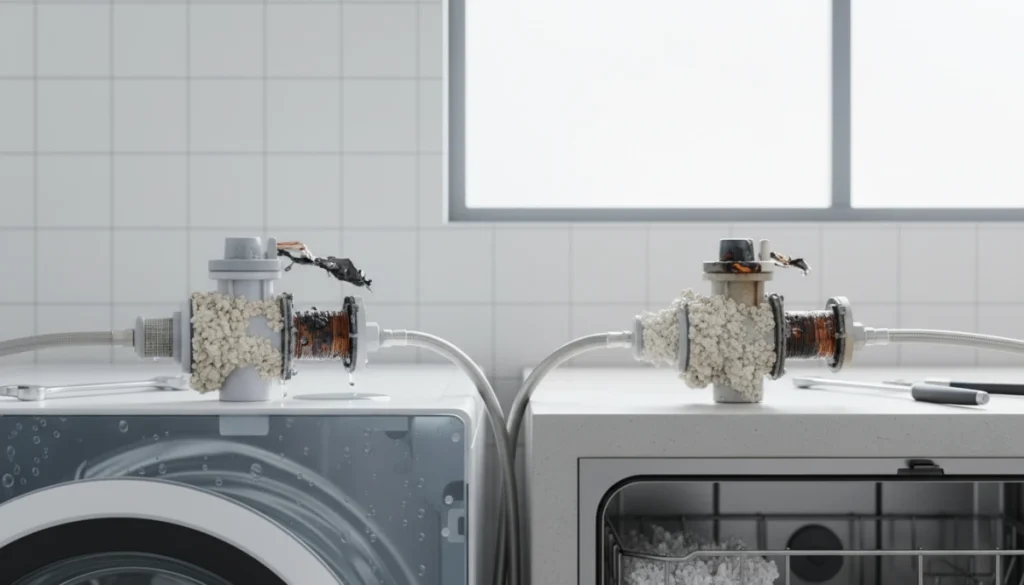
Mineral deposits from hard water, mainly calcium and magnesium, are the main culprits behind scale buildup in water inlet valves. Over time, these minerals collect on inlet screens and inside valve ports, gradually clogging them. This buildup restricts water flow, causing the valve seals to wear or fail prematurely.
In washing machines, scale buildup means slower filling times, leading to longer cycles and less efficient detergent use. Clothes may not get as clean because the water supply is inconsistent. For dishwashers, mineral deposits can block spray arms and reduce water pressure, resulting in poorer cleaning performance and leftover residue on dishes.
Common signs of scale-related problems include valves that fill slowly, unusual humming noises from the valve, or water leaking around the connections. Regular inspection and cleaning of the inlet screens are essential to avoid these issues and keep your appliances running smoothly. For more on how to inspect and maintain your appliances, check out our guide on common causes of water leaks and maintenance tips.
Solenoid Coil Failure: Causes and Effects
Solenoid coils in water inlet valves can fail for several reasons. Electrical surges, overheating from prolonged use, and simple wear over time often cause coils to burn out. Once the coil fails, the valve won’t open properly, cutting off water flow.
Common Causes of Coil Failure
- Electrical surges: Power spikes damage coil wiring.
- Age and wear: Coils degrade after years of use.
- Overheating: Continuous operation causes heat buildup.
- Prolonged use: Frequent starts and stops wear out the coil.
Symptoms of a Failed Solenoid Coil
| Symptom | Description |
|---|---|
| No water entry | Machine doesn’t fill with water at all |
| Humming without flow | Hearing buzzing noise but no water flows |
| Intermittent filling | Water flow stops and starts unpredictably |
Washers vs. Dishwashers: Failure Rates
- Washing machines typically show higher coil failure due to larger valve size and more frequent cycles.
- Dishwashers have smaller valves but may fail from buildup or electrical wear over time.
Impact of Coil Failure
A bad coil means the valve stays closed, leading to no water entering your washer or dishwasher. This often causes error codes or cycle interruptions. If ignored, coil failure results in complete valve malfunction, requiring a water inlet valve replacement.
For more on related appliance issues, check out our guide on self-cleaning oven cycle problems that highlight similar maintenance challenges in other home appliances.
Diagnosing Water Inlet Valve Problems
When your washing machine or dishwasher acts up, diagnosing water inlet valve problems starts with a simple checklist. Here’s how to quickly spot issues related to scale buildup or solenoid coil failure:
| Step | What to Check | Why It Matters |
|---|---|---|
| Visual Inspection | Look for leaks, corrosion, or debris around the valve and hoses. | Damaged seals or buildup can cause water flow issues. |
| Water Pressure Test | Confirm water supply lines have adequate pressure and no blockages. | Low pressure can mimic valve failure symptoms. |
| Inlet Screen Check | Remove and inspect screens for mineral deposits or sediment. | Clogged screens reduce flow and cause washer fills slowly or dishwasher not filling. |
| Solenoid Coil Test | Use a multimeter to check solenoid valve continuity and resistance. | A faulty coil won’t allow valve activation; electrical failure is common. |
To test the coil accurately, you can follow detailed guidance on solenoid coil testing with a multimeter, ensuring you do not confuse electrical failures with physical blockages like limescale buildup.
Distinguishing Scale Buildup vs. Coil Failure:
- Scale Buildup: Slow filling, water trickle, or inconsistent spray patterns, often accompanied by visible sediment on inlet parts.
- Coil Failure: Valve won’t open; you might hear a humming noise without water flow, or no sound at all, indicating solenoid valve failure.
Proper diagnosing means checking both mechanical and electrical issues to avoid unnecessary replacements. For more on electrical tests, see our detailed guide on using a multimeter for appliance troubleshooting.
Cleaning and Maintenance to Prevent Issues
Regular cleaning of water inlet valves is key to avoiding scale buildup and coil failure. Start by removing and rinsing the inlet screens and filters, which trap sediment and minerals. This simple step prevents clogging that restricts water flow.
For descaling, vinegar soaks are an effective, natural option to dissolve hard water mineral deposits like calcium and magnesium. Commercial cleaners like CLR also work well, especially in areas with severe hard water scale buildup. Follow product instructions carefully to avoid damage.
In hard water regions, stick to a regular maintenance schedule—clean inlet screens and descale your valves every 3 to 6 months. This proactive approach prevents calcium and limescale buildup that can cause dishwasher water valve problems or washing machine inlet valve clogging.
Don’t forget to inspect hoses and connections for sediment or corrosion. Sediment buildup in these areas can compromise water supply and damage the valve over time. Keeping these parts clear ensures steady water pressure and avoids additional wear.
For ongoing appliance care, you might also find helpful tips in our guide on cleaning and maintaining ovens, which shares useful maintenance habits that apply broadly to household appliances.
Repair Options: Cleaning vs. Replacement
When dealing with water inlet valve issues like hard water scale buildup or solenoid valve failure, deciding between cleaning and replacement is key.
When Cleaning Works
- Scale Buildup: Mineral deposits often clog inlet screens and ports. Soaking the valve parts in vinegar or a commercial descaler (like CLR) can dissolve limescale and restore flow.
- Inlet Screen Cleaning: Remove debris and rinse screens for better water flow.
- Minor Seal Damage: Some wear can be reversed by cleaning seals and lubricating with safe products.
Signs You Need Full Valve Replacement
- Failed Solenoid Coil: If the coil is burnt out or has lost electrical continuity (confirmed by solenoid coil testing with a multimeter), cleaning won’t help.
- Valve Humming but No Water Flow: This often points to mechanical failure inside the valve.
- Cracks, Corrosion, or Leaks: Physical damage means replacement is safer and prevents further appliance problems.
DIY Tools & Safety Tips
- Tools: Multimeter for coil testing, adjustable wrench, screwdrivers, vinegar or commercial descalers, gloves for protection.
- Safety: Always unplug the appliance and shut off the water supply before any work. Handle electrical parts carefully to avoid shocks.
Cost Comparison Table
| Repair Option | Estimated Cost | Time & Effort | Notes |
|---|---|---|---|
| Cleaning & Descaling | Low ($10 – $30 for cleaners) | 30 min – 1 hour | Good for mild scale buildup |
| Valve Replacement | Moderate ($50 – $150 parts) | 1 – 2 hours | Required if coil fails or leaks |
| Professional Service | Higher ($100 – $300+) | Depends on technician | Recommended for complex issues |
If you’re unsure, reading guides on when to call a professional can save time and avoid more damage. Proper repair, whether cleaning or full water inlet valve replacement, extends your appliance’s life and avoids costly breakdowns.
Step-by-Step Guide: Replacing a Water Inlet Valve
Replacing a water inlet valve in washing machines and dishwashers is a straightforward task if you follow the right steps and have the necessary tools. Whether your appliance is suffering from solenoid valve failure or hard water scale buildup, replacing the valve can restore proper water flow and prevent further damage.
For Washing Machines
-
Unplug and Turn Off Water Supply
Safety first—always disconnect the washing machine from power and shut off the water supply valves to avoid leaks or electric shocks.
-
Access the Valve
Usually located at the back, remove the rear panel or control panel to reach the washing machine inlet valve.
-
Disconnect Hoses and Wiring
Carefully detach the water hoses from the inlet ports and unplug the solenoid coil wiring. Remember which wire goes where for reassembly.
-
Remove the Old Valve
Unscrew the valve assembly from the machine.
-
Install the New Valve
Fit the replacement valve, matching the model to your washing machine for compatibility. Tighten the screws securely but avoid over-tightening.
-
Reconnect Hoses and Wiring
Attach water hoses and electrical connectors back to the new valve.
-
Turn On and Test
Open the water supply valves, plug the machine in, and run a test cycle to check for leaks and proper filling.
For Dishwashers
-
Power Off and Water Supply Shut-Off
Switch off the dishwasher and turn off the water supply connected to the appliance.
-
Access the Valve
The inlet valve is typically found at the bottom or behind the kickplate near the front. Remove access panels if needed.
-
Disconnect Components
Detach the supply hose and unplug the solenoid connector safely.
-
Remove and Replace Valve
Unscrew and remove the faulty valve, then install the new water inlet valve specific to your dishwasher model.
-
Reconnect and Secure
Hook up hoses and wiring to the new valve securely.
-
Test Operation
Turn the water and power back on, then start a cycle to verify water fills correctly with no leaks.
Tools and Parts Needed
- Screwdrivers (Phillips and flathead)
- Adjustable wrench or pliers
- Replacement water inlet valve (check appliance model number)
- Multimeter (optional, for solenoid coil testing)
- Towels or a small bucket (for any water spills)
Choosing the right valve is crucial. Using compatible parts can prevent further solenoid valve failure and extend appliance’s life. For advice on tools and parts selection tailored to your appliance, refer our tool checklist for home appliances.
By carefully following these steps you can troubleshoot and replace a water inlet valve efficiently, addressing common issues like slow washer fills or dishwasher water valve problems caused by scale or coil issues.
Prevention Strategies for Long-Term Reliability
To keep your water inlet valves in washing machines and dishwashers working smoothly over time, prevention is key. Hard water scale buildup is a major enemy, so installing a whole-home water softener is one of the best long-term solutions. It reduces mineral deposits like calcium and magnesium before they reach your appliances, cutting down on limescale in appliances and protecting inlet screens and solenoid coils.
Alongside softening your water, regularly using appliance-specific descalers helps prevent mineral deposits valve blockages. Vinegar soaks or commercial cleaners like CLR can be used to descale inlet valves effectively. Make sure to stick to a maintenance schedule—especially if you live in areas with high water hardness, where washer fills slowly and dishwasher water valve problems are more common.
Keep an eye on local water hardness reports to adjust your care routine accordingly. Also, follow best practices like running appliances on appropriate settings, avoiding overusing detergent, and inspecting hoses and connections frequently. These steps combined can significantly extend the life of your washing machine inlet valve and dishwasher water inlet valve, reducing repair needs down the road.
For ongoing tips on keeping your appliances running optimally, check out this guide for general appliance preventive maintenance.
When to Call a Professional
Some water inlet valve problems, like simple scale buildup or a clogged inlet screen, you can handle yourself. But when it comes to complex electrical issues or persistent problems—such as repeated solenoid valve failure or unexplained valve humming noise—it’s time to bring in a pro. Attempting DIY repairs on electrical components without proper tools or knowledge can risk further damage or injury.
Also, if your appliance is still under warranty, avoid opening or replacing parts yourself, as this can void coverage. Professionals will not only have the right equipment to diagnose issues like solenoid coil testing but also the expertise to ensure the washing machine inlet valve or dishwasher water valve problems are fully resolved.
For detailed advice on when to seek expert appliance repair help and protect your warranty, check out this guide on when to call a pro for appliance repairs. This ensures you avoid costly damage and keep your appliances running smoothly long-term.