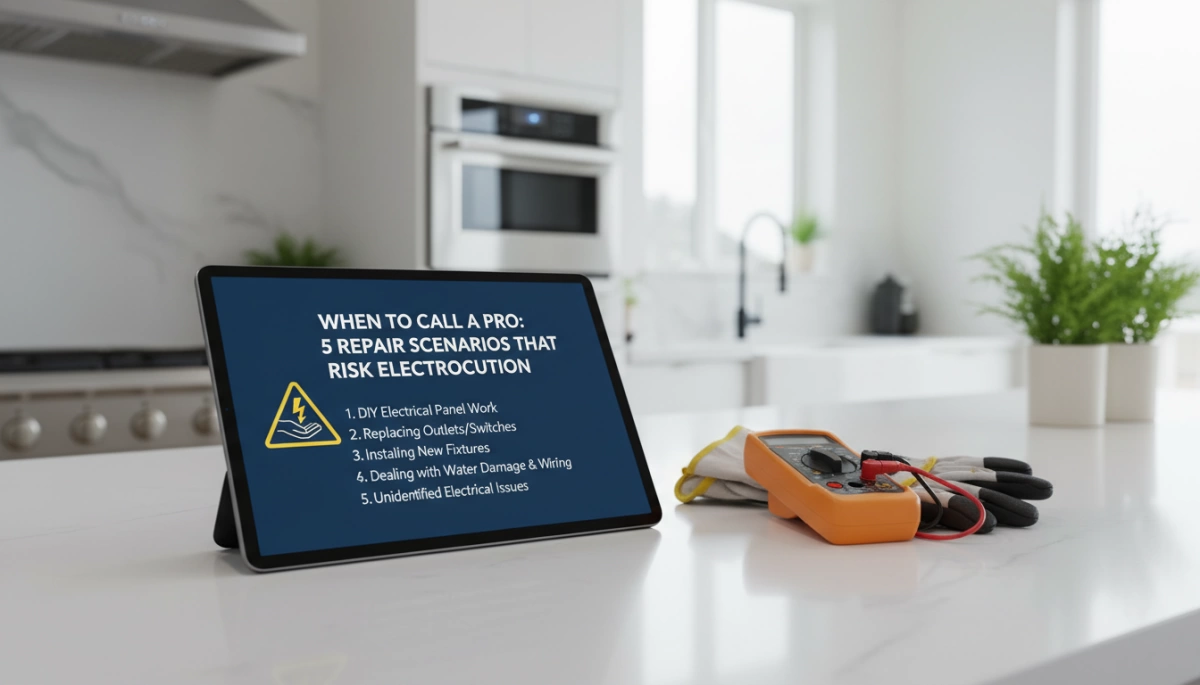
Understanding Electrical Risks in Home Repairs
Electrical shock happens when electric current passes through your body, often following the path of least resistance — like your skin, muscles, or heart. Electrocution, a deadly form of shock, occurs when this current disrupts vital functions. Understanding this risk is key to staying safe during any home electrical work.
Several factors can make electric shock more dangerous:
- Moisture: Water lowers your body’s resistance, increasing the risk of shock. That’s why bathrooms, kitchens, and outdoor areas are especially hazardous.
- Live wires: Exposed or damaged wires carry current that can easily cause injury.
- Improper tools: Using non-insulated or unsuitable tools can lead to accidental contact with live parts.
Watch for signs that your home’s wiring may be unsafe or failing:
- Flickering or dimming lights
- Outlets that feel warm or hot to the touch
- Circuit breakers that trip frequently without clear cause
These symptoms often signal faulty wiring or overloaded circuits and are red flags that professional attention is needed.
Electrical codes exist to protect you from these dangers. Licensed electricians understand and comply with these standards to ensure all work meets safety requirements. This professional compliance not only keeps you safe but also helps prevent costly repairs or electrical fires.
Knowing the basics about electric shock risks and wiring hazards empowers you to make informed decisions. While DIY projects may seem tempting, recognizing when to hire a licensed electrician can protect you from serious harm and costly mistakes.
Working on or Near the Electrical Panel
The electrical panel is the heart of your home’s wiring system, but it’s also one of the most dangerous spots to work on. Direct exposure to high-voltage live circuits here can cause severe electrical shock risks, including arc flashes—sudden bursts of electrical energy that can cause burns or worse. Faulty breaker replacement or tampering can lead to electrocution or fire hazards.
What makes this especially risky is that even if you think you’ve “turned off” the power, mislabeled breakers or shared circuits can keep parts of the panel energized without your knowledge. This hidden danger makes DIY repairs around the breaker box a bad idea.
You should definitely call a licensed electrician when you’re upgrading an electrical panel, adding new circuits, or replacing breakers. These tasks require professional electrical services to ensure everything is done safely and up to code. Handling these high-risk repairs yourself not only risks severe injury but can also lead to costly damage down the line.
Replacing or Rewiring Outlets and Switches
Working on outlets and switches might seem straightforward, but it poses serious electrical shock risks if not done right. Exposed live wires, improper grounding, and reverse polarity are common dangers that can lead to electrocution or damage to your devices. These issues are especially prevalent in older homes that still have ungrounded wiring or damaged electrical components.
Why is this so risky? Ungrounded outlets increase the chance of shocks, while reverse polarity means the hot and neutral wires are swapped—this can cause devices to malfunction or create a hazardous electric current path. Loose or hot outlets that spark or feel warm are clear signs your wiring isn’t safe.
You should call a licensed electrician when:
- Installing GFCI outlets, which protect against shock in kitchens, bathrooms, and outdoor areas.
- Fixing loose or hot outlets that cause flickering lights or frequent breaker trips.
- Upgrading from two-prong to three-prong outlets to meet current electrical safety standards.
Remember, improper use of tools or DIY attempts here can lead to serious home wiring hazards. For updates or repairs that involve outlets and switches, professional electrical services are the safest choice.
If you’re also dealing with appliance wiring issues or need guidance related to kitchen electrical safety, checking resources on fixing refrigerator problems can offer helpful insights on related electrical safety tips.
Handling Faulty or Exposed Wiring
Faulty or exposed wiring is a serious home wiring hazard that can easily lead to electrical shock risks or even electrocution. Contact with live wires or frayed insulation can cause dangerous arcs or shorts, potentially sparking fires or energizing metal parts hidden behind walls. This hidden damage is a common cause of electrical problems that many DIYers overlook but can quickly become life-threatening.
You should call a pro if you notice chewed or damaged cables, sparking connections, or smell burning near outlets or switches. Attempting to fix these issues without proper tools and knowledge puts you at extreme risk. Licensed electricians ensure safe repairs that comply with electrical codes and prevent hidden dangers from escalating.
For proper handling and to avoid worsening electrical faults, professionals use the right methods to test and repair faulty wiring. If you want to keep your home safe and avoid costly rework or fires, trust expert electrical services in these scenarios.
To better understand how long-term appliance use can strain wiring, check out our tips on extending the lifespan of your home appliances — often linked with wiring issues in older homes.
Electrical Work in Wet or Damp Areas
Working with electricity in wet or damp locations comes with serious risks. Water is an excellent conductor, which means bathrooms, kitchens, and outdoor spaces drastically increase the chances of electrical shock or electrocution. Moisture lowers the electrical resistance of surfaces and wiring, making any mistake potentially life-threatening.
Why is this dangerous? Wet conditions can turn a small fault, like a loose connection or exposed wire, into a major hazard. Even a minor amount of moisture can cause current to flow through unexpected paths, increasing electrical shock risks or causing short circuits that lead to fires.
When to call a pro:
- Installing or replacing light fixtures and outlets in bathrooms or kitchens
- Outdoor wiring projects, including garden lights or security cameras
- Electrical repairs or modifications near plumbing (sinks, pipes, water heaters)
Because these areas require special protective measures—like GFCI outlets and waterproof fixtures—it’s safest to hire a licensed electrician who knows how to manage wet area electrical work and comply with safety codes.
For more insight into safe home repairs and when it’s critical to call a professional, you can check our detailed guide on making the wise choice for home appliance and electrical repair.
Installing or Repairing Lighting Fixtures and Ceiling Fans
Working on lighting fixtures and ceiling fans might seem straightforward, but it carries real risks. You’re often up on a ladder, dealing with live wires and wiring that may not handle heavy fixtures well. This can lead to electric shock risks or even electrocution if something goes wrong.
Heavy lighting fixtures or ceiling fans put extra strain on your home wiring. Poor support or incorrect installation can cause wires to loosen, creating shorts or sparks. Overloaded circuits are another common issue, especially if the fixture draws more power than the circuit can safely handle.
When to call a pro:
- Installing new lighting or ceiling fans, especially in high or hard-to-reach ceilings
- Replacing outdated or damaged fixtures
- Adding recessed lighting or any heavy fixture that needs extra support
- Fixing buzzing or flickering lights that could signal faulty wiring
Hiring a licensed electrician ensures the job’s done right, avoiding the dangers of exposed live wires, overloaded circuits, or wiring damage. Don’t risk dangerous DIY electrical repairs—leave this to the pros to keep your home safe.
Additional High-Risk Electrical Situations
Some electrical repair scenarios pose extra risks and should always be handled by a professional:
- Overloaded circuits and extension cord misuse: Plugging too many devices into one outlet or using damaged extension cords can cause overheating and fires.
- Aluminum wiring repairs in older homes: Aluminum wiring requires special handling due to its tendency to become loose and overheat, increasing electrocution and fire risk.
- Knob-and-tube or outdated wiring systems: These older installations lack modern safety features and often have brittle insulation, making DIY repairs extremely dangerous.
If you notice frequent breaker trips, flickering lights, or warm outlets, these high-risk situations could be the cause. It’s best to hire a licensed electrician to safely assess and fix such issues, ensuring your home wiring meets current safety standards.
Why Hiring a Licensed Electrician Is Essential
When it comes to electrical work, knowing when to call a pro is key because dangerous DIY electrical repairs can lead to serious risks like electrocution or fires. A licensed electrician brings the right expertise in safe de-energizing and testing to make sure power is truly off before starting any job. This reduces the chance of electrical shock risks and accidents.
Licensed electricians also use proper tools and follow local electrical codes, ensuring your home stays safe and up to standard. They handle all the necessary permits, so you won’t run into legal or insurance headaches later.
Another big plus is their coverage: reputable electricians carry insurance and warranty protection. This means if something goes wrong after the repair, you’re protected—not stuck with costly damage.
Finally, hiring a pro saves money over time. Proper work prevents problems like overloaded circuits, sparking, or faulty connections that can cause fires or require costly rework. In the long run, investing in a licensed electrician is the smartest way to keep your home safe and sound.
How to Choose and When to Call a Professional
Knowing when to call a licensed electrician can save you from serious electrical shock risks and costly repairs. Here’s how to spot red flags and find the right pro for your home electrical needs.
Red Flags That Need Immediate Help
- Flickering or dimming lights
- Frequent breaker trips or blown fuses
- Warm or sparking outlets and switches
- Burning smells near electrical devices
- Outlets or switches that don’t work
- Exposed live wires or damaged insulation
- Electrical shocks when touching appliances
If you notice any of these, call a professional immediately.
Tips for Finding a Reliable Local Electrician
| Step | What to Look For |
|---|---|
| License & Insurance | Always verify they hold a valid license and insurance. |
| Experience | Choose electricians familiar with your local codes and wiring types. |
| Reviews & Referrals | Check online reviews or ask neighbors for recommendations. |
| Clear Estimates | Get a detailed quote before work begins; avoid surprise fees. |
| Warranties | Professionals often provide warranties on parts and labor. |
What to Expect During a Service Call
- Safety Check: The electrician will test your system before touching anything.
- Problem Diagnosis: They identify faults and explain the issue clearly.
- Written Estimate: Expect a clear quote for repairs or upgrades.
- Licensed Repairs: Work done meets local electrical codes and safety standards.
- Final Testing: After repairs, they’ll ensure everything works safely and properly.
Choosing professional electrical services ensures your home stays safe from electrocution and fire risks. Don’t hesitate—when in doubt, call a pro.



Leave a Reply