Understanding How a Fan Oven Works: Role of Fan Element vs Conventional Heating Elements
If your fan oven isn’t heating properly, understanding how it works is the first step. Unlike a conventional oven that relies on heating elements at the top and bottom to cook food, a fan oven uses a fan element – a circular heating element combined with a fan – to circulate hot air evenly throughout the oven cavity. This design helps food cook faster and more evenly by pushing warm air around.
The fan element is essential for this convection process. It heats the air and the fan spreads that heat quickly, while conventional ovens just radiate heat from stationary elements. When the fan oven element is faulty, you might notice uneven cooking or that the oven is blowing cold air despite the fan running. This is quite different from a failed traditional heating element, which usually stops heating altogether without the fan effect.
So, knowing the difference between the fan element and regular heating elements helps you pinpoint why your oven might not be heating — whether it’s the fan element itself, the fan motor, or something else in the system. It’s a key starting point before you dive into troubleshooting or testing the components.
Common Signs Your Fan Element Has Failed
If your fan oven isn’t heating properly, the fan element might be at fault. One clear sign is when the oven fan runs but only blows cold air. This usually means the circular heating element isn’t warming up as it should, a classic symptom of a fan oven element faulty issue.
Other signs include visible damage to the element itself—look for burn marks, breaks, or blistering on the ring element. Sometimes, a fault in the oven’s fan element can also cause tripped breakers or blown fuses, as the faulty element draws irregular power.
If you notice your convection oven no heat while the fan spins, or if the oven thermostat light is on but there’s no heat, these are red flags that the oven rear element may have failed. Spotting these symptoms early can save you from more extensive damage or costly repairs later.
Preliminary Checks Before Dismantling
Before opening up your oven to check the fan element, it’s smart to run through some simple checks first. This saves time and helps avoid unnecessary work.
- Verify the power supply: Make sure the oven is plugged in properly and power is running to the socket. Check your circuit breaker or fuse box in case it has tripped.
- Test the controls: Set the oven to different modes, especially non-fan settings like conventional bake. If the oven heats up in those modes, the issue is likely with the fan element or fan-assisted circuitry.
- Look for warning signs: If the oven thermostat light comes on but there’s no heat, or the fan oven is blowing cold air, these are key clues pointing towards a faulty ring element or fan element failure.
Completing these preliminary steps helps isolate the problem before moving on to more detailed inspection or testing. For a systematic approach to appliance troubleshooting, you might find useful tips in our detailed documenting repairs template.
Tools You’ll Need
Before you start checking your fan oven element, make sure you have the right tools ready. Here’s what you’ll need for a smooth and safe inspection:
- Screwdrivers: A set of Phillips and flathead screwdrivers will help you remove oven panels and access the fan element.
- Multimeter: Essential for testing the oven element continuity and checking if the fan oven element is faulty.
- Gloves: Protect your hands from sharp edges and hot surfaces inside the oven.
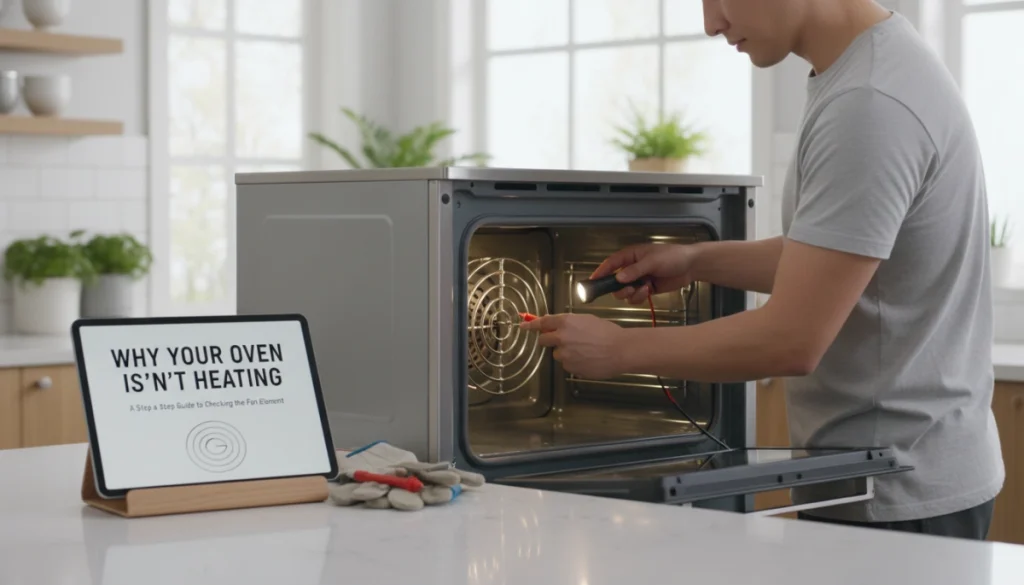
- Torch or flashlight: Good lighting helps spot visible damage or burnt spots on the circular heating element.
Having these tools on hand ensures you can safely and effectively test your fan assisted oven not getting hot due to a potential oven rear element failure or any other issue. For more tips on oven repairs, check out this detailed guide on how to replace a faulty oven element.
Step-by-Step Guide to Inspecting the Fan Element
If your fan oven isn’t heating properly, a thorough inspection of the fan element is crucial. Here’s how to do it safely and effectively:
-
Isolate the Power
Before you start, switch off the oven at the mains to avoid any risk of electric shock. Unplug the appliance if possible, or turn off the breaker that powers the oven.
-
Remove Oven Panels
Use the right screwdriver to carefully remove the oven’s rear or side panels, depending on the model. This will give you access to the fan and the circular heating element surrounding it.
-
Visual Inspection
Look closely at the fan element for any obvious signs of damage such as burns, cracks, or breaks. Also, check if the fan blade spins freely without obstruction. A faulty fan element often shows discoloration or burnt spots.
-
Check Wiring and Connections
Inspect the wiring connected to the fan element for loose connections, corrosion, or burned wires. Ensure all terminals are tightly secured and that cables are not frayed or damaged. Poor wiring can cause the oven fan element to fail or blow cold air instead of heat.
Taking these steps carefully can help pinpoint whether the fan element is the issue or if you should look elsewhere. For extra help understanding appliance wiring before you start, you might find our detailed guide on how to read appliance wiring useful.
This hands-on inspection is a key step before moving on to electrical testing or considering a replacement of your faulty fan oven element.
How to Test the Fan Element with a Multimeter
Testing the fan oven element with a multimeter is one of the most reliable ways to check if it’s faulty. Here’s a simple step-by-step process:
- Disconnect Power: Always unplug the oven or switch off the circuit breaker before starting to avoid any electric shock.
- Access the Fan Element Terminals: Remove the rear panel or whichever cover shields the fan element terminals.
- Disconnect the Element Wiring: Carefully disconnect the wires attached to the fan element terminals so you can test just the element itself.
- Set Your Multimeter: Turn your multimeter to the resistance (ohms) setting—usually indicated by the Greek letter omega (Ω).
- Measure Resistance: Place the multimeter probes on each terminal of the fan element. A functioning fan element typically shows a resistance reading between 15 and 50 ohms, but check your oven’s manual for exact specs.
- If the reading is infinite or very high, the element is broken internally.
- If the reading shows zero or very low resistance, the element may have a short circuit.
- Check for Earth Faults: Move one probe to a terminal and the other to the oven’s metal frame. There should be no continuity (no beep or low resistance). Continuity here means the element is leaking current and needs replacing.
This oven heating element continuity test will help you confirm whether the fan oven element is faulty or if you should keep looking elsewhere.
If you want to learn more about typical oven faults beyond just the fan element, check out our detailed guide on why cookers stop heating.
Ruling Out Other Causes: Thermostat, Thermal Fuse, Fan Motor, Wiring Issues
If your fan oven isn’t heating even though the fan element seems fine, it’s important to check other possible causes before assuming the element is faulty. A faulty thermostat can prevent the oven from reaching temperature, even if the fan is running and the element looks okay. Look for signs like the oven thermostat light coming on but no heat being produced.
Another common culprit is the thermal fuse. This safety device cuts power to the heating elements if the oven overheats. A blown thermal fuse will cause the oven to lose heat without obvious fan element damage. Testing the fuse with a multimeter can confirm if it’s still working.
The fan motor itself could cause problems. If the motor fails, the fan won’t circulate heat properly, making it seem like the heating element isn’t working. Listen for unusual noises or no fan movement when the oven is on.
Lastly, wiring issues such as loose connections or burnt wires can interrupt power to the fan element or other parts. Carefully inspect wiring harnesses and terminal blocks. Faulty wiring often causes intermittent heating problems or no heat at all.
To understand oven thermostat issues better, check out our detailed guide on the vital role of thermostatic controls. This can help you pinpoint if the problem is in the controls rather than the heating part itself.
By ruling out these components, you narrow down the cause of a fan oven not heating, saving time and effort when testing or replacing the fan element.
Replacing a Faulty Fan Element
If you’ve confirmed that the fan element is faulty, replacing it is the next step to get your fan oven heating again. Here’s what you need to know about sourcing parts, the removal and installation process, plus how much time and money you might expect to spend.
Sourcing the Right Fan Oven Element
- Look for a replacement fan oven element that matches your oven’s make and model. Using the exact part ensures proper fit and function.
- You can find parts through official manufacturers or reliable third-party suppliers. For guidance on choosing between genuine and generic parts, check out this detailed guide on generic vs OEM parts.
- Have your oven’s model number handy to avoid ordering the wrong element.
Removal and Installation Steps
- Safety first: Disconnect the oven from the power supply.
- Remove the oven’s back or side panel to access the fan element.
- Carefully disconnect the element’s wiring terminals—note their positions or take a photo for reference.
- Unscrew any retaining clips or brackets holding the element.
- Remove the old, faulty fan element.
- Fit the new element in place, securing it with screws or clips.
- Reconnect the wiring exactly as before.
- Replace the panels and restore power to the oven.
A caution: make sure you handle electrical components with care and confirm power is off before starting.
Cost and Time Estimates
- The cost of a replacement circular heating element or fan element typically ranges from $30 to $100, depending on the oven brand and part type.
- The job can take about 30 minutes to 1 hour if you’re comfortable with basic DIY tasks.
- If you’re unsure about any step, it’s safer to call in a professional to avoid damage or risks.
Replacing a fan oven element is a manageable fix that can restore your oven’s heating efficiency and save you potential costly repairs later on. For tips on keeping your oven parts in good shape, see the advice on spare part storage and maintenance.
When to Call a Professional
If you’re not confident working with electrical components or dismantling your oven, it’s best to call a professional. Fan oven not heating issues can sometimes seem straightforward but often hide more complex problems, especially if your fan element looks fine but still won’t heat.
For gas ovens, never attempt DIY repairs on the heating parts or fan element since gas-related faults can be dangerous and require expert handling. Persistent faults, like a fan oven blowing cold air despite replacing the fan element or repeated oven thermostat light on but no heat warnings, are clear signs to seek professional help.
A trained technician can safely test components such as the faulty ring element oven, thermal fuses, or wiring issues that could be causing your fan assisted oven not getting hot. For more guidance on when to get expert support, see this detailed advice on when to call a professional for oven repairs.
Don’t risk further damage or injury—knowing when to step back and let a pro handle the job ensures your oven is fixed correctly and safely.
Preventing Future Fan Element Failure
To keep your fan oven heating properly and avoid a faulty fan oven element, regular maintenance is key. Here’s how you can prevent future fan element failure:
- Regular Cleaning: Dust, grease, and food debris can build up around the circular heating element and fan, causing it to overheat or short out. Clean your oven regularly following oven care tips to prevent dirt from affecting the fan oven blowing cold air or causing element damage. You can check out detailed advice on cleaning and maintaining ovens here.
- Proper Use: Avoid running the fan oven on high settings for extended periods without breaks. Constant overload makes the electric oven element burn out faster. Use the fan oven as per the manufacturer’s guidelines, and give it time to cool down between heavy cooking sessions.
- Avoid Overloading the Oven: Putting too many dishes inside or blocking vents can restrict airflow, leading to uneven heating and stressing the fan element. Make sure the oven isn’t overcrowded to allow proper circulation.
By following these simple steps, you can extend the lifespan of your fan oven’s circular heating element and reduce the chances of faults like oven thermostat light on but no heat or a fan assisted oven not getting hot. Preventive care saves you time and money on repairs down the line.
Frequently Asked Questions About Fan Oven Element Failure
How long does a fan oven element usually last?
Most fan oven elements can last between 5 to 10 years depending on how often you use the oven and how well it’s maintained. Regular cleaning and avoiding overheating can extend its lifespan.
What are common signs my fan oven element is faulty?
If your fan oven is blowing cold air despite the fan running, or if the oven isn’t heating but the thermostat light is on, it often points to a faulty fan element. Other symptoms include visible damage on the circular heating element, frequent tripped breakers, or the oven not reaching temperature even though the fan is working.
Can I test the fan element myself?
Yes, you can perform a simple test using a multimeter to check for continuity and earth faults on the oven’s rear element. Make sure to isolate power before testing. If the resistance reading is off or shows an earth fault, the element likely needs replacement.
Is a faulty fan element the same as a blown oven element?
They’re related but not always the same. The fan element in a convection oven is the circular heating element that works with the fan to distribute heat. A blown or burnt-out electric oven element may refer to either this fan element or the separate bake/broil elements. Each can cause the oven fan not heating properly.
Does model type matter when replacing a fan oven element?
Yes, specific models require matching parts. Always source the correct circular heating element replacement designed for your oven to ensure proper fit and function. Check manufacturers’ details or consult a professional if unsure.
Can thermostat or thermal fuse faults cause the oven fan not heating?
Definitely. Sometimes what seems like a fan oven element failure might actually be a faulty thermostat or thermal fuse. These parts affect the oven’s heating control and can cause no heat even if the fan and element are fine.
For more tips on maintaining your oven parts and avoiding issues, check out this guide on fixing temperature inaccuracies in ovens and learn about extending the lifespan of your appliance.