Signs Your Electric Oven Temperature Is Inaccurate
Noticing your electric oven temperature off? It can be frustrating when your food doesn’t cook as expected. Here are common signs your oven temperature is inaccurate:
- Food cooks too fast or too slow: If dishes burn on the outside but stay raw inside, or take much longer than the recipe states, your oven temperature might be running too hot or cold.
- Uneven cooking or baking: Hot spots or uneven heating suggest your oven isn’t heating evenly, often caused by faulty oven heating elements or sensor issues.
- Oven temperature fluctuations: If the oven temperature fluctuates during cooking, it signals a possible thermostat or calibration problem.
- Visible signs of burn marks or undercooked areas: These can indicate the oven thermostat is out of sync or the oven door seal is compromised.
- Inconsistent results despite following recipes: When your usual recipes don’t turn out right, it’s time for an oven calibration guide or troubleshooting.
Recognizing these signs early means you can take steps to fix inaccurate oven temperature problems and keep your cooking on track.
How to Test Your Oven’s Temperature Accuracy
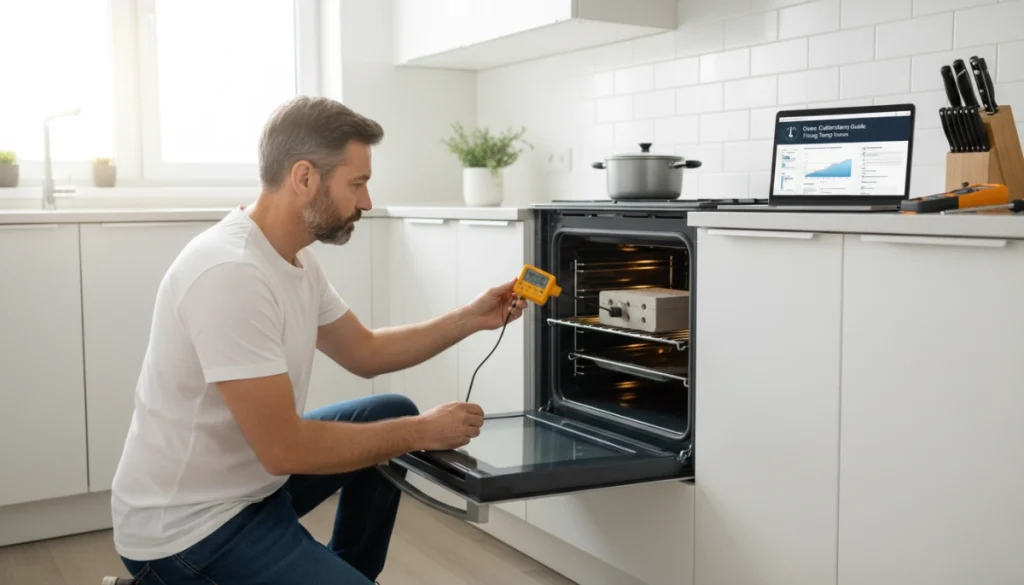
To know if your electric oven temperature is off, the easiest way is to test it yourself. Here’s a simple method to check your oven’s temperature accuracy:
- Get a reliable oven thermometer. This is the best oven thermometer you can buy, and it gives a more accurate reading than your oven’s built-in dial. Place it in the center of the oven rack.
- Preheat your oven. Set it to a specific temperature, like 350°F (175°C). Let it fully preheat for at least 15 minutes.
- Check the reading. After preheating, note the temperature on the oven thermometer. If it’s more than 25°F (about 15°C) off from the set temperature, your oven temperature is inaccurate.
- Repeat at different settings. Test at various temperatures (e.g., 300°F and 400°F) to see if the oven runs consistently too hot or cold.
This method helps you figure out if your oven not heating evenly or runs too hot or cold, which can affect baking results. If you find big temperature fluctuations, you might need to calibrate the electric oven thermostat or investigate other issues.
For detailed steps on how to fix a faulty oven heating element or other parts that cause inaccurate oven temperatures, check out this guide on how to replace a faulty oven.
Common Causes of Temperature Inaccuracies in Electric Ovens
If your electric oven temperature is off, it usually comes down to a few common issues. One big culprit is a faulty oven heating element. When the bake or broil element wears out or breaks, the oven won’t heat evenly or reach the right temperature. Another frequent cause is oven temperature sensor problems. If the sensor gets damaged or misaligned, it sends wrong signals to the thermostat, causing fluctuations and inaccuracy.
Sometimes, the root cause is a miscalibrated thermostat. When the oven thermostat is off, the oven might run too hot or cold without you realizing it. This is why oven calibration guides are helpful for adjusting the thermostat precisely. Another factor affecting accuracy is oven door seal issues. If the seal around your oven door is cracked or worn, heat escapes, and the temperature inside won’t stay consistent.
Dust and dirt buildup can also cause your oven to act up, interfering with heating components. Regular cleaning helps maintain reliable temperature control—check out this DIY guide to clean your oven properly for tips on keeping everything in good shape.
Finally, wiring problems or faulty control boards may cause weird temperature behaviours, but those tend to require professional attention. Understanding these common causes gives you a solid starting point to fix your electric oven temperature problems.
Step-by-Step Fixes: DIY Solutions
Fixing an electric oven temperature inaccuracy yourself can save time and money. Here’s a straightforward guide to help you troubleshoot and perform basic fixes for common issues:
1. Test and Calibrate the Thermostat
- Use the best oven thermometer to check if your oven temperature matches the dial setting.
- If the oven runs too hot or cold, adjust the thermostat calibration. Many ovens have a calibration screw or digital setting for this. Consult your oven calibration guide in the manual.
2. Check the Oven Temperature Sensor
- A faulty oven temperature sensor can cause inaccurate temperature readings.
- Inspect for visible damage or disconnections.
- You can test it with a multimeter or swap it with a known good sensor if available.
3. Inspect and Replace the Bake Element
- The oven not heating evenly could be due to a faulty oven heating element.
- Look for blisters or breaks on the element.
- Replacing the oven bake element is a common fix to restore consistent heat.
4. Examine the Oven Door Seal
- Oven door seal issues let heat escape, causing temperature fluctuations.
- Check for cracks or gaps and replace the seal if needed for a better oven seal.
5. Clean the Oven Interior
- Built-up grease and grime around the heating elements or sensor can cause inaccurate oven temperature.
- Give your oven a good clean to remove any residues that interfere with heat distribution.
These DIY steps cover most electric oven temperature off problems. However, always unplug your oven before starting any repairs for safety. If you want to learn more about extending the lifespan of your appliances, check out this guide on appliance maintenance.
When to Repair or Replace Components
Knowing when to repair or replace parts is key to fixing electric oven temperature inaccuracies. If your oven temperature sensor is faulty or the oven temperature fluctuations continue after calibration, it’s a sign that components might need attention. Similarly, a worn-out or damaged oven bake element can cause the oven to run too hot or cold, leading to uneven heating.
Here are clear signs you should consider repair or replacement:
- Oven not heating evenly despite temperature adjustments
- Frequent temperature swings that don’t improve after resetting or recalibrating
- Visible damage or wear on the heating element or thermostat
- Oven door seal issues causing heat to escape and affect temperature accuracy
If your DIY oven temperature adjustment doesn’t solve the problem, replacing these parts usually resolves the issue. For parts like the oven bake element or thermostat, choosing the right replacement is crucial. You can find expert advice on selecting compatible parts in this helpful guide to discovering the perfect replacement.
Regularly checking these components can save you from bigger failures and keep your oven running at the right temperature for longer.
When to Call a Professional
Sometimes, a DIY oven calibration guide or simple fixes won’t cut it. If your electric oven temperature is off despite testing and basic tweaks, it might be time to get expert help. Call a professional if you notice:
- Persistent oven temperature fluctuations even after resetting the thermostat.
- Signs of a faulty oven heating element that you can’t safely replace yourself.
- Issues with the oven temperature sensor that cause inconsistent heating.
- The oven runs too hot or cold and you can’t pinpoint the problem.
- Your oven not heating evenly despite cleaning and checking seals.
Also, if you’re uncomfortable handling electrical components or lack the right tools, a professional technician can safely troubleshoot and fix complex problems. Getting expert repair ensures your electric oven stays accurate, safe, and reliable for the long haul.
Prevention Tips for Long-Term Accuracy
Keeping your electric oven temperature accurate over time means a little regular care goes a long way. Here are some simple tips to prevent your oven temperature from being off in the long run:
- Use a reliable oven thermometer: Even the best ovens can have temperature fluctuations. A good oven thermometer helps you keep an eye on any changes early.
- Calibrate electric oven thermostat yearly: Check your oven’s temperature with a thermometer and adjust the thermostat if it starts running too hot or cold.
- Avoid slamming the oven door: This can loosen or damage the oven door seal, leading to heat loss and uneven heating.
- Clean your oven regularly: Built-up grease and grime can impact sensor accuracy and heat distribution, causing oven temperature issues.
- Check and replace faulty oven heating elements: If your oven isn’t heating evenly, worn out elements might be the reason. Keeping these in good shape is key to stable heat.
- Don’t overload your oven: Crowding the oven blocks air flow, causing inconsistent cooking.
- Keep door seals tight: Replace any broken or worn-out seals to stop heat from escaping and throwing off your oven’s temperature.
- Avoid frequent temperature changes: Constantly switching temps can wear down components faster, leading to more inaccuracies.
- Schedule professional maintenance when needed: A quick annual check-up can catch and fix issues before they impact your cooking.
Following these tips will help you avoid common electric oven temperature sensor problems and keep your oven calibrated for accurate cooking every time.
FAQ Section
Q: How do I know if my electric oven temperature is off?
A: If your food is consistently undercooked or burnt, or if baking times seem off, your oven temperature is likely inaccurate. Using the best oven thermometer can help confirm this.
Q: How can I test oven temperature accuracy at home?
A: Place an oven thermometer inside, preheat to a set temperature, and check if the thermometer matches the oven’s dial. Repeat in different spots to spot oven temperature fluctuations.
Q: What causes electric oven temperature problems?
A: Common issues include a faulty oven heating element, oven temperature sensor problems, or oven door seal issues that let heat escape.
Q: Can I fix an inaccurate oven temperature myself?
A: Yes. You can try DIY oven temperature adjustment by recalibrating the thermostat or replacing faulty parts like the bake element. Always follow an oven calibration guide for step-by-step help.
Q: When should I replace parts or call a professional?
A: If DIY fixes don’t work or you suspect damaged components, consider replacing the oven bake element or the sensor. Call a professional if you’re unsure or if electrical repairs are involved.
Q: How do I prevent oven temperature inaccuracies?
A: Regularly check and clean the oven, avoid slamming the door, fix seal issues promptly, and periodically calibrate your electric oven thermostat to maintain long-term accuracy.
Q: What if my oven runs too hot or cold despite calibration?
A: This could indicate deeper electrical problems or failing parts. It’s best to schedule a professional electric oven troubleshooting service to diagnose and fix the issue properly.