Why Your Dryer Isn’t Drying Clothes: Start by Checking the Thermal Fuse and Thermostat
If your dryer isn’t drying clothes, the problem often comes down to two main parts: the thermal fuse and the thermostat. These components play a crucial role in your dryer producing heat. When either fails, your dryer can run but no heat is generated, leaving your clothes damp and frustrating you.
Common reasons your dryer stops producing heat include a blown thermal fuse, a faulty dryer thermostat replacement, or issues with the high limit thermostat. Dirt and lint buildup can also cause overheating, tripping these safety parts to protect your appliance.
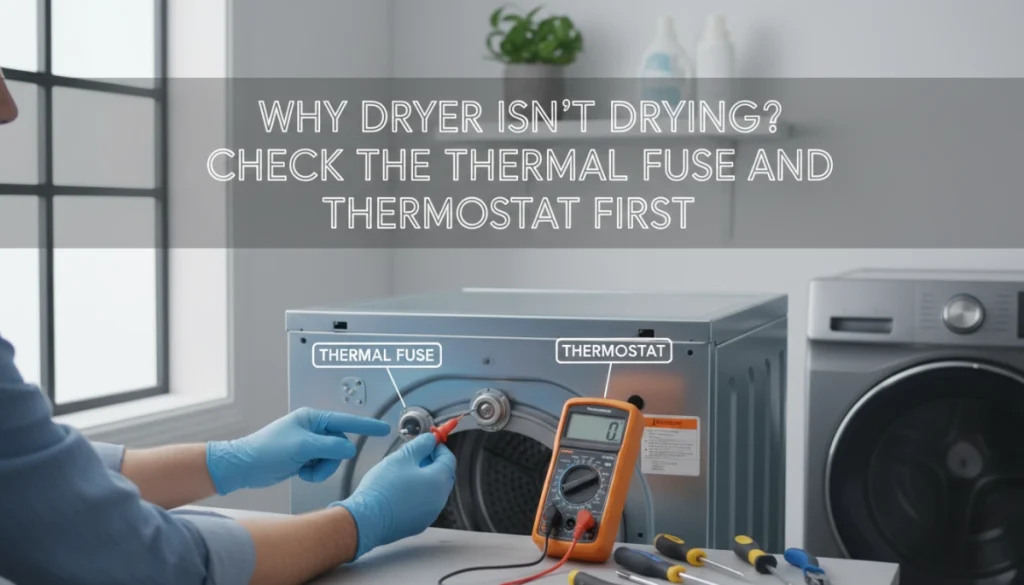
Before diving deeper, it’s important to check these parts first to avoid unnecessary repairs. Testing your dryer thermal fuse and thermostat with a multimeter is an easy way to narrow down the problem. By focusing on these, you can often fix your clothes dryer no heat issue quickly and safely.
Step 1: Rule Out Simple Issues Before Disassembly
Before diving into testing or replacing parts like the thermal fuse or thermostat, start with the basics. Sometimes, your dryer not heating up is due to simple issues you can fix quickly without any tools or technical know-how. Here’s what to check first:
- Clean the lint filter and vent: A clogged dryer vent or heavy lint buildup can cause your dryer to run but no heat. Make sure both are free of debris to improve airflow.
- Check the power supply: For electric dryers, ensure the dryer is plugged in properly and the circuit breaker hasn’t tripped. Gas dryers should have the gas supply turned on.
- Test the dryer settings: Double-check you’re using the correct heat settings—the wrong cycle may cause the dryer to run without heat.
If all these basics check out and the dryer still isn’t drying clothes, it’s time to understand the role of the thermal fuse, a key safety part that often causes a dryer to stop producing heat when it blows.
Step 2: Understanding the Thermal Fuse
The thermal fuse is a safety device designed to prevent your dryer from overheating. It’s a small, inexpensive component but critical for protecting your dryer’s internal wiring from damage. When the dryer overheats, the thermal fuse blows, cutting off power to the heating element. This means your dryer will run but no heat will be produced, resulting in clothes that come out damp.
Blown thermal fuses are a common reason for clothes dryer no heat problems, especially after repeated overheating caused by things like lint buildup or a clogged dryer vent. Knowing this helps you narrow down the cause before moving on to testing or replacing the fuse.
For more details on how thermostats work alongside thermal fuses in maintaining safe dryer temperatures, see this guide on the vital role of thermostatic controls.
Step 3: How to Test and Replace the Thermal Fuse
If your dryer isn’t heating, the thermal fuse is often the first part to check. This safety device cuts power to the heating element if the dryer overheats, which means a blown thermal fuse will cause your dryer to run but no heat. Here’s how to test it:
- Unplug the dryer and access the thermal fuse, usually located on the blower housing or near the heating element.
- Use a multimeter to perform a continuity test on the fuse. Set your meter to the ohms setting and touch the probes to the fuse terminals.
- If the meter shows no reading, the fuse is blown and needs replacement.
Replacing the thermal fuse is straightforward: remove the screws holding it in place, unplug the connectors, and swap it with a new fuse designed for your dryer model. Always use an exact replacement to avoid safety risks.
Step 4: Checking the Thermostats
Next, check the dryer’s thermostats – usually the cycling thermostat and the high limit thermostat. These parts control the temperature inside the dryer and can cause your clothes dryer no heat issue when they fail.
- Locate the thermostats on or near the heating element.
- Perform a continuity test with a multimeter just like the thermal fuse.
- If either thermostat shows no continuity, replacing it will solve the problem.
Sometimes a faulty cycling thermostat failure or high limit thermostat causes the dryer to overheat and trip the thermal fuse repeatedly. Testing both components can save you multiple parts swaps later.
If you’re not confident testing or replacing these parts yourself, see when it’s better to seek help from a professional technician to avoid damage or safety hazards. For detailed troubleshooting tips, check out our guide on electric dryer troubleshooting.
Preventing Future Problems and When to Call a Professional Technician
To keep your dryer heating properly and avoid issues like a blown thermal fuse or thermostat failure, regular maintenance is key. Always clean the lint filter after every load and check for lint buildup inside the vent. A clogged dryer vent can cause overheating, which damages components like the thermal fuse and high limit thermostat. Make sure your dryer has plenty of airflow and avoid overloading it to prevent cycling thermostat failure.
If you notice your dryer runs but no heat, or if testing the thermal fuse and thermostats feels overwhelming, it’s time to call a professional technician. Especially with electrical dryer troubleshooting or gas dryer not drying situations, expert help ensures safety and a proper fix. For guidance on when to reach out, check this detailed advice on when to call a professional technician to avoid making things worse. Regular care combined with timely professional service is the best way to keep your clothes dryer heating efficiently for years.