Understanding the Real Risk: How Dryer Fires Start
Dryer fires often catch homeowners off guard, but they are entirely preventable with the right knowledge. At the heart of the risk lies lint buildup in dryers—a surprisingly flammable material that accumulates over time. Lint, composed of tiny fibers from clothing and fabric, easily ignites when trapped, especially as it blocks airflow.
When lint collects, it restricts air circulation inside the dryer and vent system, causing the dryer to overheat. This overheating can ignite lint deposits found not only in the lint trap but also deep inside the exhaust ducts, behind internal components like the drum and heating element, and even the exterior vent. These are the most common ignition points for dryer fires.
Certain factors make the risk higher:
- Long or flexible dryer ducts that trap more lint and reduce airflow.
- Households with high laundry loads, increasing the volume of lint generated.
- Pets and children, who contribute extra lint by handling clothes more frequently.
Understanding this science behind lint buildup and the typical ignition areas helps highlight why regular dryer vent cleaning and maintenance are critical steps in effective clothes dryer fire prevention.
Warning Signs Your Dryer System Needs Attention
Knowing the warning signs that your dryer system needs maintenance can help prevent lint buildup and reduce dryer fire risk. Here are key signals to watch for:
- Clothes take longer to dry or come out unusually hot. This often means restricted airflow caused by lint buildup or duct blockages, which leads to dryer overheating.
- You notice a burning smell, excessive heat from the dryer exterior, or loud operation. These are serious signs of possible dryer overheating or mechanical issues that require prompt attention.
- Visible lint around the lint trap slot, behind the dryer, or at the outdoor vent. Lint escaping outside the trap hints at clogs further down the dryer exhaust system.
- Little or no lint collects in the lint trap. This can mean lint is stuck further along the vent duct, increasing fire risk due to flammable lint accumulation in hidden spots.
If you spot any of these warning signs, it’s a good idea to start with a thorough dryer vent cleaning or consider professional vent cleaning for a safer, more efficient dryer. For related appliance upkeep advice, you might also find helpful tips in guides about signs your refrigerator needs attention on reliable home appliance resources.
Essential Prevention Steps Beyond the Lint Trap
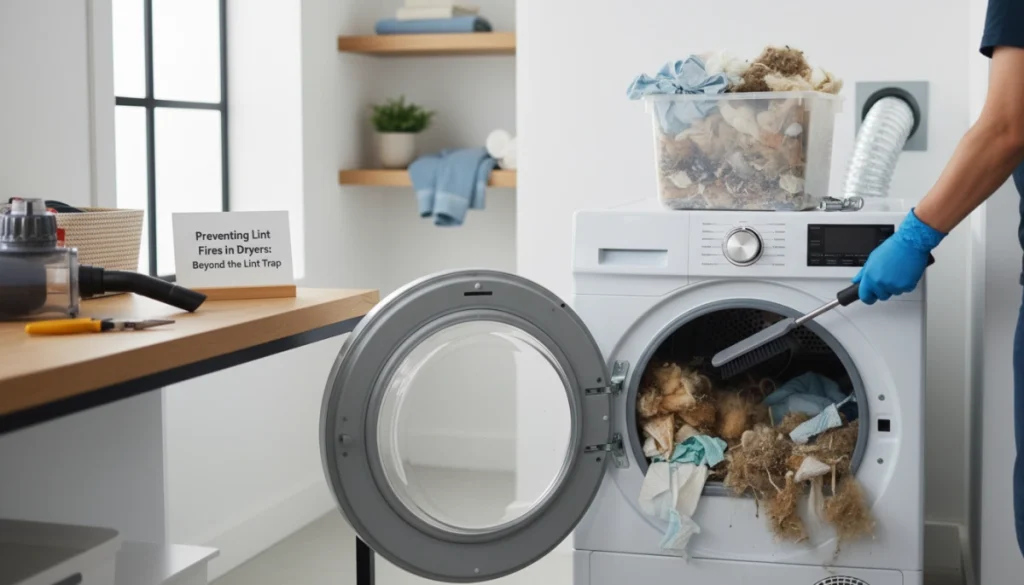
Preventing lint fires means going well past just emptying the lint trap. Start with a deep clean of the lint trap area itself—vacuum the slot and screen thoroughly to grab hidden lint that brushing alone can miss. This simple step reduces the flammable lint accumulation within reach.
Next, inspect and clean the dryer vent duct regularly. You can try DIY dryer vent kits or brushes for smaller jobs, but keep in mind that professional vent cleaning tools are often more effective at clearing stubborn lint buildup deep inside the ductwork. Clogged ducts restrict airflow and cause overheating, a common ignition point for dryer fires.
Don’t forget the exterior dryer vent hood. Check this spot for debris, leaves, bird nests, or any blockages that can trap lint and block airflow. Cleaning here ensures your dryer exhaust system works properly and safely.
Inside the dryer, lint and dust can gather near the drum and heating element. This hidden lint hazard can be tricky to reach. If you’re not comfortable opening up your dryer, it’s best to call a professional for internal dryer maintenance to avoid damaging sensitive parts.
As a rule of thumb, schedule annual professional dryer vent cleaning, especially if your household has heavy dryer use. More frequent checks might be needed if you notice your clothes taking longer to dry or suspect airflow issues. Regular maintenance is key to reducing dryer fire risk and keeping your system running safely and efficiently.
For more DIY tips on appliance maintenance, check out this detailed DIY guide to cleaning refrigeration components which covers similar cleaning strategies you can apply to your dryer upkeep.
Best Practices for Dryer Installation and Materials
Proper dryer installation plays a key role in preventing lint fires and ensuring safe operation. Start by choosing rigid metal ducts instead of flexible plastic or foil ones. Metal ducts offer better airflow and are much more fire-resistant, reducing the risk of lint buildup in dryer vents catching fire.
Keep vent runs as short and straight as possible—ideally under 25 feet with minimal bends. Long or overly flexible ducts cause airflow restrictions that trap lint and increase the chance of overheating. Also, place the exterior dryer vent hood where it’s clear of obstacles and use a vent with a flapped hood to stop debris, birds, or pests from blocking airflow.
Avoid common installation mistakes like crushed or kinked ducts, improper transitions between duct sections, or venting into attics or garages where lint and heat can accumulate unnoticed. Following these dryer duct maintenance guidelines helps reduce fire risk and improves your dryer’s efficiency.
For technical insights on components affecting drying safety, check out this overview of thermostatic controls and their role in appliance maintenance.
Additional Safety Habits and Tools
Preventing dryer fires means going beyond just cleaning lint traps. Never run your dryer unattended or overnight—fires often start when no one is around to catch warning signs early. Always use the correct heat settings and avoid overloading the machine, since excess lint and restricted airflow can lead to dryer overheating.
Installing smoke and carbon monoxide detectors near laundry areas adds an extra layer of safety, giving early alerts if something goes wrong inside your dryer exhaust system.
To keep your dryer running safely and efficiently:
- Use dryer vent cleaning kits regularly to clear lint buildup deep inside vents and ducts.
- Consider vent boosters for long vent runs to improve airflow and reduce fire risks.
- Look for dryers with built-in lint alerts or sensors that warn you when lint accumulation might become dangerous.
Combining these habits and tools helps reduce the risk of dryer fires and keeps your laundry space safer. For comprehensive upkeep, you might also explore professional vent cleaning services to stay ahead of potential hidden lint hazards.
When to Call a Professional
Sometimes, DIY dryer vent cleaning just isn’t enough. If you notice persistent issues like your clothes still taking too long to dry, unusual heat buildup, or strange smells despite regular maintenance, it’s time to call in a pro. Complex dryer setups, especially those with long or flexible ducts, also benefit from professional attention to reduce fire risks.
Why Choose Certified Technicians?
- Thorough inspection: Pros spot hidden lint hazards inside vents and dryer components you might miss.
- Proper tools: Professional vent cleaning uses specialized tools to clear tough blockages effectively.
- Insurance compliance: Licensed technicians ensure your maintenance meets safety codes, lowering your liability.
- Long-term savings: Regular professional service can extend your dryer’s life and reduce energy costs.
How to Find Reputable Local Services
| Tips for Finding Trusted Dryer Vent Cleaners | What to Avoid |
|---|---|
| Check for certifications or licenses | Services without proper credentials |
| Read customer reviews and testimonials | Low-cost offers with vague service |
| Ask for a detailed quote before service | Companies unwilling to explain work |
| Use local directories or ask neighbors for referrals | Services without insurance coverage |
For a reliable start, consider professional advice on equipment and maintenance available in trusted guides like the perfect appliance replacement advice to keep your dryer safe and efficient.
Calling a professional at the right time ensures your dryer’s exhaust system is clear and safe, helping you reduce dryer fire risk for peace of mind.