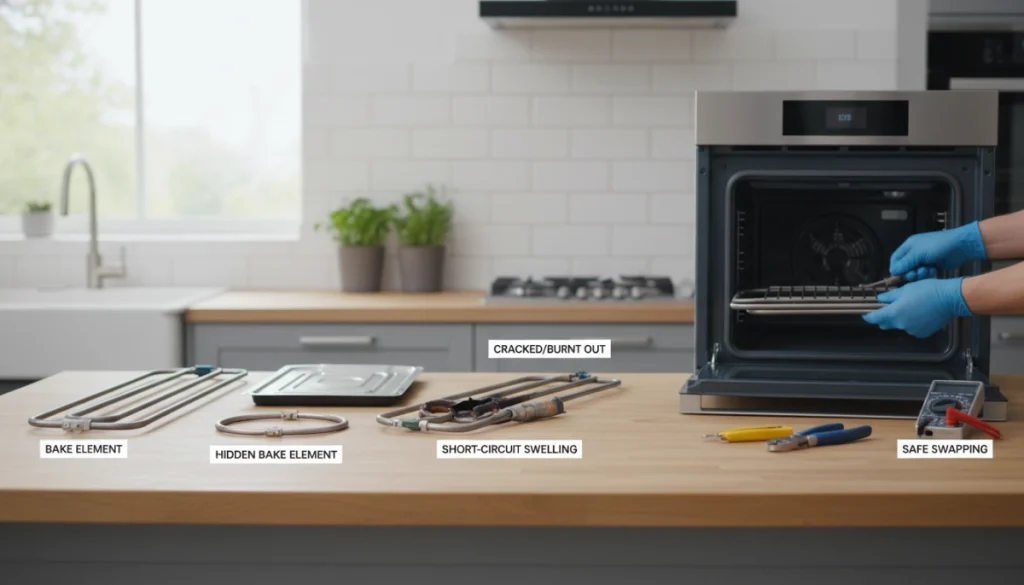
Types of Oven Heating Elements
Oven heating elements come in several types, each designed for specific functions and locations inside your oven. Here’s a quick overview to help you identify them easily:
| Element Type | Location | Function | Key Features |
|---|---|---|---|
| Bake Element | Bottom of the oven cavity | Provides consistent heat for baking and roasting | Visible coil, delivers steady bottom heat |
| Broil Element | Top of the oven cavity | Produces intense direct heat for broiling | Usually exposed, heats from above |
| Hidden Bake Element | Underneath oven floor or concealed within base | Even heat distribution with easier cleaning | Hidden, less prone to damage, improves oven look |
| Convection Element | Surrounding or near fan unit inside convection ovens | Circulates hot air evenly around food | Works with fan to improve heat circulation |
Key Differences at a Glance
- Location: Bake elements are typically at the bottom, broil at the top, hidden bake placed under the oven floor, and convection elements near the fan.
- Heat Distribution: Bake elements provide steady, radiant heat; broil elements deliver intense, direct heat; convection elements circulate hot air.
- Wattage: Broil elements generally have a higher wattage for faster, hotter heat; bake elements use moderate wattage for consistent temperature.
- Materials: Most elements use metal coils, but concealed bake and convection elements tend to have protective coverings to resist damage and aid cleaning.
Understanding these types can help you spot the right part for an oven bake element replacement or diagnose issues like broil element not working or uneven oven heating.
Signs of a Failing Heating Element
Recognizing the signs of a failing oven heating element early can save you from uneven cooking or a complete breakdown. Here’s what to watch for:
- Visible damage: Look closely for blisters, cracks, or burnt spots on the bake or broil element. These physical marks often mean the coil is compromised.
- No or partial glow: When the oven is on, the heating element should glow bright orange or red. If it stays dark or only glows in parts, that’s a sign it’s failing.
- Oven temperature issues: If your electric oven is not heating properly, takes a long time to preheat, or doesn’t reach the set temperature, the heating element may be to blame.
- Uneven cooking results: Spots that cook faster or slower, or baked goods that come out inconsistent, often point to a faulty or unevenly heating element.
- Unusual odors, noises, or sparking: Burning smells, buzzing sounds, or even sparks inside the oven can indicate electrical issues or damaged elements that need immediate attention.
If you notice one or more of these signs, it’s time to check your oven heating coil for possible failure or replacement to maintain proper oven performance. For more tips on diagnosing uneven heating problems, you might find this guide on oven not heating evenly helpful.
Common Failure Modes and Causes
Oven heating elements often fail due to thermal fatigue and burnout. Constant heating and cooling cycles cause the metal coil to weaken and eventually crack or break, especially in bake and broil elements. Over time, this natural wear leads to heating element burnout symptoms like no heat or uneven oven heating.
Physical damage is another key issue. Aggressive or abrasive cleaning can scratch or break the heating coil, reducing its effectiveness. Using harsh scrubbing pads or chemicals may cause visible cracks, blisters, or burns on the element surface.
Electrical problems are common too. Loose connections, corrosion at terminals, or power surges can interrupt the current flow, making the element stop working or glow only partially. These issues can also lead to sparking or unusual noises inside the oven.
Overheating caused by poor ventilation or thermostat malfunctions stresses the heating element. If air can’t circulate properly or the oven runs hotter than it should, the element is forced to work harder, shortening its lifespan.
Lastly, age and general wear play a big role. Most oven heating coils last between 3 to 5 years with regular use. Beyond this, even without obvious damage, elements tend to lose efficiency and will need replacement. For tips on extending the lifespan of your oven parts, check out helpful guides on extending the lifespan of your appliances to keep your oven running smoothly.
How to Diagnose a Faulty Heating Element
Before you start diagnosing any oven heating element issues, safety first: always unplug your oven or switch off the circuit breaker to avoid electrical shocks.
Next, perform a visual inspection of the element. Look closely for visible damage like blisters, cracks, or burn marks on the coil. These signs often point to a faulty oven heating coil.
If everything looks fine but your oven still has heating problems, use a multimeter to test the element’s continuity. A healthy bake or broil element usually reads between 15 and 50 ohms. Any reading outside this range suggests the element is bad and needs replacing.
When diagnosing, remember the difference between bake and broil elements:
- Bake elements are located at the bottom of the oven and heat evenly during baking.
- Broil elements are at the top and only activate during broiling.
If only the bake element fails, you’ll experience issues like long preheating times or no heat from the bottom, whereas problems with the broil element will affect the top heating and browning. Proper diagnosis helps avoid unnecessary replacements and unsafe swaps.
For detailed step-by-step checks, see this guide on how to diagnose unusual appliance problems.
Safe Swapping: Step-by-Step Guide to Replacing a Heating Element
Replacing an oven heating element can be straightforward if you follow the right steps and use the proper tools. Here’s a quick guide to help you swap out your faulty element safely.
Tools Needed
- Screwdriver (usually Phillips or flathead)
- Multimeter (for testing continuity)
- Needle-nose pliers (optional)
- Work gloves (to protect your hands)
- Replacement heating element matching your oven’s model, wattage, and size
Selecting the Correct Replacement
Always choose a heating element designed specifically for your oven model. Matching the wattage and size is key to ensuring proper heat distribution and safety. Using incorrect parts can cause uneven heating or even damage your oven. For advice on finding the perfect part, check out this guide on discovering the perfect replacement.
Removal Process
- Unplug the oven and turn off power at the breaker – Safety first.
- Remove oven racks to access the element easily.
- Unscrew the mounting plate holding the element in place.
- Carefully pull the element forward to expose the wiring terminals.
- Disconnect the wires by gently pulling or using pliers if needed—note their position for reconnecting.
Installation Steps
- Connect the wires to the terminals on your new element, ensuring tight and secure connections.
- Slide the element back into position and reattach the mounting screws.
- Replace the oven racks.
- Restore power to your oven.
Post-Installation Testing
Turn on your oven’s bake or broil setting to check if the new element glows evenly. Use a multimeter to test continuity if it does not heat properly. A healthy element typically reads between 15–50 ohms.
When to Call a Professional
If you encounter stubborn wiring issues, corrosion, or aren’t comfortable with electrical work, it’s best to get expert help. For more guidance on knowing when it’s time, see our detailed advice on when to call a professional for oven repairs.
Swapping a heating element safely can restore your oven’s performance and extend its lifespan when done right.
Compatibility and Safety Considerations
When dealing with oven heating elements, knowing the differences between bake and broil elements is crucial. Bake elements typically sit at the bottom of the oven and provide even heat for cooking, while broil elements are located at the top and deliver intense, direct heat for grilling or browning. Using one in place of the other can cause poor heating performance and damage.
| Feature | Bake Element | Broil Element |
|---|---|---|
| Location | Bottom of oven cavity | Top of oven cavity |
| Heat Distribution | Even, moderate heat | Direct, high heat |
| Wattage Range | Usually 1500–3000W | Usually 3000–4000W |
| Common Materials | Nickel-chromium wire | Nickel-chromium wire |
Using mismatched parts increases risks like electrical failure, overheating, and uneven cooking. It can also void your oven’s warranty or create safety hazards such as sparking or fire.
Always choose OEM or compatible replacement parts designed for your oven model. OEM parts ensure the right fit, wattage, and material composition, reducing the chances of premature failure or unsafe operation. For guidance on selecting the correct part and tools, consider checking a detailed tool checklist for home appliance repair.
In short: sticking with the right element type and quality replacement parts is key to safe oven operation and long-lasting performance.
Prevention and Maintenance Tips
Keeping your oven heating elements in good shape starts with regular cleaning. Avoid using aluminum foil on the bottom of the oven, as it can trap heat and cause the heating elements to burn out faster. Instead, clean spills promptly with a gentle cleaner to prevent abrasive damage to the coils.
Proper oven usage and ventilation are just as important. Make sure your oven vents are clear and fully functional to prevent overheating, which can shorten the lifespan of both bake and broil elements. Poor ventilation often leads to uneven oven heating or even element burnout.
Routine inspections go a long way. Check your oven heating element connections for looseness or corrosion periodically. A quick oven element continuity test with a multimeter can detect early signs of failure before your cooking is affected.
Finally, extend your oven heating element’s lifespan by using your oven moderately. Avoid running it at maximum heat unnecessarily and address any issues right when they appear. Early fixes help prevent more costly heating coil failures down the line.
For extra guidance on cleaning and maintenance, check out detailed advice on cleaning and maintaining oven parts to keep your appliance running safely and efficiently.
FAQ Section: Oven Heating Elements
Can I use a broil element as a bake element?
No, broil and bake elements are designed differently in terms of size, wattage, and heat distribution. Using a broil element as a bake element can cause uneven cooking and may damage your oven. It’s important to replace elements with the correct type to avoid issues.
What is the typical lifespan of an oven heating element?
Most oven heating elements last between 3 to 5 years depending on usage, maintenance, and oven model. Frequent overheating and poor ventilation can shorten this lifespan, while regular care can help extend it.
Is it safe to repair a damaged heating element?
Repairing a damaged element is generally not recommended due to safety risks like electrical shocks or fire hazards. Replacing the faulty element entirely with an OEM or compatible part ensures safe and reliable oven operation.
What should I do if my oven still has no heat after replacing the element?
If you’ve done an oven bake element replacement and still get no heat, check:
- Proper installation and wiring connections
- Oven thermostat and control board functioning
- Power supply issues
Sometimes, problems can stem from other oven components beyond the element itself. For a detailed troubleshooting guide, viewing this troubleshooting an oven that won’t heat properly can be very helpful.
What’s the difference between hidden and exposed heating elements?
Hidden bake elements are tucked under the oven floor, making cleaning easier and improving oven appearance. Exposed elements sit openly at the bottom and are easier to replace but can accumulate debris faster. Both types function to produce heat but may differ slightly in heat distribution and maintenance needs.
By understanding these common questions and answers, you can better maintain your oven and ensure safe, efficient heating element swaps when needed.