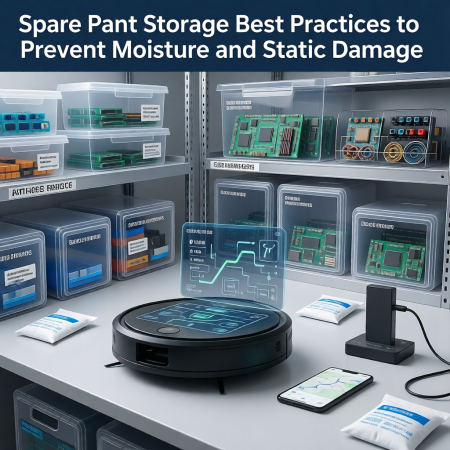
Understanding the Risks: Why Moisture and Static Are Major Threats
When storing spare parts, moisture and static electricity are two major threats that can lead to costly damage. Moisture causes corrosion, oxidation, mold growth, and general degradation of metal and electronic components. Even small amounts of humidity can trigger corrosion that weakens parts and shortens their lifespan. In electronics, moisture accelerates oxidation, which damages circuits and connections, while mold can affect insulation and non-metal parts.
Static electricity is another silent enemy, especially for sensitive components. Electrostatic discharge (ESD) can instantly ruin integrated circuits, semiconductors, and other delicate electronics. Static builds up easily in dry, unregulated environments or through poor handling. Without proper ESD protection storage, spare parts remain highly vulnerable.
Several factors increase these risks, including high relative humidity, poor packaging, and careless handling. Packaging that fails to seal out moisture or static, combined with environments lacking humidity control and ESD-safe materials, leaves inventory exposed. Industries like manufacturing, automotive, electronics, and heavy equipment rely heavily on reliable spare parts. Damage from moisture and static translates to operational downtime, increased maintenance costs, and loss of trust in quality.
Understanding these risks is the first step toward protecting your inventory with the right climate-controlled inventory solutions, moisture barrier bags, anti-static packaging, and proper handling practices.
Ideal Storage Environment Conditions
Creating the right storage environment is key to protecting spare parts from moisture and static. Ideally, maintain a stable temperature between 18°C and 24°C (65°F to 75°F). Humidity should stay within 30% to 50% relative humidity to minimize moisture risks like corrosion and oxidation. Fluctuating temperatures or high humidity can cause condensation, accelerating damage and increasing static buildup.
Consistent conditions help prevent sudden moisture absorption and electrostatic discharge (ESD) events. Proper ventilation and airflow are also essential—they reduce stagnant air pockets where humidity can rise and help control temperature evenly across the storage area. Using a climate-controlled inventory system or dry cabinet storage supports maintaining these stable conditions.
By managing temperature, humidity, and airflow carefully, you’ll significantly reduce the risk of moisture and static damage, ensuring your spare parts stay in good shape until needed. For more on managing moisture risks in storage, see practical tips on managing water leaks and moisture control techniques.
Best Practices for Moisture Prevention
Keeping spare parts dry is essential to prevent corrosion, oxidation, and mold. Here are the best practices to protect your inventory from moisture:
- Use moisture barrier bags and vacuum-sealed packaging to create tight seals that block humidity. Including desiccant packets like silica gel inside these packages helps absorb any residual moisture.
- Store parts in dry cabinets or use dehumidifiers to maintain low humidity levels in your storage area. This climate-controlled inventory approach significantly reduces moisture risks.
- Always keep spare parts in sealed containers, and avoid placing them directly on the floor where they can absorb moisture or get contaminated.
- Monitor humidity levels with indicator cards or sensors to quickly spot any moisture buildup before it damages components.
- For parts that have been exposed to moisture, baking them at recommended temperatures can remove moisture safely and prevent further degradation.
Following these moisture prevention steps ensures your spare parts remain in top condition, ready for use when needed. For a closer look at practical storage setups, check out guides on household appliance parts storage which often face similar moisture challenges.
Best Practices for Static Electricity Prevention (ESD Protection)
Preventing static electricity is crucial in spare part storage, especially for sensitive electronics and components prone to Electrostatic Discharge (ESD) damage. To keep your inventory safe, use anti-static bags, conductive bins, and ESD-safe shelving to minimize static buildup. Grounding plays a key role—install grounding mats, wrist straps, and use conductive flooring where possible to safely discharge static.
Avoid storing parts near materials that generate static, like certain plastics or synthetic fabrics. For packaging, choose static shielding bags and cushioning foam designed for ESD protection to shield components effectively.
Equally important is staff training. Ensure your team is familiar with ESD-safe handling procedures to prevent accidental damage during movement and maintenance. This combined approach creates a robust defense against static risks, safeguarding your spare parts and preserving their reliability.
Packaging and Organization Strategies
Keeping spare parts well-packaged and organized is key to preventing moisture and static issues. Whenever possible, retain original factory packaging because it’s designed to provide optimal protection, especially with built-in moisture barrier bags or anti-static packaging. If original packaging isn’t available, use vacuum-sealed spare parts bags, static shielding bags, or sealed containers to maintain the right environment.
Label each part clearly with essential details like part numbers, manufacturing dates, and sensitivity level to both moisture and static. This helps quickly identify the right components and their storage requirements, reducing handling mistakes.
Organize your inventory using bins, racks, or clearly marked zones to keep parts tidy and accessible. This setup improves airflow and decreases the risk of damage from overcrowding or floor contact. Using ESD-safe bins and shelving in designated areas further reduces static risks.
Lastly, apply the FIFO (First-In, First-Out) rotation method to ensure older parts get used first, preventing long-term storage that can lead to corrosion or static degradation. This approach supports a well-maintained, climate-controlled inventory that keeps your spare parts reliable and ready for use.
For practical insights into efficient storage and handling, check detailed guides on maintaining appliances and their parts like this refrigerator door seal guide.
Monitoring, Maintenance, and Common Mistakes to Avoid
Regular monitoring and maintenance are essential to keep your spare part storage safe from moisture and static issues. Conduct frequent inspections and audits to catch early signs of corrosion, oxidation, or ESD damage. Using data loggers and automated alerts can help track temperature and humidity levels in your climate-controlled inventory, ensuring optimal conditions at all times.
Be cautious about common mistakes such as overstacking parts, exposing them to direct sunlight or excessive heat, and mishandling items during storage or retrieval. These habits increase risks like moisture buildup and static electricity, which can lead to premature part failure. Always follow vendor guidelines carefully and apply recommended recovery steps promptly if parts show damage.
For best results, incorporate relative humidity monitoring devices and stick to proper MSD storage guidelines to prevent costly issues. Proper care will extend the life of your spare parts and improve overall reliability.
Additionally, if you deal with appliance components, checking troubleshooting guides such as those for maintaining ovens or ice makers can provide tailored tips for preserving sensitive parts in storage. For example, the guide on fixing ice maker issues in home appliances offers insights that are useful for managing moisture in spare parts related to refrigeration components.



Leave a Reply