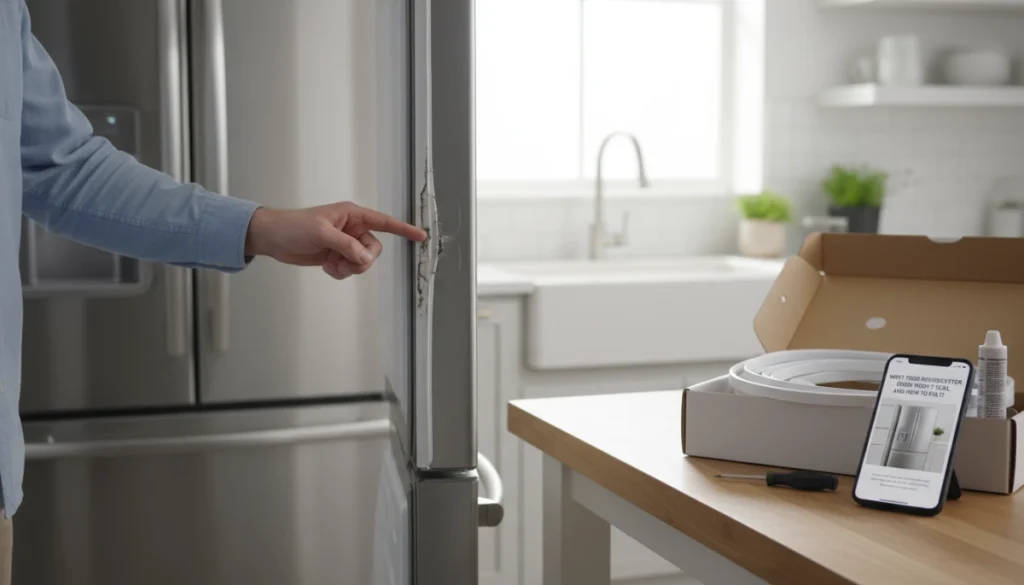
How to Test If Your Refrigerator Door Seal Is Faulty
A faulty fridge door seal can cause cold air to escape, wasting energy and spoiling food. Luckily, you can easily test your refrigerator gasket at home with simple tools.
Step-by-Step Dollar Bill Test
- Close the Refrigerator Door on a Dollar Bill: Place a dollar bill or any paper halfway inside the door seal.
- Pull the Bill Gently: Try to pull it out slowly. If it slides out easily without resistance, that spot on the gasket isn’t sealing properly.
- Repeat Around the Door: Test several spots on both the fridge and freezer doors—top, middle, and bottom—to find all weak areas.
Alternative Flashlight Test
If you have a flashlight, try this quick check:
- Turn Off the Kitchen Lights: Close the fridge door and shine a flashlight inside the fridge while the door is closed.
- Look for Light Escaping: If you see light leaking around the door edges, your seal is likely damaged or worn.
Test Multiple Spots on Both Doors
Don’t forget to check both the refrigerator and freezer doors separately. Both gaskets wear differently due to temperature and usage. Testing all around each door ensures you catch any broken or worn spots early.
These DIY checks help you confirm if your fridge door seal is the problem before moving on to fixes or replacements.
Common Causes of a Poor Refrigerator Door Seal
If your fridge door seal isn’t working right, it usually comes down to a few common issues:
- Dirty or Sticky Gasket: Food spills, grease, and dust can build up on the refrigerator gasket, stopping it from making good contact with the fridge body. This blocks the magnetic fridge door seal from sticking properly.
- Deformed or Compressed Gasket: Over time, the rubber on the door gasket can lose shape, especially in the corners. A compressed or misshapen gasket won’t seal tightly, letting cold air escape.
- Worn or Torn Gasket: Age and constant opening and closing can cause cracks, tears, or flattening in the gasket, leading to a worn refrigerator seal that won’t close as it should.
- Misaligned or Sagging Door: If the fridge door is sagging or misaligned due to uneven flooring, worn hinges, or overloaded door shelves, the seal won’t line up correctly, causing gaps.
- Refrigerator Not Level: When the fridge tilts forward even slightly, the door may struggle to close fully, ruining the door gasket’s seal.
- Obstructions or Overloading: Sometimes items inside the fridge or freezer block the door from shutting all the way, or heavy contents on door shelves put extra weight on the door, affecting the gasket’s pressure.
Fixing these issues usually helps restore your fridge door seal and prevents energy loss. For more detailed help on gasket replacement and fridge door alignment, you can check out reliable guides like the one on discovering the perfect replacement refrigerator door gasket.
Step-by-Step Solutions to Fix a Refrigerator Door That Won’t Seal
If your fridge door seal isn’t working right, here’s how you can fix it step by step:
-
Clean the Gasket Thoroughly
Use warm soapy water and a soft cloth or toothbrush to clean the refrigerator gasket. Grease, food residue, and dirt can prevent a tight seal, so make sure to remove all buildup.
-
Reshape a Deformed Gasket
If the door gasket is bent or compressed, gently heat it with a hair dryer on low setting or soak it briefly in boiling water. This helps the rubber regain its original shape. Just be cautious not to overheat or melt the gasket.
-
Lubricate the Gasket
Apply a thin layer of petroleum jelly or a silicone-based lubricant to the gasket. This keeps the rubber flexible and helps maintain a strong magnetic door seal.
-
Level the Refrigerator
Use a spirit level to check if your fridge is properly balanced. Adjust the front feet if needed. A tilted fridge can stop the door from closing fully.
-
Adjust Door Alignment
Tighten any loose hinges and add washers if the door is sagging or out of alignment. Proper fridge door alignment ensures an even seal all around.
-
Replace the Gasket if Damaged
If the gasket has cracks, tears, or permanent flattening, replacement is the best option. Order the correct door gasket for your model and follow the manufacturer’s guide for installation. For extra tips on gasket replacement and appliance part troubleshooting, check out this detailed guide on troubleshooting freezer parts.
Following these steps can restore a worn refrigerator seal and improve your fridge’s efficiency by preventing cold air loss.
Preventive Maintenance Tips for Your Refrigerator Door Seal
Keeping your fridge door gasket clean and well-maintained is key to preventing seal problems down the line. Here’s what I recommend:
- Clean the gasket regularly with warm, soapy water and a soft cloth to remove dirt, grease, and food residue. This stops stickiness and helps the magnetic door gasket stick properly.
- Avoid slamming the fridge door or overloading door shelves. Excess weight or impact can wear out the gasket faster and cause misalignment.
- Check your refrigerator leveling once a year. A fridge that isn’t level can cause the door gasket to lose its seal, leading to cold air leaks and higher energy bills.
- Keep the condenser coils clean by dusting or vacuuming them periodically. Cleaner coils help your fridge work efficiently, which indirectly supports optimal door sealing.
Following these simple steps can save you from costly repairs and keep your fridge running smoothly longer. For more DIY fridge repair tips, check out essential advice on maintaining appliance parts effectively.
When to Call a Professional Technician
Sometimes, a fridge door seal problem isn’t something you can fix with simple DIY steps. Here’s when it’s best to call a professional technician:
- Bent Frame or Door: If the fridge door frame is warped or bent, it can stop the door gasket from sealing properly. This usually needs expert repair or part replacement.
- Broken or Loose Hinges: Worn-out hinges or ones that are loose can cause the fridge door to sag, creating gaps that a gasket can’t close. A technician can realign or replace these parts safely.
- Persistent Gaps Despite Fixes: If you’ve cleaned, adjusted, and replaced gaskets but still notice gaps or a door that won’t close fully, it might be an internal issue needing professional diagnosis.
- Electrical or Cooling Problems: Sometimes, seal problems come alongside fridge cooling issues caused by the door not sealing right. If you notice frost buildup, water leaks, or rising temperatures, it’s smart to get an expert involved.
Also, check your warranty status before attempting any door gasket replacement or major repairs yourself. Some repairs may void your warranty or be covered by the manufacturer, saving you time and money.
Getting professional help ensures the job is done correctly, helping your fridge door seal tight and keeping your energy bills down.
Frequently Asked Questions
Why does the freezer door seal worse than the fridge door?
Freezer door gaskets tend to wear out faster because they deal with colder temperatures and frost buildup. The constant freeze-thaw cycle can make the rubber stiffer and less flexible, causing a weaker fridge door seal compared to the fridge section.
How does a bad refrigerator door seal affect my electric bill?
A worn refrigerator gasket lets cold air escape, forcing your fridge to work harder to keep cool. This wastes energy and spikes your electric bill. Fixing a faulty fridge door seal can save money and improve efficiency.
What’s the typical lifespan of refrigerator gaskets?
Most fridge door gaskets last around 5 to 10 years. Over time, they lose elasticity, crack, or get damaged, which leads to poor sealing. Regular cleaning and maintenance can extend their life.
Is Vaseline safe for gasket lubrication?
Using petroleum jelly like Vaseline on your fridge door seal is generally safe and can help maintain flexibility. However, avoid over-applying it, as too much can attract dirt and cause buildup.
How do I address localized seal failures found by the dollar bill test?
If the dollar bill slips easily in just one or two spots, clean those areas thoroughly first. If that doesn’t help, try reshaping the gasket with warm water or a hair dryer. Persistent issues may mean the gasket needs partial or full replacement.
Is it safe to heat the gasket with a hair dryer?
Yes, cautiously heating a deformed refrigerator gasket with a hair dryer helps soften the rubber and restore its shape. Keep the dryer moving and don’t hold it too close or too long to avoid damage.
By understanding these common concerns and how they relate to your fridge door seal, you can keep your refrigerator working efficiently and avoid costly repairs.