Understanding Refrigerator Failures – Key Causes
Ever wondered why your fridge suddenly stops cooling or starts leaking water? Refrigerator failures often come down to a few common causes. The biggest culprits are wear from daily use, power surges, dirt buildup, refrigerant problems, and poor maintenance. Over time, parts wear out or get clogged, leading to issues like noisy operation, ice buildup, or a fridge that just won’t keep your food cold.
Here’s a quick symptom guide to help spot common problems:
- Not cooling properly: Could point to evaporator fan motor failure, compressor issues, or refrigerant leaks.
- Water leaks: Often caused by a clogged water inlet valve or a cracked door gasket.
- Unusual noises: Usually linked to worn-out fans, motors, or compressor start relay faults.
- Ice buildup: Typically the result of defrost system problems like a faulty defrost heater or timer.
Wondering when to roll up your sleeves and try a DIY fridge repair, or when to call in a pro? Small fixes like replacing a water filter or cleaning condenser coils are doable at home. But for complex issues — like compressor or refrigerant troubles — it’s safer and more effective to get professional help. Knowing these basics can save you time, money, and a lot of fridge frustration.
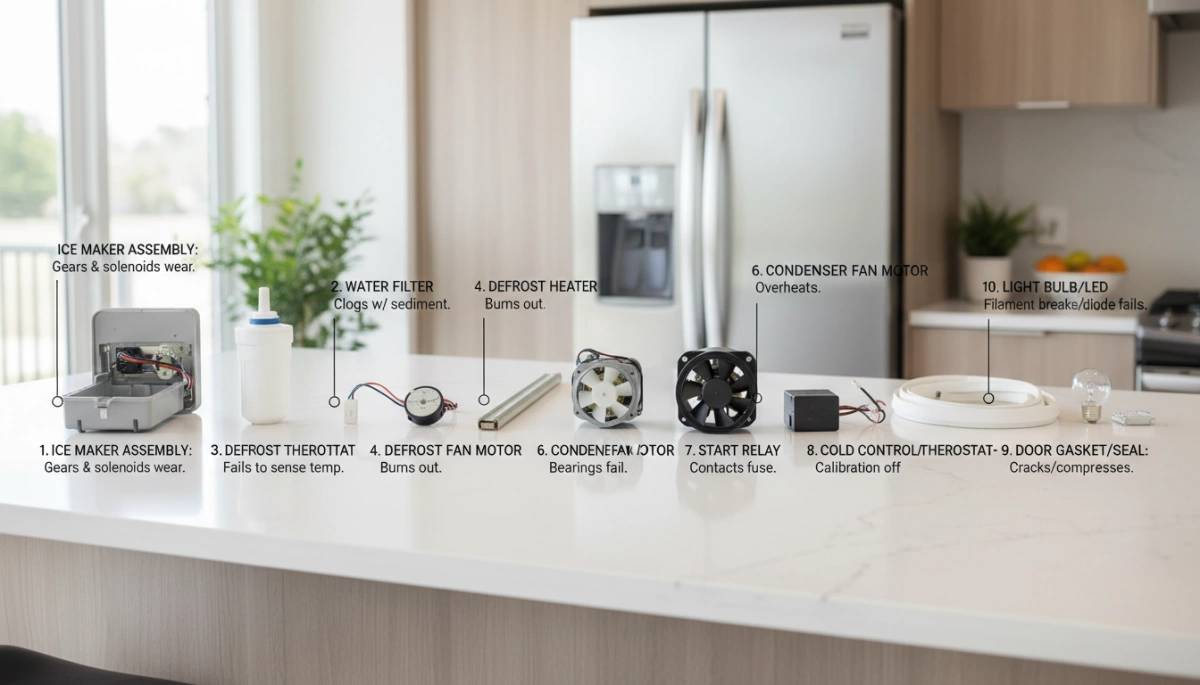
The Top 10 Most Frequently Replaced Refrigerator Parts
When it comes to common refrigerator repairs, certain parts tend to fail more often due to everyday use and wear. Here’s a quick rundown of the top 10 most frequently replaced fridge components and why they usually break down:
-
Water Filter
Mineral buildup clogs the filter over time, leading to poor water or ice quality and sometimes stopping the water flow altogether. Replacing the water filter every six months helps avoid common water inlet valve issues and keeps ice makers running smoothly.
-
Door Gasket/Seal
The seal can wear out, crack, or lose its magnetic grip after constant opening and closing. This causes air leaks that make your fridge work harder, reducing efficiency and increasing energy costs. A worn gasket is a common reason for a fridge not cooling properly.
-
Evaporator Fan Motor
Bearings in the fan motor can fail, or the motor can burn out. When this happens, you might notice unusual noises or that the fridge section gets warm while the freezer stays cold. Replacing a faulty evaporator fan motor often fixes these symptoms.
-
Ice Maker Assembly
Ice makers can freeze up, have motor jams, or develop mold from moisture. These issues cause no ice production or water leaks. Troubleshooting ice maker problems is a frequent part of fridge repairs and might need professional help. For detailed fixes, check out resources on fixing ice maker issues in home refrigerators.
-
Water Inlet Valve
This valve can clog with minerals, fail electronically, or leak, stopping water supply to the ice maker and water dispenser. A failing valve is often behind water flow problems and ice maker dysfunction.
-
Defrost Heater/Thermostat/Timer
These parts control the defrost cycle and stop frost buildup. When they fail, ice piles up on evaporator coils, causing poor cooling and higher energy use. Problems with the defrost system are a tried-and-true cause of constant running or poor fridge temperature control. For guidance, see tips on how to defrost a freezer manually.
-
Condenser Coils/Fan
Dust and dirt on condenser coils or a broken fan cause the fridge to overheat and run non-stop. Regular condenser coil cleaning is key to preventing compressor overload and keeping your fridge energy-efficient.
-
Start Relay/Capacitor (Compressor-related)
Electrical wear on the start relay or capacitor prevents the compressor from starting, stopping the fridge from cooling. This part is crucial because without it, the compressor won’t run at all.
-
Thermistor/Temperature Sensor
Over time, these sensors lose accuracy, leading to inconsistent temperatures inside the fridge or freezer. You might see food freezing unexpectedly or spoilage due to erratic temperature control.
-
Door Bins/Shelves/Crisper Drawers
Though mostly cosmetic, these components often break from drops or normal wear. Replacing cracked bins or drawers helps keep your fridge organized and functioning properly.
Knowing these common fridge breakdowns helps you diagnose problems faster and decide whether it’s a simple DIY fix or time to call a pro. Regular maintenance on these parts can prevent costly repairs and keep your refrigerator running smoothly.
Prevention and Maintenance Tips
Keeping your fridge in top shape starts with regular maintenance. Here’s a simple routine to follow:
- Clean condenser coils yearly to remove dust and dirt buildup. Dirty coils force your fridge to work harder, wasting energy and causing common fridge breakdowns. For a straightforward cleaning guide, check out this DIY guide to cleaning refrigerator coils.
- Replace the water filter every 6 months to avoid clogs and maintain good water quality. A clogged filter affects both water and ice dispenser performance.
- Inspect and clean door gaskets regularly. Worn or cracked seals let cold air escape, making your fridge inefficient and increasing power bills.
- Avoid overloading door bins and shelves to prevent damage and ensure proper door closure.
- Defrost manually if needed when you notice ice buildup despite an automatic system, as defrost system problems can cause uneven cooling.
When to Repair vs. Replace
Not every fridge issue calls for a new appliance. If repairs are frequent, costly, or the fridge is over 10-15 years old, consider replacement for better energy efficiency and reliability. Otherwise, timely fixes like thermostat replacement or fixing a noisy evaporator fan motor can extend your fridge’s life.
Save Energy with Proper Upkeep
Regular maintenance not only prevents fridge not cooling fix scenarios but also reduces energy consumption. Clean coils and good door seals mean your fridge doesn’t have to run constantly, saving on electricity bills and reducing wear on key components like the compressor start relay.
Sticking to these maintenance tips keeps your fridge running efficiently, helps you avoid costly repairs, and supports energy savings over time.



Leave a Reply