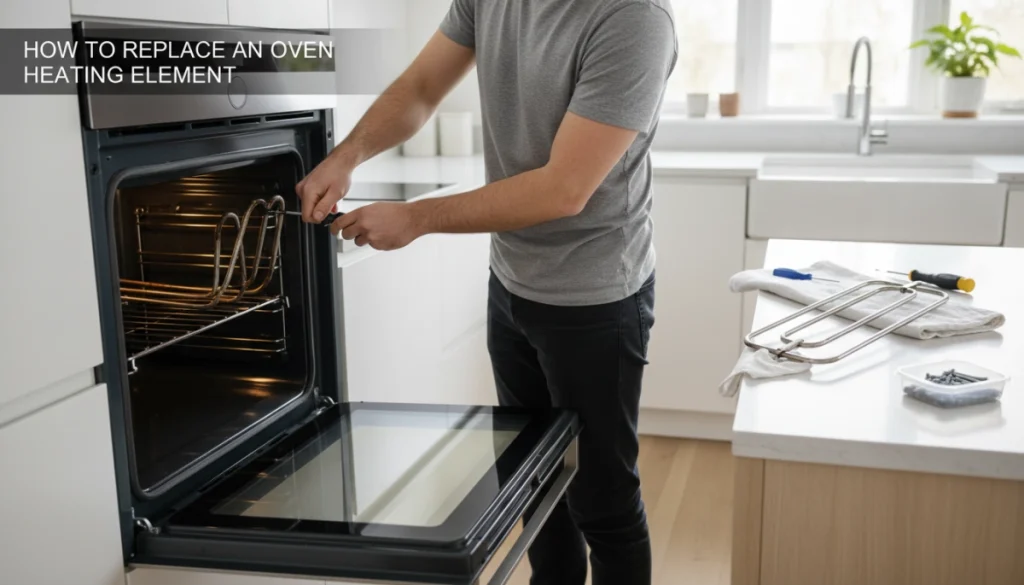

Signs of a Faulty Oven Heating Element
Is your oven not heating properly? A bad heating element is often the culprit. Here are the clear signs to watch for:
- Oven not reaching the right temperature or heating slowly: If your oven takes much longer than usual to heat or doesn’t get hot enough, the bake element may be failing.
- Uneven baking results: Food baking unevenly or burning in spots can indicate that the heating coil isn’t working consistently.
- Element not glowing red when preheated: Normally, the electric oven heating coil glows red as it heats up. If it stays dark, the element might be burnt out.
- Visible damage on the element: Look for blisters, cracks, breaks, or burn marks on the heating element. These are clear signs it’s time for a replacement.
- Burning smell during oven use: A strange burning odor suggests the element is damaged or shorting out.
Spotting these signs early helps avoid uneven oven heating or complete failure. Next, we’ll cover safety precautions before you start your oven bake element replacement.
Safety Precautions Before Starting
Before you begin any oven bake element replacement, safety is key. Always start by turning off the power at the circuit breaker to avoid any risk of electric shock. Double-check that the power is truly off by using a voltage tester on the oven’s wiring. Never skip this step when working with an electric oven heating coil.
Make sure the oven has cooled down completely—this prevents burns and makes handling easier. Wearing gloves is a smart move, not only to protect your hands but also to keep oils and dirt off the new heating element, which can affect its performance. Finally, work in a well-lit area with stable footing to avoid accidents and ensure you can clearly see connections and screws as you go. Keeping these safety tips in mind will help you safely replace a faulty oven heating element without issues.
Tools and Materials You’ll Need
To replace a faulty oven heating element safely and efficiently, gather the right tools and materials before you start. Here’s what you’ll need:
- Phillips or 1/4-inch nut driver screwdriver: Most oven bake element replacements use these screws, so having both options covers common types.
- Multimeter for continuity testing: Essential for checking if the heating coil is actually broken before replacement.
- Replacement heating element: Make sure it exactly matches your oven model to avoid fit or wattage issues.
- Work gloves: Protect your hands and keep oils off the new element, which can shorten its life.
- Flashlight: Good lighting helps you see screws and wiring clearly inside the oven.
- Optional tools: Needle-nose pliers can help disconnect wires carefully, and using your phone to take photos of connections ensures you reconnect everything correctly.
Having these tools handy will make your oven bake element replacement smoother and safer, especially when testing and disconnecting oven wires.
How to Confirm the Heating Element is Faulty
First, start with a visual inspection. Remove the oven racks to get clear access to the heating element. Look closely for obvious signs like blisters, cracks, breaks, or burn marks. If the element looks damaged, that’s a strong clue it needs replacing.
Next, perform a continuity test using a multimeter. After ensuring the oven is completely disconnected from power, set your multimeter to the continuity setting or the lowest ohms scale. Touch the probes to each terminal of the heating coil. A good element will show a low resistance reading, usually between 10 and 50 ohms, indicating the circuit is complete. If the multimeter shows infinite resistance or no continuity, the heating element is faulty and won’t heat properly.
Also, keep in mind to rule out other causes for heating problems such as a broken thermostat or faulty wiring. Sometimes the oven’s uneven heating or failure to reach temperature isn’t the element itself but an electrical issue elsewhere. If your oven isn’t heating properly after confirming the element is good, further diagnosis is necessary.
For helpful guidance on testing electrical parts safely, you might find this detailed multimeter oven repair guide useful.
Finding the Correct Replacement Element
To replace a faulty oven heating element correctly, start by locating your oven’s model and serial number. These are usually found inside the oven door frame, on the back panel, or near the oven’s control panel. This information is crucial to ensure you get an exact match.
Next, check the part number on the old heating element if possible. This makes it easier to find the right replacement bake coil that fits your specific model. Using the wrong part can cause poor performance or may not fit securely.
You can buy replacement oven heating elements from online retailers, appliance parts stores, or directly from the oven manufacturer’s website. When purchasing, always verify that the wattage and size match the original element to maintain proper oven function and safety.
For more tips on selecting and buying parts, check out detailed guides on appliance repair and replacement.
Step-by-Step Guide to Replacing the Heating Element
Replacing a faulty oven heating element is straightforward if you follow these steps carefully:
Step 1: Shut off power and prepare the oven
Always start by turning off the power at the circuit breaker to ensure safety. Double-check with a voltage tester that no electricity is flowing to the oven. Let the oven cool completely before working on it.
Step 2: Remove oven racks and access the element
Open the oven door and take out all racks to give yourself clear access to the heating element inside.
Step 3: Unscrew the mounting bracket
Locate the screws holding the oven bake element in place, usually at the back wall of the oven. Use a Phillips or nut driver screwdriver to carefully remove these screws.
Step 4: Carefully pull out the element and disconnect wires
Gently pull the heating element out just enough to reach behind it. Before disconnecting the wires, take photos to remember the wiring setup. Then, unplug or unscrew the wires from the old element.
Step 5: Remove the old element
Fully remove the faulty heating element from the oven cavity and set it aside.
Step 6: Connect wires to the new element
Attach the wires to the matching terminals on the new replacement bake coil. Make sure connections are secure and match your photos.
Step 7: Position and secure the new element
Slide the new element back into place and screw it in with the mounting bracket you removed earlier. Ensure it is firmly positioned so it won’t move during operation.
Step 8: Reassemble and restore power
Put the oven racks back in and close the door. Turn the power back on at the breaker. Your oven is ready for testing.
Following these steps carefully will help you safely and effectively fix an electric oven heating coil. This DIY oven element fix can save time and money compared to calling a repair service.
Testing the New Heating Element
Once you’ve installed the replacement heating element, it’s important to test it properly to make sure everything works right.
- Start with a low-temperature test: Turn the oven on to a low setting, like 200°F (90°C). Watch closely to see if the element glows evenly red. This is a good sign the element is heating properly without any hot spots or cold areas.
- Check for even glowing: The electric oven heating coil should glow all across its surface. Uneven glow can mean a problem with the element or poor connections.
- Run a full preheat cycle: After the low test, set the oven to a higher temperature and let it preheat fully. Confirm it reaches the set temp faster and more reliably than before.
- Monitor for unusual smells or sparks: If you notice any burning smells or see sparks, immediately turn the oven off and double-check the wiring. This could signal a wiring issue or a faulty element.
Testing your new bake coil like this helps avoid common problems and confirms your repair is a success. If everything looks and feels right, you’re good to go!
Common Issues and Troubleshooting After Replacement
Sometimes, even after replacing the oven heating element, problems can stick around. Here’s what to watch for and how to troubleshoot common issues:
-
Oven still not heating
Check for loose connections first—wires can come undone when swapping the element. Make sure you installed the replacement bake coil correctly and it matches your model. If everything looks good but the oven won’t heat, the problem might be elsewhere, like a faulty thermostat or wiring.
-
Element not glowing evenly
A properly working electric oven heating coil should glow red all over. Uneven glowing could mean the new element is defective or damaged during installation. Double-check connections and that the element fits snugly in place.
-
Tripped breaker during testing
If the circuit breaker trips when you turn on the oven after replacement, there might be a short in the new element or wiring issues. Disconnect power immediately to avoid electrical hazards. Inspect for exposed wires or damaged insulation.
-
When further diagnosis is needed
If these basic fixes don’t solve your oven not heating properly issue, it’s time to dig deeper or call a professional. Electrical problems beyond the element replacement can be complex and unsafe to DIY.
Keeping an eye on these common issues can save time and help ensure your oven bake element replacement actually gets your oven back to normal.
When to Call a Professional
Sometimes, replacing a faulty oven heating element yourself just isn’t the best option. Here’s when you should call in a pro:
- Gas ovens or complex wiring: If you have a gas oven or your electric oven’s wiring looks complicated, it’s safer to leave it to an expert to avoid risks like gas leaks or electrical hazards.
- No improvement after replacement: If you replace the heating element but the oven still isn’t heating properly, the problem might be more than just a bad heating coil. A professional can diagnose issues like faulty thermostats or wiring problems.
- Signs of broader electrical issues: Frequent tripped breakers, sparks, or burning smells aren’t normal. These could mean bigger electrical problems that need expert attention.
- Lack of comfort with electrical work: If you’re not confident working with oven electrical parts or testing element continuity, it’s best not to risk it. Safety first—get a qualified technician to handle the repair.
Calling a pro ensures your oven is fixed right and safe, especially when the job goes beyond a simple oven bake element replacement or broil element repair.
FAQs About Oven Heating Element Replacement
How long do oven heating elements typically last?
Most oven heating elements last between 5 to 10 years, depending on use and oven type. Frequent heavy baking or broiling might shorten their lifespan.
Can I replace the broil element the same way?
Yes, the broil element replacement is similar to the bake element replacement. The process involves turning off power, removing the old element, and installing a new one matched to your oven model.
Is it safe to use the oven if the element is damaged?
Using an oven with a faulty or damaged heating element isn’t safe. It can cause uneven heating, electrical issues, or even sparks. It’s best to replace the bad heating element before using the oven.
How much does a replacement element cost?
Replacement heating elements usually range from $20 to $60, depending on your oven model and where you buy it. Buying online or at appliance parts stores often gives you a good price and selection of the right replacement bake coil.
What if my oven is built-in and hard to access?
Built-in ovens can be trickier to work on. If accessing the oven element is difficult, consider getting a professional to help. Safety and proper installation are key, especially in tight spaces or complex wiring setups.
Replacing an oven bake element or broil element fix is doable on your own with the right tools and safety steps, but knowing when to call a pro matters for built-in or electrical challenges.