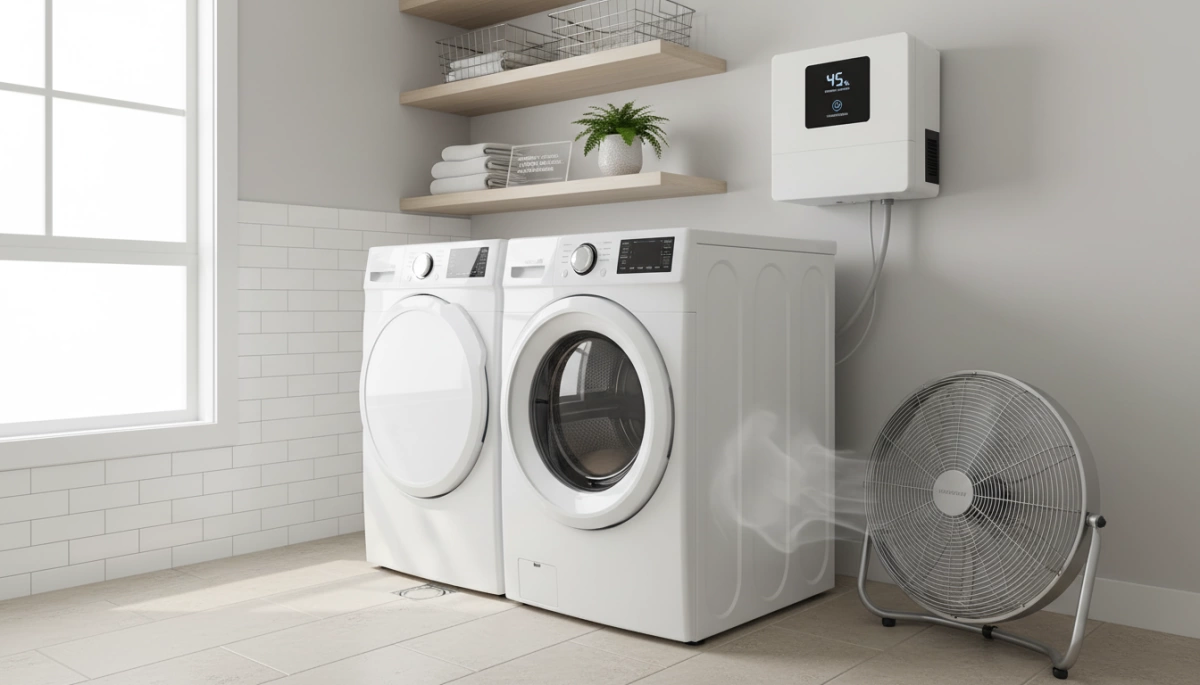
If your laundry room feels like a steam chamber after every wash, you’re not alone—and that excess moisture is far more than just annoying. Humidity control in laundry rooms is crucial for protecting motor lifespan in washers and dryers, preventing costly breakdowns from corrosion, shorts, and moisture buildup. In this post, you’ll discover why your laundry space traps so much humidity and exactly what you can do—fast and affordably—to keep your appliances running longer and smoother. Let’s cut through the moisture and get straight to solutions that save you time, money, and hassle.
Why Laundry Rooms Become High-Humidity Zones
Laundry rooms are prime spots for high humidity, and it’s no surprise why. Wet clothes release moisture into the air during washing and drying cycles—this evaporation instantly raises the humidity level. Plus, if your dryer vent has leaks or it’s unvented, moist air gets trapped instead of being funneled outside, making things even worse. Poor airflow adds another layer to the problem, allowing moisture to linger and build up over time.
Certain setups make humidity problems a lot worse. Basement laundry rooms, for example, naturally hold more moisture due to their location below ground. Enclosed spaces without windows or ventilation fans also trap humidity, creating a damp environment perfect for mold and corrosion.
Seasonal and regional factors play their part too. In humid climates or during rainy months, outdoor moisture sneaks inside, increasing indoor humidity. Even colder seasons can cause condensation inside laundry rooms if vents and airflow aren’t adequate—leading to persistent dampness.
Understanding these sources and setups helps us tackle laundry room humidity head-on and protect your appliances from moisture damage.
How Excess Humidity Damages Appliance Motors
High humidity in laundry rooms can seriously harm appliance motors over time. Moisture leads to corrosion and rust on crucial metal parts like motor housings and windings. This corrosion weakens the motor’s structure and can cause parts to seize or fail unexpectedly.
Condensation inside washers and dryers also creates risks of electrical shorts and control board failures, interrupting the appliance’s normal operation. When water collects on sensitive electronics, it can cause malfunctions or permanent damage.
Moisture can interfere with motor function, contributing to overheating and reduced efficiency. Wet components don’t run as smoothly, which forces motors to work harder and use more energy.
All these problems add up to shortened lifespan, more frequent breakdowns, and higher energy bills. Common failure points in washers and dryers include motor bearings, windings, and electrical connections—all vulnerable to damage from persistent humidity.
Addressing washer dryer humidity damage early is key to avoiding costly repairs and longer downtime. For tips on extending the lifespan of your home appliances under humid conditions, check out our guide on extending the lifespan of your appliances.
Ideal Humidity Levels for Laundry Room Appliances
Maintaining the right humidity level in your laundry room is key to protecting your washer and dryer motors. The recommended range is between 30-50% relative humidity. Staying within this range prevents excess moisture from causing rust, corrosion, and electrical issues in your appliances.
Why this range? At 30-50%, you reduce the risk of condensation forming on motor windings and control boards, keeping them dry and functioning well. Moisture levels above 50% increase the chances of appliance motor corrosion and can lead to mold growth, which affects both your machines and your home’s air quality.
Watch for signs your laundry room humidity is too high:
- Foggy windows or mirrors near the laundry area
- A persistent musty smell indicating mold or mildew build-up
- Visible mold spots on walls, ceilings, or even on your washer and dryer
Keeping an eye on these signs helps you avoid costly repairs and keeps your laundry appliances running longer. For more on controlling moisture around your home appliances, you might find helpful tips in articles about appliance thermostat issues that also touch on how humidity affects electronics.
Measuring and Monitoring Humidity
Keeping an eye on humidity levels in your laundry room is key to protecting your appliances from moisture damage. The best tools for this job are hygrometers, smart sensors, and app-connected monitors. These devices give you real-time data on relative humidity appliances face, helping you act before it gets too high.
For accurate readings, place your humidity monitor about waist height—away from direct heat sources, vents, or windows. Avoid corners where moisture might collect unevenly. Check readings during and after wash or dry cycles to catch spikes caused by evaporation or dryer vent moisture control issues.
Aim to set a baseline by observing typical daily humidity levels. If your monitor consistently shows above 50% relative humidity, that’s a red flag. You might notice signs, too: foggy windows or a musty smell are common indicators your laundry room humidity exceeds safe levels.
By regularly measuring and monitoring humidity, you can better manage moisture and prevent washer dryer humidity damage before it affects motor lifespan. For maintaining appliances, following detailed cleaning and maintenance tips like in this DIY guide to cleaning refrigerators can also help reduce moisture-related failures.
Proven Strategies for Humidity Control
Controlling humidity in your laundry room is key to protecting your appliance motor lifespan. Here’s how to tackle it effectively:
Improve Ventilation
- Proper Dryer Venting: Ensure your dryer vent is securely connected and leads outside. A blocked or leaking vent can cause moisture to build up, increasing the risk of washer dryer humidity damage.
- Exhaust Fans: Installing a strong exhaust fan helps pull excess moisture out of the room, especially in basement laundry humidity setups where air can be stagnant.
- Windows: If possible, open windows during laundry cycles to increase airflow and reduce relative humidity appliances face.
Use a Dehumidifier
- Types: Choose between refrigerant or desiccant dehumidifiers based on your room size and temperature.
- Sizing Guide: A larger room or high moisture load requires a more powerful laundry room dehumidifier to maintain ideal laundry room humidity levels.
- Placement: Position it near the washer and dryer or in a central spot with good airflow.
- Maintenance: Clean filters and empty water tanks regularly for optimal performance.
Quick Fixes
- Run ceiling or portable fans during and after wash cycles.
- Wipe down wet surfaces quickly to prevent condensation washer dryer issues.
- Leave laundry room doors open to allow moisture to disperse into the rest of your home.
Advanced Solutions
- Consider whole-home integration systems that control humidity throughout your house, including the laundry area.
- Automated sensors can trigger exhaust fans or dehumidifiers only when needed, saving energy while maintaining moisture control.
These proven strategies not only reduce appliance motor corrosion and related failures but also help prevent mold prevention laundry appliances need to stay in top shape. For more on appliance maintenance, check out the detailed tips on common causes of water leaks in appliances.
Preventive Maintenance to Safeguard Motors
Keeping your laundry room’s humidity in check means regular preventive maintenance is a must to protect your washer and dryer motors from damage. Start with regular inspections to spot leaks, vent clogs, or worn seals that can trap moisture and worsen humidity. Check dryer vents often to avoid blocked airflow, a common cause of moisture buildup and overheating.
Develop simple cleaning routines for both the appliances and the laundry space. Wipe down surfaces and clean lint traps consistently to stop mold growth and reduce dampness around your units. Don’t forget to clean exhaust fans and vents, which help control dryer vent moisture and keep the room ventilated.
Take extra steps like using elevated platforms to keep washers and dryers off cold floors, reducing condensation risks. Consider installing moisture barriers or applying rust inhibitors on metal parts to prevent appliance motor corrosion caused by persistent humidity. These simple precautions go a long way in extending the lifespan of your washing machine motor and dryer components while maintaining ideal laundry room humidity.
Benefits Beyond Motor Protection
Controlling humidity in your laundry room does more than just protect appliance motors. Here’s how it pays off in the long run:
| Benefit | Details |
|---|---|
| Longer Appliance Lifespan | Less moisture means less corrosion and fewer breakdowns, saving on repair costs. |
| Healthier Home Environment | Reduced mold, mildew, and allergens help keep your home fresh and safe. |
| Energy Savings | Dryers work faster and more efficiently, cutting energy use and utility bills. |
Maintaining the ideal laundry room humidity also helps prevent typical issues like washer dryer humidity damage and mold prevention laundry appliances problems. This not only extends your appliance’s life but keeps your whole home environment healthier.
For tips on avoiding appliance troubles related to electrical parts, check out the vital role of thermostatic controls, which are often affected by moisture issues in laundry setups.



Leave a Reply