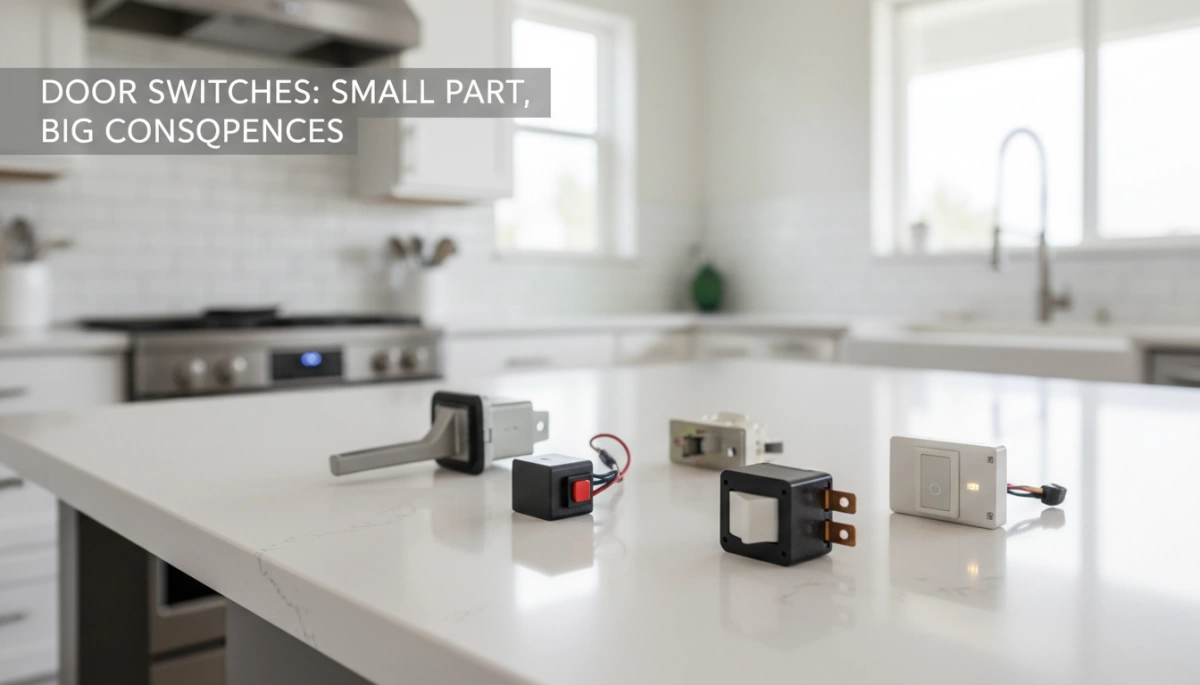
What Are Door Switches and How They Work?
Door switches are small but essential components found in many household appliances. They act as safety and control devices that detect whether an appliance door or lid is open or closed. These switches ensure the appliance operates correctly, preventing accidents and damage.
There are several common types of door switches:
- Plunger-style switches: These use a spring-loaded button that’s pressed when the door closes.
- Microswitches: Small, sensitive switches triggered by a lever or plunger, known for their reliability.
- Interlock systems: Complex multi-switch setups, especially in microwaves, designed for added safety.
At their core, door switches work by changing their electrical state when the door moves. They’re typically configured as normally open (NO) or normally closed (NC) circuits. When the door is closed, the switch toggles to complete or break the circuit, sending a clear signal to the appliance’s control board.
This signaling role is critical. It tells the control board whether it’s safe to start or continue operation—like turning on lights inside refrigerators, enabling microwave radiation emissions, or allowing washing machines to spin. Without a correctly working door switch, the appliance might not work at all or could run unsafely, leading to potential hazards or damage.
Door Switches in Common Household Appliances
Door switches play a crucial role across many household appliances, ensuring safety and proper operation. In refrigerators and freezers, these switches control interior lights, fans, and alarms, and they help prevent compressor overload by signaling when the door is open or closed. For microwaves, a multi-switch interlock system consisting of primary, secondary, and monitor switches guarantees radiation safety by preventing the appliance from running if the door isn’t securely shut.
In dishwashers, the door latch switches enable wash cycles only when the door is fully closed, preventing flooding or leaks during operation. Similarly, washing machines rely on lid switches to activate the spin cycle safely and avoid injury. Dryers use door switches to stop the machine from operating with the door open and manage the drum and heating elements for efficient drying.
Ovens and furnaces also feature door switches as safety cutoffs—these switches help avoid gas leaks or overheating by interrupting operation if a door or panel is improperly closed. If you want to maintain these appliances well, understanding common appliance door switch failure helps. For example, keeping oven doors aligned and clean can improve safety and prevent uneven heating, as detailed in our guide on oven maintenance tips.
Common Failure Symptoms of Door Switches
A faulty appliance door switch can cause several frustrating issues. One of the most obvious symptoms is when the appliance won’t start or suddenly stops mid-cycle. This happens because the door switch fails to signal that the door is securely closed, preventing operations for safety reasons.
You might also notice that interior lights stay on or off unexpectedly—for example, a fridge with its light stuck on due to a door switch problem or a dishwasher that won’t start because the door latch switch isn’t registering closure.
Unusual noises, alarms going off, or error codes popping up on your appliance display can point to appliance door switch failure as well. These signals often indicate that the control board is getting mixed messages from the door switch.
Intermittent operation or tripped breakers are another sign, especially in washers and dryers, where a faulty microswitch or interlock system causes electrical glitches. Being alert to these symptoms and understanding their link to appliance safety switches can save you time and costly repairs.
For detailed troubleshooting steps on appliance errors, guides like those on fixing temperature inaccuracy in appliances can be quite helpful.
The Big Consequences of a Faulty Door Switch
A faulty appliance door switch might seem like a small issue, but it can lead to serious problems with safety, efficiency, and costs. Here’s why you should never ignore symptoms of appliance door switch failure.
Safety Risks
One of the biggest concerns is safety. In microwaves, a bad microwave interlock switch can cause dangerous radiation leakage, putting users at risk. Faulty door switches may also cause electrical shocks or even fire hazards due to arcing and burning contacts. These risks are why the door switch acts as a critical appliance safety switch, cutting power if the door isn’t securely closed.
Energy Waste and Efficiency Loss
When door switches fail, lights, fans, or compressors might run continuously. For example, if your refrigerator’s refrigerator light switch problems keep the interior light on, it heats up the fridge, forcing the compressor to work harder and consume more electricity. This not only drives up your energy bills but also shortens the lifespan of costly components like compressors.
Food Safety and Spoilage
In refrigerators and freezers, a broken door switch can mean the interior light stays on, creating warm spots that spoil your food faster. This undermines food safety and leads to unnecessary waste. If you want to understand more about fridge door issues and their impact, check out this guide on why your refrigerator door won’t close properly.
Appliance Damage
Ongoing door switch problems can also damage your appliance. Overheating parts, blown fuses, or premature motor failure often trace back to malfunctioning door switches. For instance, a dishwasher with a defective dishwasher door latch switch might flood or stop unexpectedly, causing costly repairs.
Inconvenience and Repair Costs
Lastly, ignoring door switch failure usually leads to full appliance breakdowns. This means inconvenient interruptions and higher repair or replacement expenses. Whether it’s a washing machine lid switch affecting spin cycles or a dryer door switch replacement necessary to initiate drying, the costs and hassle can add up quickly.
In short, a small faulty door switch has big consequences that affect safety, energy efficiency, food preservation, and your wallet. Catching problems early improves appliance life and keeps your home safe.
Causes of Door Switch Failure
Door switch problems often stem from a few common causes that can affect any appliance. Wear from frequent use and mechanical stress gradually degrade the switch’s parts, especially in busy households where doors open and close often. Over time, this wear can cause faulty contacts or stuck switches.
Misalignment or door sagging is another frequent culprit. If the door doesn’t line up properly with the switch, it may not fully engage or disengage, leading to issues like appliances not starting or lights staying on. This is common in refrigerators and washing machines where heavy doors and frequent movement can cause sagging.
Dirt, debris, moisture, or corrosion can build up around the switch or its contacts. Over time, this grime can interfere with the switch’s electrical connections or mechanical action, especially in damp areas like dishwashers or dryers.
One serious but less obvious cause is electrical arcing and contact burnout, which is notably common in microwaves with their sensitive microwave interlock switches. This can happen when the switch repeatedly opens and closes under load, eventually burning out the contacts and causing safety interlock failures.
Lastly, don’t overlook manufacturing defects or poor installation. Faulty switches or incorrect fitting can lead to early failure and pose safety risks. Checking alignment and ensuring proper installation can prevent premature issues.
Understanding these causes helps with effective troubleshooting and ensures you know when a dryer door switch replacement or other repair is truly needed. For electrical testing tips, you can refer to this handy guide on using a multimeter for appliance parts.
Troubleshooting and Testing Door Switches
When your appliance shows signs of a faulty door switch, start by prioritizing safety. Always unplug the appliance before inspecting or testing any components. For microwaves, it’s crucial to discharge capacitors properly to avoid electric shock—this step is often overlooked but essential for safe troubleshooting. You can find detailed capacitor discharge protocols to guide you through this process.
Next, perform a visual inspection of the door switch and surrounding parts. Look for obvious damage, cracks, or dirt buildup that could cause misalignment or prevent the switch from fully engaging. Sometimes, simple cleaning or door adjustment can restore proper function.
For a more accurate diagnosis, use a multimeter to test continuity on the door switch. This helps determine if the switch is opening or closing as it should when the door is actuated. Continuity tests are straightforward and will reveal faulty contacts or breaks in the circuit. For those unfamiliar, there are step-by-step guides available for troubleshooting appliance electrical issues safely and effectively.
Here’s a quick approach for popular appliance door switch tests:
- Microwaves: Check all interlock switches (primary, secondary, monitor) to confirm they respond when the door closes.
- Refrigerators: Test the interior light switch for continuity when the door opens and closes.
- Washing Machines and Dishwashers: Confirm lid or door switches are enabling the cycle start and stopping operation if opened.
- Dryers: Verify the switch prevents the drum and heat operation if the door is open.
If these tests indicate a failure, the door switch likely needs replacement. Proper troubleshooting can save you from unnecessary repairs or replacements and prevent appliance downtime.
For more detailed multimeter techniques and safety advice, see our guide on troubleshooting appliance electrical components.
Repair and Replacement Guide
Knowing when to tackle an appliance door switch failure yourself and when to call in a professional can save you time and money. If you’re comfortable with basic tools and have some experience, DIY can be a good option for common issues like a dryer door switch replacement or fixing a refrigerator light switch problem. However, for complex appliances such as microwaves with their sensitive microwave safety interlock systems, professional help is often safer and more reliable.
Tools Needed and Sourcing OEM Parts
Before starting any repair, gather simple tools like a screwdriver set, multimeter, and pliers. It’s crucial to use genuine replacement parts—OEM door switches ensure proper fit and durability, reducing chances of recurring problems. You can find quality components through trusted suppliers or online appliance parts stores.
Replacement Steps for Key Appliances
- Refrigerators: Remove the light cover, disconnect the faulty switch, and replace it with a matching plunger or microswitch.
- Microwaves: Handle with care; after unplugging and discharging capacitors, replace interlock switches in sequence—primary, secondary, then the monitor.
- Dishwashers and Washing Machines: Access the door latch or lid switch by removing the panel, unplug the old switch, and install the new microswitch or latch switch.
- Dryers: Open the dryer door panel, detach the broken door switch, and install the replacement, ensuring it clicks firmly in place for safety.
Tips for Alignment and Preventing Recurrent Failure
- Ensure door hinges and frames aren’t sagging or bent; misaligned doors can cause switches to fail quickly.
- Clean switch contacts gently and keep the switch area free from dirt and moisture.
- Handle doors gently, avoiding slams that stress switch mechanisms.
- If problems persist, consider upgrading to higher-quality, more durable appliance microswitches.
For detailed step-by-step instructions tailored to your appliance, check out this comprehensive guide on discovering the perfect replacement parts and when to consider professional repairs to avoid safety risks or costly mistakes.
(See: discover the perfect replacement and when to call a professional)
Prevention and Maintenance Tips for Door Switches
Keeping your appliance door switches in good shape starts with regular care and attention. Here are some practical steps to help prevent door switch failure and extend their lifespan:
-
Regular Cleaning and Door Alignment Checks
Dirt, debris, and moisture can cause appliance microswitch issues or lead to interlock switch burnout. Clean the door switch area regularly to keep contacts free of grime. Also, make sure the door aligns properly when closed—misalignment or door sagging can put extra stress on the switch and lead to failure.
-
Gentle Door Handling
Avoid slamming or forcing doors shut. Frequent rough handling wears down plunger door switches and other types quicker, increasing the chance of mechanical breakdown and electrical faults.
-
Upgrading to Higher-Quality Switches
If you replace a faulty door switch, consider choosing a higher-quality or OEM part designed to withstand frequent use and resist corrosion. This is especially important for critical components like the microwave interlock switch or refrigerator light switch.
-
Monitoring for Early Symptoms
Pay attention to signs such as lights that won’t turn off, intermittent operation, or unusual noises. Catching appliance door switch failure early can save you from bigger problems like energy waste, food spoilage, or safety risks.
For more on keeping appliances running efficiently and safely, check out our guide on energy-saving maintenance. Ensuring your door switches work well is a small step that goes a long way toward appliance health and your peace of mind.



Leave a Reply