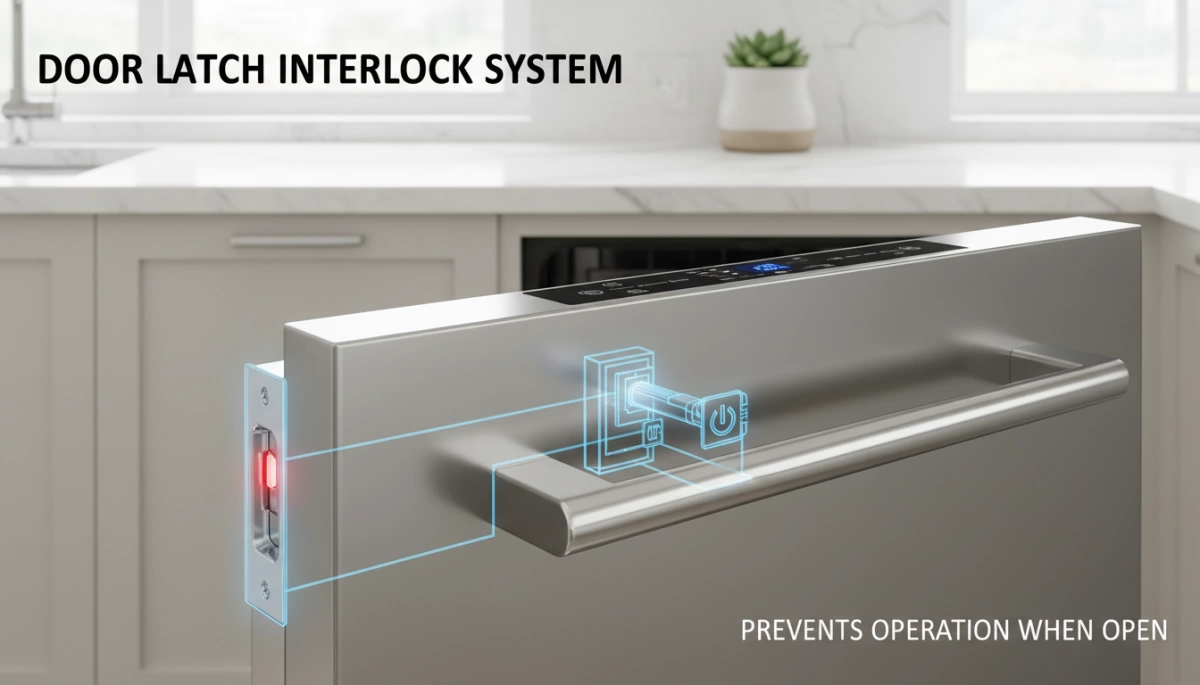
What Is a Door Latch Interlock System?
A door latch interlock system is a safety feature in many appliances that prevents operation when the door is open. It combines mechanical and electrical parts to ensure the appliance only runs when the door is securely closed.
Key Components:
- Door latch: The part you close and lock physically.
- Lock mechanism: Usually a solenoid or bimetallic strip that physically locks the door.
- Interlock switch: Detects if the door is closed and sends signals to the control board.
- Control board integration: Manages signals and allows or blocks appliance operation.
Simple Latch vs. Full Interlock System
| Feature | Simple Latch | Full Interlock System |
|---|---|---|
| Function | Basic mechanical closure | Locks door and prevents operation |
| Safety | Low | High with electrical confirmation |
| Components | Only latch | Latch + switch + lock + control board |
| User protection | Minimal | Prevents accidents when door open |
Evolution of Systems
Early appliances used basic mechanical switches to detect door closure. Modern systems evolved to delayed-release designs using bimetallic strips or solenoids with time delays. These setups avoid accidental door openings mid-cycle and improve safety.
In short, a door latch interlock system keeps you safe by physically locking the door and electronically confirming it’s secure before the appliance starts. This prevents hazards like water spills in washing machines or radiation leaks in microwaves.
How the Door Interlock Prevents Operation When Open
The door latch interlock system works by physically and electrically preventing your appliance from running when the door isn’t securely closed. Here’s a simple step-by-step rundown:
- Door closes and engages latch: When you shut the door, the door latch hooks into place, securing it physically.
- Electrical signal activates lock: This latch triggers an electrical signal, usually to a door lock solenoid or another locking mechanism that keeps the door firmly shut.
- Secondary switches confirm closure: Multiple interlock switches act as fail-safes, verifying the door is tightly sealed.
- Circuit completes and operation starts: Once all switches confirm closure, the control board allows the appliance to begin its cycle.
- Circuit breaks if the door opens: If the door is opened mid-cycle, these switches break the electrical circuit, instantly stopping operation.
This layered safety approach—with redundant switches and locked latches—prevents accidents, like a washing machine spinning with the door open or a microwave running while accessible, ensuring user safety and appliance protection. For more on how these appliance safety switches operate across different machines, you can check out this detailed overview of door switches across appliances.
Types of Door Interlock Mechanisms
Door latch interlock systems vary depending on the appliance and safety needs. Here are the common types used today:
| Interlock Type | How It Works | Pros | Cons | Typical Appliances |
|---|---|---|---|---|
| Bimetallic Strip Locking | Uses a metal strip that bends with heat to lock or release door after a time delay. | Simple, no power needed; reliable for timed locks | Slow response; limited to heated environments | Washing machines (time delay door unlock) |
| Solenoid-Based Locking | Electromagnetic or wax motor solenoid activates to physically lock/unlock door. | Fast, strong lock; precise control | Requires power; can wear out solenoid coil | Front load washers, ovens |
| Microwave Multi-Switch System | Multiple interlock switches arranged in sequence block magnetron operation when door opens. | Highly safe; prevents radiation leaks | Complex; switches wear over time | Microwave ovens |
Quick Note on Each Type
- Bimetallic strip interlock is popular in washing machines for a delayed door unlock, ensuring the drum stops spinning safely before the door opens.
- Solenoid locks—often called door lock solenoids—use electromagnetic power or a wax motor to engage latches firmly during operation, common in front load washers and ovens.
- Microwaves use a unique appliance door safety interlock involving several switches and a door strike hook to prevent magnetron operation and radiation leakage.
This variety helps appliances meet safety standards while fitting their operational needs. For example, a washing machine’s door interlock switch prioritizes mechanical robustness and timed unlock, while microwaves require multiple safety checks.
If you’re curious about the mechanical parts inside your washer, check out this detailed look at the washing machine drum bearing, which often works closely with the door lock mechanism to keep things running smoothly.
Common Appliances and Specific Examples
Door latch interlock systems are essential in many household appliances to ensure safety and proper operation. Here’s how they work in some common devices:
- Washing Machines: The most familiar example is the washing machine door lock mechanism. It prevents the machine from spinning or agitating when the door is open. Modern washers often use a time-delay door unlock, meaning the door stays locked for a short period after the cycle ends to protect users from sudden opening. This is especially common in front load washers, where the door interlock switch plays a critical role in safety.
- Microwaves: Microwave door interlock systems are designed to block any radiation leakage. They use multiple switches and door strike hooks to physically lock the door and ensure the magnetron won’t operate unless the door is fully closed. This multi-switch sequence is a strict safety requirement to protect against microwave exposure.
- Dishwashers and Ovens: These appliances rely on switch-based interlock systems that prevent the door from being opened mid-cycle, which could cause hot water spills in dishwashers or heat loss and safety hazards in ovens. If the door latch assembly fails, it can trigger error codes or prevent the appliance from starting altogether.
Real-World Failure Modes and Activations
Failures in door latch interlock systems are common trouble spots. For instance, a faulty door latch assembly might cause the door to stay locked after the cycle, or the appliance may refuse to start because the system doesn’t detect the door is properly closed. In microwaves, if the solenoid or interlock switches are damaged, the unit won’t run at all for safety reasons. These failures prevent unsafe operation but can also cause frustrating downtime, highlighting the importance of proper maintenance.
For those interested in keeping their appliances safe and functional, understanding these basic mechanisms and regularly checking the door latch areas can save time and repair costs. For oven users, also consider learning about common oven heating issues and maintenance to ensure overall appliance safety.
Signs of a Faulty Door Interlock System
A faulty door latch interlock system can cause several issues with your appliance. One common sign is when the door won’t lock or the cycle won’t start—this usually means the washing machine door lock mechanism or microwave door interlock system isn’t engaging properly. Another problem is when the door remains locked even after the cycle finishes, trapping the door shut.
You might also see error codes specific to door lock faults. For example, LG washers often display codes like dE or LE, indicating door lock errors. Alongside these codes, pay attention to any unusual noises, such as clicking or buzzing sounds coming from the door lock solenoid, or even a faint burning smell, which can mean electrical issues with the appliance door safety interlock.
If you experience these signs, it’s a clear warning that the door interlock system—whether it’s a bimetallic strip interlock, solenoid-based lock, or multi-switch assembly—needs immediate inspection or replacement to keep your appliance safe and functional.
For deeper insights on similar appliance electrical issues, you might find it useful to explore our guide on wiring harnesses in modern appliances.
Troubleshooting and Basic Repairs
When dealing with a faulty door latch assembly or door interlock switch, safety is the top priority. Always unplug the appliance before starting any troubleshooting or repairs to avoid electric shock.
Start by cleaning the door latch area—dirt or debris can block proper latching and cause failure. Inspect the latch and lock mechanism for visible damage or wear that might prevent it from engaging correctly.
Next, reset the power to the appliance by unplugging it for a few minutes before plugging it back in. This can sometimes clear error codes related to the appliance door safety interlock.
To check if the door interlock switch is working properly, use a multimeter to test continuity. A continuous circuit when the door is closed indicates the switch is likely functioning. For detailed guidance on using a multimeter effectively for appliance repair, consult this multimeter troubleshooting guide.
Knowing when to DIY or call a professional is key:
- Do it yourself if you’re comfortable with basic electrical tests, have the right tools, and the problem is simple like cleaning or resetting.
- Call a technician if the door won’t lock or unlock, you detect burning smells, or if error codes persist after basic fixes.
Following these steps can help resolve many common appliance door interlock issues safely and effectively.
Maintenance and Prevention Tips
Keeping your door latch interlock system in good shape is key to safe and smooth appliance operation. Here are some simple tips to help you maintain it:
- Regular cleaning of latch area: Dirt and grime can build up around the door latch and interlock switch, causing poor contact or jams. Use a soft cloth and mild cleaner to wipe the latch area regularly, especially with washing machines and microwaves that get frequent use. For ovens, check out our guide on cleaning and maintaining oven doors, which applies similar basics to latch care.
- Avoid slamming doors: Banging the appliance door can damage the latch assembly or misalign the door interlock switch. This may lead to a faulty door latch assembly or cause the door lock solenoid to fail. Always close doors gently to extend component lifespan.
- Use genuine replacement parts: When repairs are needed, avoid cheap knockoffs. Genuine parts like the correct front load washer door interlock or microwave door strike hook ensure proper fit and reliable function. This reduces the chance of repeated issues and keeps the appliance safety switch operating correctly.
By following these simple steps, you’ll avoid many common problems with washing machine door lock mechanisms and other appliance door safety interlocks. Regular attention pays off with fewer breakdowns and safer operation.



Leave a Reply