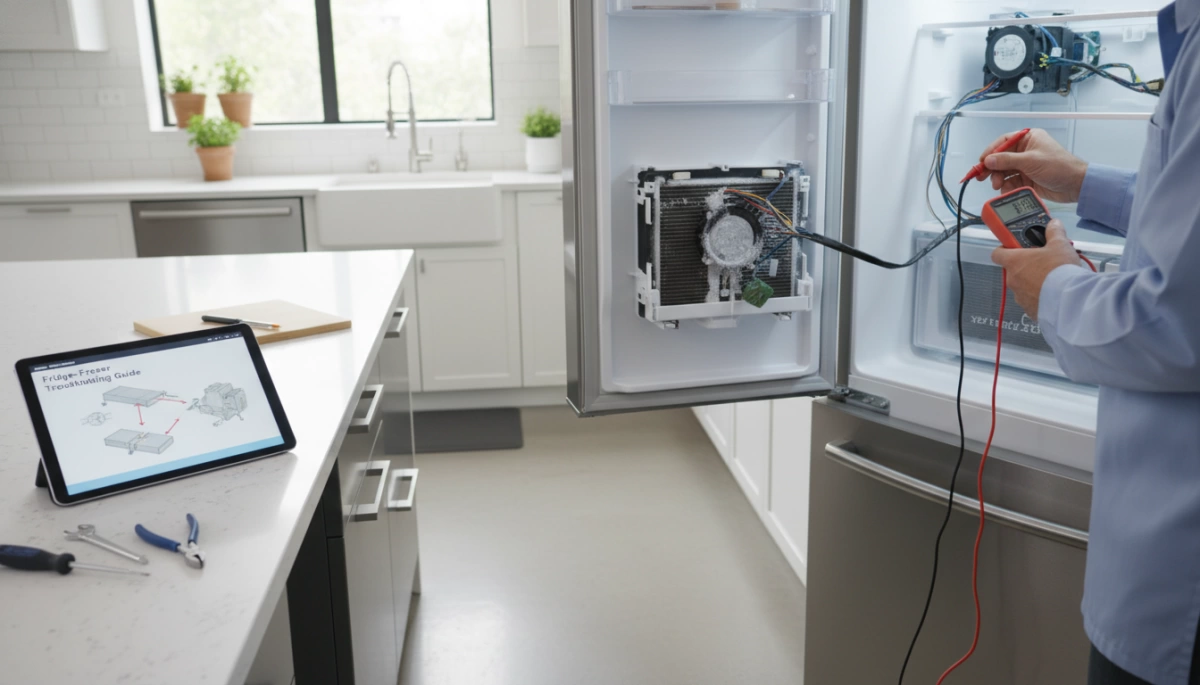
Signs Your Evaporator Fan Motor May Be Faulty
If your fridge-freezer is acting up, the evaporator fan motor could be the culprit. One common sign is when the freezer stays cold, but the fridge section is warm or not cooling properly. This happens because the fan helps circulate cold air between the freezer and fridge compartments.
You might also notice unusual freezer fan noise, such as grinding or rattling sounds, which often indicate the fan motor is struggling or failing. Excessive frost buildup or ice on the evaporator coils can block the fan blades, stopping the fan from running smoothly.
Another key symptom is if the fan isn’t running when the fridge or freezer doors are closed. Since the fan should activate to circulate air, its silence can lead to uneven cooling. You may also find the refrigerator running constantly or using more energy than usual as it tries to compensate for poor airflow.
Finally, food spoilage in the fridge despite a working freezer is a red flag. Since the evaporator fan motor moves cold air, a faulty fan means your fridge won’t stay at the right temperature, causing fresh food to go bad faster. Keep an eye out for these signs to test your refrigerator evaporator fan early and avoid bigger issues.
Safety Precautions Before Starting
Before you begin diagnosing a faulty evaporator fan motor in your fridge-freezer, safety comes first. Always unplug the appliance to prevent any risk of electric shock while working inside. The metal parts can be sharp, so it’s wise to wear gloves to protect your hands from cuts and the cold, especially if there’s frost or ice present. If you notice heavy frost buildup on the evaporator coils, allow the freezer to defrost fully before accessing the fan motor—this helps avoid injury and makes inspection easier.
Gather all necessary tools before starting, including a screwdriver for opening panels, a multimeter to test electrical components, and a flashlight to spot hidden issues clearly. Having everything ready streamlines the process and keeps things safe. For a handy list of essential tools, check out this detailed tool checklist for home appliance repairs.
Locating the Evaporator Fan Motor
The evaporator fan motor is usually found behind the freezer’s rear panel, near the evaporator coils. It’s the part responsible for circulating cold air between the freezer and fridge, so if it’s faulty, you might notice the fridge not cooling properly even if the freezer stays cold.
Evaporator Fan Location by Fridge-Freezer Type
| Fridge Type | Fan Motor Location | Access Tips |
|---|---|---|
| Top-Freezer | Rear panel inside the freezer compartment | Remove shelves, freezer drawers, lift panel |
| Bottom-Freezer | Rear panel behind the freezer drawers | Slide out bottom freezer bins, unscrew panel |
| Side-by-Side | Rear freezer compartment panel or side wall | Remove shelves, freezer bins, unscrew cover |
| French Door | Behind rear freezer panel or inside bottom freezer drawer | Clear drawers, remove rear panel screws |
Steps to Access the Evaporator Fan Motor
- Empty the freezer section: Remove shelves and drawers to clear your workspace.
- Unscrew and remove the rear freezer cover panel: This hides the evaporator coils and the fan motor.
- Inspect the area for frost or ice buildup: This can block the fan blades from spinning freely.
If you want detailed guidance on appliance wiring or accessing internal parts safely, check out helpful tips for reading appliance wiring diagrams to get familiar with your fridge freezer’s layout. That makes locating and testing the fan motor much easier.
Initial Visual and Manual Checks
Start by inspecting the evaporator fan blades for any frost buildup that could be blocking them. If you notice ice or frost, defrost the area manually by unplugging the fridge and letting the frost melt—this can often improve fan movement. Next, check for any obstructions like debris or damaged fan blades that might stop the fan from spinning freely. Try to spin the fan blade by hand; it should move smoothly without resistance. Finally, close the fridge door and listen carefully—if you don’t hear the fan running, it could signal an issue. These simple visual and manual checks are key first steps to test your refrigerator evaporator fan before digging deeper.
Electrical Testing with a Multimeter
To confirm if the evaporator fan motor is faulty, electrical testing with a multimeter is essential. Start by testing the evaporator fan motor voltage to see if power is reaching the motor. Set your multimeter to AC voltage and carefully check the terminals of the fan motor while the fridge is running. No voltage reading could mean wiring issues or a faulty control board.
Next, perform a continuity test on the motor windings. This checks if the motor coils are intact. With the power off and the motor disconnected, set your multimeter to the resistance (ohms) setting and place the probes on the motor terminals. A reading of infinite resistance indicates a broken winding, meaning the motor needs replacement.
Don’t forget to check the door switch and wiring harness as well. The door switch prevents the fan from running when the door is open; if it’s defective, the fan may not start. Test the switch by checking for continuity when pressed. Inspect wiring for visible damage or loose connections that might interrupt power.
If your fridge has a diagnostic mode, use it to run self-tests on the evaporator fan motor and related components. This mode can help pinpoint electrical faults without manually testing every part.
By combining these electrical tests, you can accurately determine if the evaporator fan motor is the root cause of your refrigerator not cooling properly or if other issues might be involved. For tips on replacing parts, also consider choosing the right components by reviewing advice on generic vs OEM parts to ensure durability and fit.
Common Related Issues That Mimic Fan Failure
Sometimes, symptoms that look like a faulty evaporator fan motor are actually caused by other problems. The defrost system failure is a common culprit—if it stops working, you’ll get ice buildup blocking the evaporator coil or fan blades, making it seem like the fan isn’t running properly.
A bad control board or faulty thermistor can also cause incorrect temperature regulation, resulting in the fridge not cooling even though the fan motor is fine. These components control the cooling cycles, so if they malfunction, your fridge can behave oddly.
Don’t overlook issues with the condenser fan or compressor either. If the condenser fan isn’t running smoothly or the compressor struggles, the whole cooling system suffers, which might be mistaken for evaporator fan problems.
To accurately diagnose your fridge freezer, consider testing key components carefully before concluding the evaporator fan motor is at fault. For detailed steps on dealing with ice buildup and cooling issues, checking a guide on common causes of frost and water leaks can be very helpful.
When to Replace the Evaporator Fan Motor
You should consider replacing the evaporator fan motor once your tests confirm it’s faulty—such as no voltage at the motor, failed continuity tests, or a fan that won’t spin freely. If you notice ongoing issues like the refrigerator not cooling properly, excessive frost buildup, or strange noises from the freezer that can’t be fixed by clearing ice or checking related parts, it’s time to swap out the motor.
To source the correct replacement, always check your fridge-freezer’s model number and search for a compatible refrigerator fan motor replacement. Buying the exact part ensures proper fit and function, which saves time and effort. Reputable appliance parts suppliers often have detailed listings for the right evaporator fan motors for various brands and models.
The replacement process generally involves:
- Unplugging the fridge.
- Removing shelves and the freezer rear panel to access the motor.
- Disconnecting the wiring harness.
- Taking out the faulty motor.
- Installing the new fan motor.
- Reassembling all components.
Replacing the evaporator fan motor isn’t usually complicated but do follow safety steps carefully. If you want a detailed guide on finding genuine replacement parts and step-by-step instructions, this resource on discovering the perfect replacement part can be very helpful.
Calling a Professional vs. DIY
Knowing when to call a professional for a faulty evaporator fan motor can save time, stress, and unexpected costs. Here’s when to seek expert help and what to expect:
Signs to Seek Expert Help
- You’re unsure how to safely test or replace the fan motor
- Multimeter tests and basic checks don’t pinpoint the issue
- Complex electrical problems like wiring faults or control board failure
- Persistent noises or cooling issues despite cleaning and defrosting
- Warranty considerations or when your fridge-freezer is still under manufacturer support
Average Repair Costs
| Service | Approximate Cost (USD) |
|---|---|
| Evaporator fan motor replacement | $100 – $250 |
| Diagnostic fee | $50 – $100 |
| Additional parts or labor | Varies by model/region |
Costs vary depending on fridge type and local labor rates, but professional diagnosis often ensures accurate repair and avoids repeated failures.
Benefits of Professional Diagnosis
- Quick identification of related issues like control board faults or defrost system failures
- Accurate testing using advanced diagnostic modes or tools beyond a basic multimeter test fridge fan checks
- Safe handling of electrical components reduces risk of injury or damage
- Proper installation of correct parts tailored to your fridge model (including complex units like French door or bottom-freezers)
If you’re comfortable with basic troubleshooting, DIY can work for simple fan motor replacements, but for unreliable symptoms or complicated diagnostics, expert help is usually worth it. For more tips on maintaining your fridge system, check out our guide on extending the lifespan of your appliance.
Prevention Tips to Extend Evaporator Fan Motor Life
Keeping your evaporator fan motor in good shape means fewer cooling problems and longer fridge-freezer life. Here’s how to prevent premature fan failure:
- Clean Coils and Vents Regularly: Dust and dirt on evaporator coils and air vents can cause the fan to work harder or get blocked, leading to overheating or motor wear. Make a habit of cleaning these at least twice a year to ensure good fridge freezer air circulation.
- Avoid Overloading and Blocking Airflow: Stuffing your fridge or freezer too full can block airflow around the fan, causing it to strain or stop running altogether. Leave some space between items, especially near vents and coils.
- Watch for Early Signs: Listen carefully for any unusual freezer fan noise or grinding sounds. Also, keep an eye on cooling performance—if the fridge feels warm but the freezer is cold, or if you notice excessive frost buildup, these could be bad evaporator fan symptoms signaling trouble.
- Schedule Annual Maintenance Checks: A yearly inspection by a professional or a thorough DIY check can catch small issues before they turn into big failures. This includes looking over the evaporator fan motor, checking electrical connections, and making sure the defrost system is working.
Following these steps helps reduce wear on your evaporator fan motor and can save you from costly replacements. For more on keeping your appliances in top shape, check out tips on effective energy-saving maintenance.



Leave a Reply