Understanding the Convection Fan Motor in Your Oven
The convection fan motor plays a crucial role in your oven by circulating hot air evenly throughout the cooking chamber. This steady airflow ensures even cooking and consistent baking results by preventing hot spots and promoting uniform heat distribution.
Most convection fan motors are small AC motors, often shaded-pole types, designed specifically for oven environments. These motors typically feature either sleeve bearings or sealed bearings to support the fan shaft. Sleeve bearings are usually lubricated and can sometimes be serviced, while sealed bearings are often maintenance-free but less tolerant of high heat over time.
Stalling in the convection fan motor is a common issue that occurs when the motor stops spinning as it should. This can happen for several reasons:
- Heat dries out the lubricant, causing increased friction and resistance.
- Bearings wear down or become damaged, leading to rough movement or seizure.
- Debris buildup like grease or food particles can obstruct the fan.
- Shafts may seize due to corrosion or extended heat exposure, preventing smooth rotation.
Understanding these factors helps you identify why your convection oven fan is not spinning properly and guides you toward the right maintenance or repair approach.
Common Symptoms of a Stalling Convection Fan Motor
If your convection oven fan is stalling, you’ll notice some clear signs right away. One common symptom is the motor humming or buzzing without the fan blades actually moving. Sometimes, the fan might start spinning but then slow down or stop intermittently, which can affect airflow inside the oven. You may also hear unusual noises like grinding, squealing, or chirping coming from the fan motor—these are often caused by worn or damaged bearings.
Other symptoms include uneven baking results or longer preheat times because the convection fan isn’t circulating hot air properly. In some cases, the motor might overheat, causing thermal protection to trip and stop the fan from running altogether. These issues make troubleshooting the convection fan motor essential to getting your oven back to proper working order.
If you want to dive deeper into diagnosing fan motor issues, you can check out our guide on reliable ways for oven fan motor troubleshooting to identify what’s really going wrong.
Diagnosing the Problem Step by Step
First, always put safety first. Unplug your oven and make sure it’s completely cool before starting any inspection. To access the convection fan motor, you’ll usually need to remove the rear panel or the interior cover. This varies by model, so check your oven’s manual for exact instructions.
Next, try a manual spin test—turn the fan blades by hand. They should move freely without much resistance. If they feel stuck or stiff, that’s an early sign of a stalled oven circulation fan or a bearing issue.
Look carefully for any obstructions like grease buildup, food debris, or burnt bits that might be blocking or jamming the fan blades. Clean these away if found.
If safe to do so, power the oven briefly and listen. A convection oven fan not spinning but making a humming or buzzing noise points to motor stalling or electrical problems. Compare humming without blade movement to smooth running.
Finally, if the motor still seems off, use a multimeter for continuity and voltage checks on the fan motor wiring and terminals. This will help confirm whether the motor is receiving proper power or if there’s an internal fault. For detailed multimeter guidance, see this multimeter continuity and voltage testing resource.
Taking these diagnostic steps narrows down whether lubrication, bearing replacement, or full motor replacement is needed to fix your convection fan motor stalling issue.
Lubrication as a Potential Fix: When It Works and How to Do It
Lubrication can be a handy fix for a convection fan motor stalling, but it only works in certain cases. Typically, it’s suitable for motors with sleeve bearings that have accessible oil ports or show a bit of play—not for sealed high-temperature bearings that don’t allow oil inside.
When to try lubrication:
- The motor hums but the fan blades don’t spin smoothly
- The shaft turns with effort but isn’t completely seized
- You notice slight resistance rather than grinding or heavy noise
Recommended lubricants include high-temp synthetic oils or 3-in-1 electric motor oil. Avoid using WD-40 long-term because it evaporates quickly and doesn’t protect under high heat.
Simple lubrication steps:
- Unplug the oven and ensure the motor is cool
- Access the fan motor oil port (check your model)
- Apply a few drops of oil using the drip method on the shaft or oil hole
- Manually spin the fan blades to spread the oil evenly
- Wipe off any excess lubricant to avoid attracting dirt and debris
Keep in mind, lubrication usually offers only temporary relief—often lasting weeks to a few months—because the intense heat inside ovens breaks down oils faster than in other appliances. If symptoms return quickly, bearing replacement or full motor replacement may be needed.
For more on choosing the right lubricant for your home appliances, you can check this detailed lubricant selection guide.
Bearing Replacement: When It’s Necessary and Feasible
Most convection fan motors in ovens come with sealed or non-serviceable bearings designed to handle high heat, but over time these bearings can wear out. If lubrication doesn’t improve the situation, you notice visible play in the fan shaft, or the grinding noise continues, it’s a strong sign the bearings need replacement.
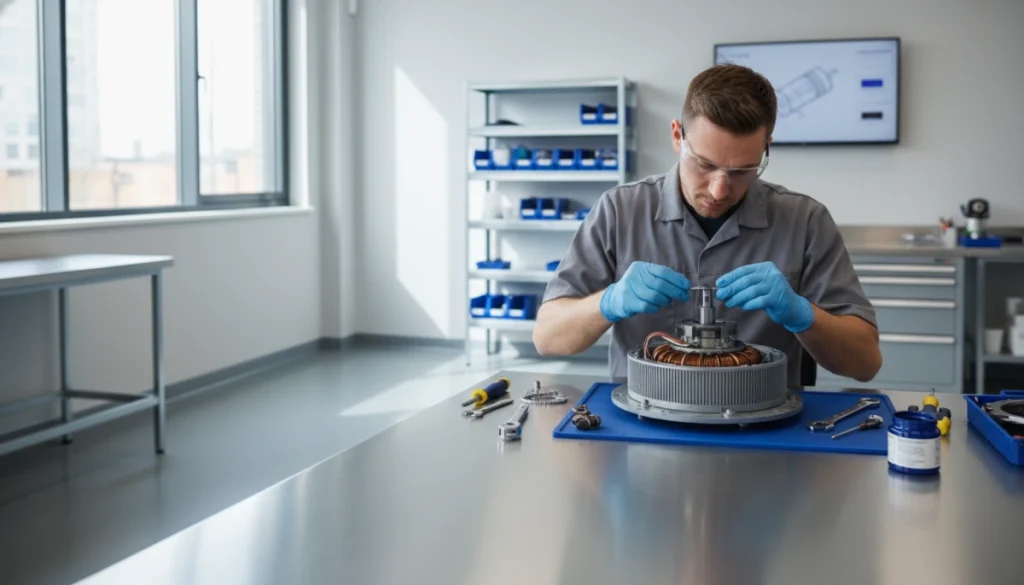
However, bearing replacement isn’t always straightforward. These bearings are often pressed into the motor housing, making them hard to remove without specialized tools. The process involves carefully disassembling the motor (if the design allows), pressing out the old bearings, and installing high-temperature replacements made to withstand oven conditions.
Because of these challenges, many people find full motor replacement a more cost-effective and reliable solution rather than attempting to swap bearings. For detailed guidance on replacing parts in your oven, you might find tips in related oven fan motor troubleshooting resources helpful. This approach saves time and reduces the risk of further damage when dealing with sealed bearing oven motors.
Full Motor Replacement: The Reliable Long-Term Solution
When your convection fan motor keeps stalling despite lubrication attempts, or if it uses sealed bearings that can’t be serviced, it’s time to consider a full motor replacement. Repeated issues like a stalled oven circulation fan or persistent grinding noise usually mean the motor’s internal parts are beyond repair.
When to Replace the Motor
- Lubrication doesn’t improve the motor’s humming or spinning issues
- Bearings are sealed and can’t be easily serviced
- The fan motor repeatedly stops or struggles during use
Finding the Right Replacement Motor
Use your oven’s model number to source the exact motor. OEM parts are often more reliable, but some compatible aftermarket motors can provide good value. For help identifying parts, you can check detailed guides on how to read appliance wiring to ensure compatibility.
Basic Installation Steps
- Disconnect the oven from power before starting
- Remove the old motor assembly by disconnecting wires and screws
- Mount the new motor securely and reconnect wiring
- Test the fan to confirm smooth, quiet operation
Cost and Service Considerations
- DIY replacement can save money but requires careful handling and some basic tools
- Professional appliance technicians ensure correct installation and safety, especially with gas ovens
- Motor replacement cost varies by model but is often more cost-effective long-term than repeated repairs
Preventing Future Motor Issues
- Avoid excessive use of high-heat self-clean cycles that accelerate lubricant breakdown and bearing wear
- Ensure proper ventilation inside the oven to reduce overheating risks
- Regular maintenance, like cleaning fan blades and checking for debris, extends motor life
Replacing the convection fan motor is usually the most reliable fix for ongoing stalling and noise problems, ensuring even heating and better convection baking results over the long run.
When to Call a Professional Appliance Technician
Sometimes, fixing a convection fan motor stalling problem isn’t straightforward. You should call a professional appliance technician if the repair involves complex disassembly that puts your oven at risk or if you’re unsure how to safely handle the motor. If your oven convection motor is humming but not working and there’s no continuity found during testing, the issue might be deeper, possibly involving the motor’s control board or electronics—things best left to experts.
Also, bear in mind warranty terms; attempting DIY repairs can void coverage. For gas ovens or models with sensitive safety features, professional service ensures repairs meet safety standards. For dealing with intricate oven fan motor troubleshooting or control board issues, checking out detailed guides on control board malfunctions and when to call a pro can help you understand when it’s time to get expert help.
Calling a pro saves time, prevents accidental damage, and guarantees your convection fan gets back to spinning like it should—ensuring even cooking and safe operation.