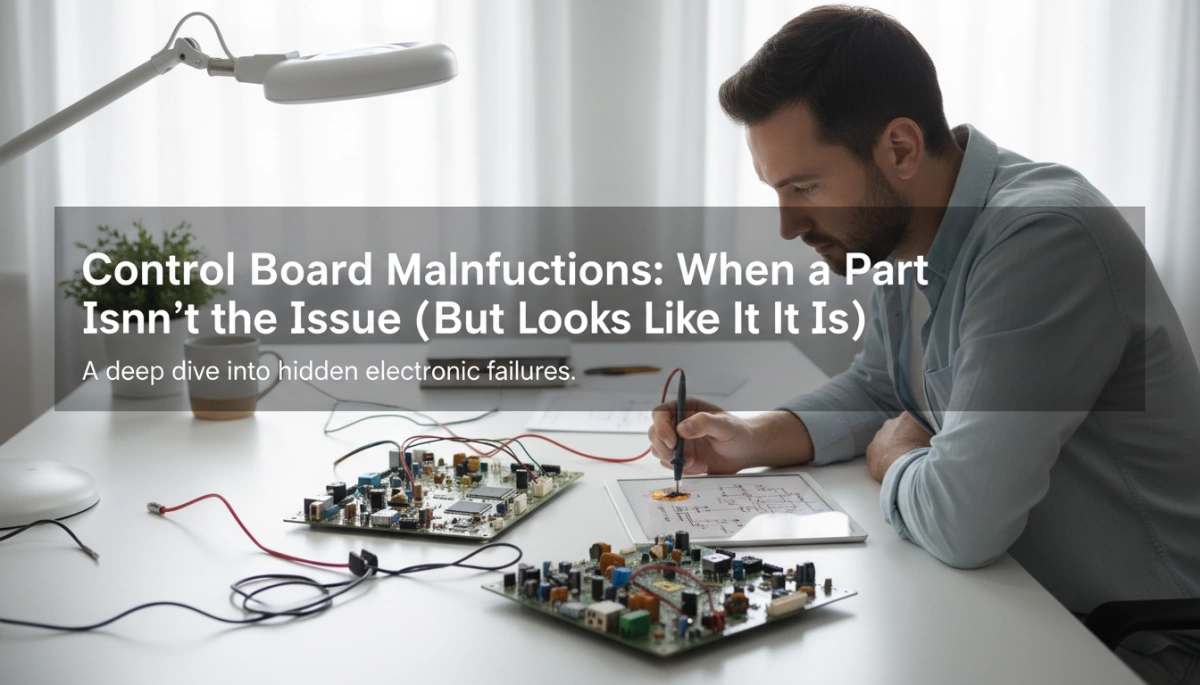
Common Symptoms That Mimic Control Board Failure
Ever been sure your appliance’s control board is on the fritz—only to find out it wasn’t the real culprit? You’re not alone. Many users experience control board misdiagnosis because certain symptoms closely mimic bad control board issues but stem from other problems. Common symptoms that look like a bad control board include:
- Intermittent malfunctions: Appliances like ovens or washing machines may start and stop randomly, which often points to the control board but could be caused by faulty sensors.
- Unresponsive controls: When buttons or touchpads don’t respond, it’s tempting to blame the control board, but this can also stem from loose connections or wiring problems.
- Error codes that don’t add up: Sometimes, furnace error codes or refrigerator control issues suggest a board failure while the real issue lies elsewhere.
- Power-related glitches: Power surges can make certain components behave erratically, creating false alarms about control board damage.
- Diagnostic LED misinterpretation: Many modern appliances flash error codes through LEDs, which can be easily misread, leading to a false assumption of control board failure.
Recognizing these symptoms and understanding their potential causes helps avoid unnecessary board replacements. It’s essential to rule out control board failure by checking other common issues first—especially wiring, sensors, and external factors—before concluding the control board is truly at fault.
Why Control Boards Get Wrongly Blamed
Control boards often get the blame for appliance issues because their failure symptoms can mimic other problems. When something goes wrong, it’s easy to assume the control board is at fault, especially since it’s the “brain” of many appliances. However, control board misdiagnosis is common because several hidden issues can create false failure signals. For example, loose connections, wiring problems, or sensor failure mimicking board errors often look like bad control board symptoms.
Many technicians or DIYers jump to s without properly ruling out control board failure through systematic appliance diagnosis. Misinterpreting diagnostic LED signals or misreading furnace error codes wrong can lead to unnecessary and costly board replacements. Power surges, while a genuine threat, aren’t always the cause of control board damage but are often overblown as the culprit.
Understanding why control boards are wrongly blamed helps avoid expensive repairs and keeps appliance troubleshooting on track. It’s all about looking beyond the surface and avoiding appliance false failure assumptions. This approach not only saves money but also prolongs appliance life by focusing on real faults like wiring or sensor issues before swapping out the control board.
For tips on extending your appliance’s lifespan and preventing common errors, check out ways of extending the lifespan of your appliances.
Top Hidden Causes of “Fake” Control Board Malfunctions
Control board misdiagnosis happens more often than you think. Sometimes, a part acting up only looks like the control board is to blame, but the real issue hides elsewhere. Here are the top hidden causes of these “fake” control board malfunctions:
- Loose connections appliance wiring: Faulty or loose wiring can mimic refrigerator control issues or oven intermittent malfunction symptoms. This results in false failure signals, making the control board seem bad when it’s actually just a poor connection.
- Power surge control board damage myths: While power surges can damage boards, many “failures” are actually triggered by upstream problems like blown fuses or tripped breakers, not the board itself.
- Sensor failure mimicking board error: Sensors sending erratic or no signals often cause the system to think the control board is faulty. For example, furnace error codes wrong readings can stem from a bad sensor, not the HVAC board.
- Diagnostic LED misinterpretation: Many appliances use diagnostic LEDs that flash error codes. Misreading these signals leads to mistaking a simple wiring or sensor problem for a bad control board.
- Component failure elsewhere: Sometimes mechanical or electrical parts (motors, relays, switches) fail and throw off the whole system, generating bad control board symptoms but with no real board fault.
Understanding these hidden causes helps avoid unnecessary control board replacements. Rule out control board failure first by checking these easily overlooked issues. For a deeper dive into appliance troubleshooting, you can refer to the detailed tool checklist for home appliances to equip yourself for systematic appliance diagnosis.
Step-by-Step Diagnostic Guide
When dealing with suspected control board malfunctions, a systematic appliance diagnosis is key to avoid control board misdiagnosis and unnecessary replacements. Here’s a simple step-by-step guide to help you rule out control board failure and spot other hidden issues:
-
Check for Loose Connections:
Start by inspecting wiring and connectors for any signs of looseness or corrosion. Many refrigerator control issues wiring or washing machine board not bad problems come from poor connections rather than the board itself.
-
Read Diagnostic LEDs and Codes Carefully:
Don’t jump to s just because a furnace error codes wrong or an oven intermittent malfunction displays. Sometimes, misinterpreting diagnostic LED lights leads to false failure assumptions.
-
Test Sensors and Related Components:
Sensor failure mimicking board failure is common. Use a multimeter to test temperature sensors, door switches, or pressure sensors before blaming the control board.
-
Rule Out Power Supply Issues:
Power surge control board damage can happen, but more often it’s power supply or capacitor faults affecting the system. Check voltage levels and follow capacitor discharge protocols to ensure safe testing.
-
Perform Targeted Component Tests:
If your appliance has replaceable parts like relays or capacitors on the board, test these individually. A bad relay or capacitor can mimic control board symptoms without the entire board being faulty.
-
Use Known-Good Parts or Swap Boards Last:
Only swap the control board after all other possibilities are exhausted. If available, use a known-good board for testing to confirm control board issues.
Following these steps can significantly reduce appliance false failure diagnoses and avoid unnecessary board replacements. For more detailed help on handling electrical components safely during appliance repair, check out our guide on capacitor discharge protocols.
Prevention Tips to Avoid Future Misdiagnoses and Failures
Avoiding control board misdiagnosis starts with a clear, systematic approach to appliance diagnostics. Here are some practical prevention tips to save you time and money:
- Check the Basics First: Always rule out loose connections, faulty wiring, or power surges before pointing to the control board. Many appliance false failures happen due to simple wiring or connection issues.
- Use a Step-by-Step Diagnostic Process: Follow manufacturer guidelines and verify sensor functions, error codes, and diagnostic LEDs carefully. Don’t jump to s based on one symptom alone. Misreading furnace error codes or diagnostic LED lights is common and leads to unnecessary part replacement.
- Test Sensors and Related Components: Sensor failure mimicking board issues is frequent. Confirm sensors and switches are working properly, especially on ovens or refrigerators where intermittent malfunctions often appear as bad control board symptoms. For example, check your oven heating irregularities alongside sensor evaluations regularly, as explained in detailed preventive maintenance guides.
- Protect Appliances from Power Surges: Power surges can damage control boards unexpectedly. Use surge protectors or whole-home surge prevention to shield sensitive HVAC board troubleshooting and other appliances.
- Regular Preventive Maintenance: Keep your appliances clean and well-maintained to avoid hidden causes of “fake” control board malfunctions. For ovens, routine cleaning and maintenance help prevent false control board errors caused by grime or debris interfering with sensors.
- Document Error Codes and Symptoms: Keeping a log helps spot patterns and avoid misdiagnosis later. When you notice strange appliance behavior, compare symptoms with common bad control board symptoms before ordering parts.
By following these prevention tips, you can avoid unnecessary board replacements and improve the reliability of your appliance diagnoses in the long term. For specific oven issues, applying regular cleaning and maintaining strategies can drastically reduce device errors not caused by the board itself.
For more on keeping your oven in good shape and avoiding control board problems in the process, explore this guide on cleaning and maintaining ovens.
Cost Implications: Repair vs. Replacement
When dealing with control board malfunctions, understanding the cost implications between repair and replacement is crucial. Misdiagnosing a control board as the problem often leads to unnecessary expenses, especially since control board repair or replacement can be pricey compared to fixing other issues like loose connections or sensor failures.
Key cost factors to consider:
- Repair costs: Fixing wiring issues, replacing sensors, or addressing power surge damage might cost significantly less than swapping out the entire control board.
- Replacement costs: A new control board can run hundreds of dollars depending on the appliance—whether it’s an HVAC board, washing machine board, or fridge control unit.
- Diagnostic fees: Sometimes, the cost of a professional appliance diagnosis might be a worthwhile investment to avoid an expensive false failure claim.
- Long-term value: Repairing a genuine control board issue ensures proper appliance function, but replacing a board unnecessarily rarely solves the root cause and wastes money.
Carefully rule out control board failure before committing to costly replacements. Employ a systematic appliance diagnosis approach to spot hidden causes and avoid the common pitfall of blaming the board prematurely. This strategy not only saves money but extends the appliance’s life.
For a better understanding of when to invest in professional help and how to avoid unnecessary board replacements, check out this guide on when to call a pro for appliance repairs.
In short, weighing repair versus replacement costs depends on accurate diagnosis. Avoid jumping to s based on hard-to-interpret furnace error codes or misleading oven intermittent malfunctions. Proper troubleshooting ensures you get the best value and avoid overspending on a control board that’s not actually at fault.
FAQs: Control Board Misdiagnosis and Appliance Issues
Q1: How can I tell if a control board is really bad or just seems faulty?
A1: Look beyond the obvious “bad control board symptoms.” Often, issues like loose connections, sensor failure mimicking board faults, or power surges can cause appliance false failure. A systematic appliance diagnosis is essential to rule out control board failure before replacing the part.
Q2: Why do appliances show error codes that don’t add up?
A2: Furnace error codes wrong or refrigerator control issues wiring can lead to confusing diagnostics. Sometimes, diagnostic LED misinterpretation causes technicians to blame the control board mistakenly.
Q3: Can other parts cause control board malfunctions to appear real?
A3: Yes. Loose wiring, faulty sensors, or even intermittent malfunctions like oven problems often look like control board failures. HVAC board troubleshooting stresses checking related components first.
Q4: Is it better to repair the control board or replace it completely?
A4: Repairing is usually less costly, but only if you have accurately diagnosed the root cause. Avoid unnecessary board replacement by following a step-by-step diagnostic guide to identify hidden causes.
Q5: How can I prevent control board misdiagnosis in the future?
A5: Regular appliance maintenance, careful wiring checks, and understanding common false failure triggers are key prevention tips to avoid future misdiagnoses and actual control board damage.
For detailed help with related appliance boards, check out our guides on troubleshooting noisy refrigerators or how thermostatic controls play a role in avoiding false failures in your systems.



Leave a Reply