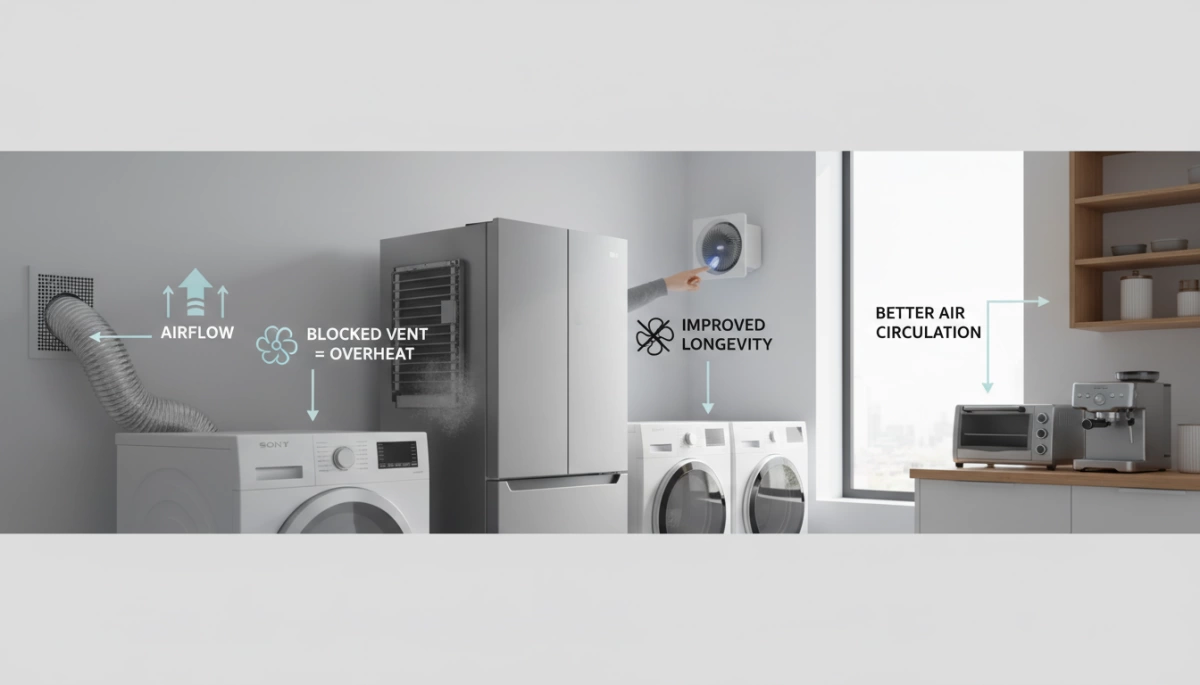
If you’ve noticed your appliance running hotter or less efficiently, ventilation might be the hidden culprit. Understanding the importance of ventilation in appliance longevity is crucial—because without proper airflow, components like compressors and motors face unnecessary strain, leading to higher energy bills, more frequent breakdowns, and a shorter lifespan. Whether it’s your refrigerator, dryer, or oven, learning how to optimize proper appliance airflow isn’t just about comfort; it’s a smart move to protect your investment and keep your home safe. Let’s unpack why ventilation matters so much—and how you can get it right.
What Ventilation Really Means for Household Appliances
When we talk about ventilation for household appliances, we’re really focusing on how air moves around and through these machines to keep them cool and dry. Proper appliance airflow is crucial—it helps remove excess heat and moisture that naturally build up when appliances run. Without good ventilation, appliances can overheat, work harder, and wear out faster.
There are two main types of ventilation to understand: internal and external. Internal ventilation happens inside the appliance—fans and vents circulate air to cool key parts like compressors or heating elements. External ventilation involves letting heat and moisture escape the appliance’s immediate surroundings, such as using space around the appliance or dedicated vent ducts.
The science behind this is simple but important. Heat dissipation prevents dangerous temperature spikes that can damage components. Moisture removal stops rust, mold, and other issues that come from trapped humidity. Together, these processes help maintain your appliance’s performance and longevity. Understanding how ventilation works gives you a clearer picture of why keeping airflow pathways clear is one of the best ways to keep your appliances running smoothly.
How Poor Ventilation Shortens Appliance Lifespan
When appliances don’t get proper airflow, they work harder than they need to, causing energy waste and higher utility bills. Poor ventilation traps heat inside, making components like compressors and motors overheat. This extra strain can lead to premature breakdowns and costly repairs.
For example, a refrigerator with blocked ventilation coils forces its compressor to run continuously, increasing wear and cutting down its lifespan significantly. Similarly, dryers with clogged vents risk overheating, which not only shortens the machine’s life but also creates fire hazards.
Overheating damages sensitive parts, leading to frequent malfunctions. Without proper heat dissipation, appliances can fail years earlier than expected. To avoid this, routine checks and maintenance like dryer vent cleaning or ensuring refrigerator ventilation spacing is clear are essential steps that protect your investment. For deeper insights into preserving your refrigerator’s health, see our guide on how to fix a refrigerator that’s overheating.
Ventilation Challenges by Appliance Type
Different appliances face unique ventilation challenges that directly affect their performance and lifespan.
Refrigerators and Freezers
Proper refrigerator ventilation spacing is crucial to prevent overheating. When coils are too close to walls or blocked by dust buildup, airflow is restricted, causing the compressor to work harder and wear out faster. Heat sources near these appliances add extra strain, making dust buildup on coils an even bigger issue. Regularly cleaning around the appliance and ensuring enough clearance can significantly reduce this risk.
Clothes Dryers
Dryers rely heavily on clean exhaust vents to expel hot, moist air. Clogged dryer vents risks include overheating and fire hazards, so lint buildup must be cleared frequently. Using outside venting methods helps maintain airflow and efficiency. Neglecting dryer vent cleaning not only wastes energy but can lead to costly repairs or replacements. You can find detailed guidance on maintaining your dryer’s heating elements in resources like this page on tumble dryer heating elements.
Ovens and Stoves
For ovens and stoves, especially gas models, effective oven heat dissipation and kitchen exhaust ventilation are vital. Without proper ventilation, heat and fumes can build up, leading to uneven cooking and potential moisture damage inside the oven cavity. Electric ovens also benefit from clean vents to avoid overheating components. Proper ventilation helps protect internal parts and ensures consistent cooking results. Issues like uneven heating can be further explored in our oven heating elements guide.
Other Appliances
Moisture control is especially important for dishwashers and laundry areas to prevent mold and mildew growth. Appliances in these humid spaces need good airflow and sometimes additional venting to stay dry. Regular maintenance and occasional checks for proper ventilation can help stave off long-term moisture damage, securing appliance longevity.
By understanding these distinct ventilation challenges and addressing them, you can protect your appliances from overheating, moisture buildup, and premature breakdown, ultimately helping extend appliance lifespan while reducing energy costs.
Practical Tips to Ensure Proper Ventilation
Ensuring proper appliance airflow starts with following the manufacturer’s guidelines for clearance and installation. Always leave enough space around appliances like refrigerators and dryers to allow heat and moisture to escape efficiently. Tight spots or built-in appliance ventilation without proper gaps can cause overheating and reduce lifespan.
Routine maintenance is key to keeping ventilation working well. Clean refrigerator coils regularly to prevent dust buildup on coils, which blocks heat dissipation. Vacuum vents and check filters often, especially in dryers and HVAC systems. For example, regular HEPA and premotor filter cleaning can improve airflow and prevent strain on appliance components.
Watch for warning signs like unusual heat around appliances, increased energy bills, or longer run times—these can indicate poor ventilation. Also, keep dryer vents free of lint to avoid clogged dryer vents risks and fire hazards.
If ventilation problems persist, consider upgrades like professional vent cleaning, remodeling tight kitchen or laundry spaces, or installing kitchen exhaust ventilation systems. Exhaust hoods for stoves and dryers greatly improve heat and fume expulsion, boosting appliance safety and performance.
By following these simple steps, you can reduce appliance overheating, save on energy costs, and extend appliance lifespan.
The Bigger Benefits: Savings, Safety, and Sustainability
Proper appliance airflow does more than just keep your devices running—it saves you money and protects your home. Here’s how good ventilation pays off:
| Benefit | Details |
|---|---|
| Lower energy bills | Appliances use less power when they don’t overheat or strain, reducing your electricity costs. Efficient ventilation means less compressor strain and energy-efficient appliance maintenance. |
| Reduced repair costs | Avoid premature breakdowns caused by heat damage, which often lead to costly fixes or replacements. |
| Fire safety | Good airflow prevents overheating that can trigger hazardous situations. Clean dryer vents especially reduce the risk of fires related to lint buildup. For more on safety mechanisms, check this guide on safety cutout triggers for overheating. |
| Carbon monoxide safety | Proper kitchen exhaust ventilation ensures fumes don’t build up, especially with gas ovens and stoves, reducing carbon monoxide risks. |
| Environmental impact | Energy-efficient operation cuts down your household’s carbon footprint, helping preserve the planet. Efficient ventilation plays a key role here. |
| Extends appliance lifespan | Keeping moisture and heat in check preserves appliance parts longer, protecting your investment in the long run. |
Small steps like routine dryer vent cleaning, ensuring refrigerator ventilation spacing, and using exhaust hoods can lead to big gains in safety, savings, and sustainability. Taking these seriously means you protect your home, lower bills, and reduce waste—smart choices for any household.



Leave a Reply