Understanding Main Brushes and Side Brushes
Robotic vacuums rely on two key types of brushes to keep your floors clean: main brushes and side brushes. Each serves a unique purpose and comes in different designs suited to various cleaning needs.
Main Brushes
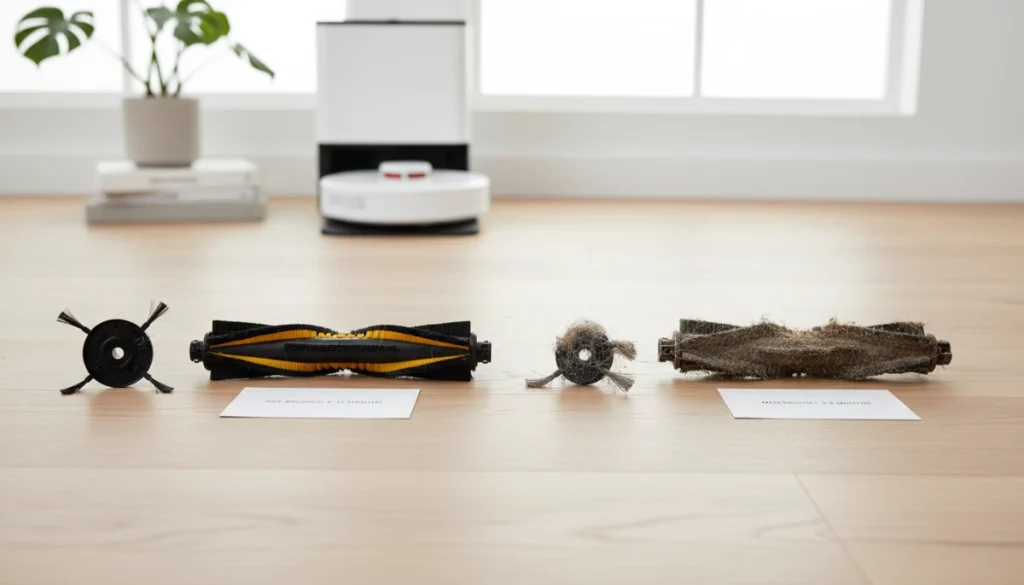
The main roller brush is the powerhouse of your robot vacuum. Usually located underneath the device, it often combines rubber blades and bristles to pick up dirt, dust, and debris from carpets and hard floors. Some models feature rubber vs. bristle robot brushes, offering different cleaning styles—rubber brushes are great at grabbing pet hair without tangling, while bristle brushes sweep fine dust effectively. The design and material of the main brush directly affect the robot vacuum’s cleaning performance and how often you’ll need robot vacuum brush replacement.
Side Brushes
Side brushes are smaller spinning brushes at the edges of the robot. Their job is critical: they sweep dirt from walls, corners, and edges into the path of the main brush. Side brushes come in various designs, typically made with soft bristles or flexible materials to avoid scratching surfaces. Because they encounter constant friction, side brushes face side brush wear and tear faster than main brushes and often require more frequent attention.
Together, these brushes define how efficient your robot vacuum is at picking up dirt across different floor types. Having the right brush types and maintaining them properly will help avoid a drop in robot vacuum cleaning performance and keep your home consistently clean.
Typical Lifespan and Replacement Cycles
Main brushes and side brushes in robot vacuums don’t last forever—they wear out over time due to regular use. Typically, the main roller brush lifespan ranges from 6 to 12 months, depending on how often you run your vacuum and floor conditions. Side brushes usually need replacement a bit sooner, often every 3 to 6 months, as they face more wear and tear around edges and corners.
Several factors affect the robot vacuum brush replacement frequency:
- Run frequency: The more often you use your vacuum, the quicker the brushes wear out.
- Floor types: Rough surfaces cause faster brush wear compared to smooth floors.
- Pets: Homes with shedding pets usually require more frequent pet hair robot brush replacement because pet hair can tangle brushes and accelerate damage.
- Brush material: Rubber brushes tend to last longer than bristle types but may be less effective on certain debris.
Monitoring these factors helps you anticipate when to replace brushes before your vacuum’s cleaning performance drops. Many newer robot vacuums come with app alerts that notify you when it’s time for a robot vacuum side brush replacement or main brush change, making maintenance easier.
For guidance on extending parts’ life beyond replacement, check out this DIY guide to cleaning refrigerant filters — similar DIY maintenance habits can help keep your brushes in better shape.
Signs It’s Time to Replace Your Brushes
Knowing when to replace your robotic vacuum’s main and side brushes is key to keeping cleaning performance at its best. Here are some common signs that your robot vacuum brushes need attention or replacement:
- Visible wear and tear: Frayed bristles, bent or broken brush strands, and rubber brushes that have lost flexibility are clear visual indicators of side brush wear and tear or main roller brush lifespan ending.
- Reduced cleaning efficiency: If your vacuum misses dirt, leaves debris behind, or struggles with pet hair pickup, it’s a strong sign brushes are worn out and slipping in performance.
- Brush tangling and hair buildup: Frequent tangles or clogs that won’t clear with simple cleaning suggest brush damage or stiffness, which impacts overall brush life.
- Unusual noise or rattling: If the brushes make abnormal sounds during operation, it could mean worn gears or unbalanced brushes requiring replacement.
- Robot vacuum app brush alerts: Many modern robot vacuums notify you through their app when it’s time to replace consumable parts like main and side brushes, following recommended replacement frequency.
Ignoring these signs can lead to a drop in cleaning power and even damage other vacuum parts. Regular checks keep your robot running smoothly and extend the life of your brushes. For detailed advice on replacement and maintenance, including compatible replacement brushes, check out our guide on how to discover the perfect replacement parts.
How Usage and Environment Affect Replacement Cycles
How often you need to replace your robotic vacuum brushes largely depends on how often you run the device and the environment it cleans. For example, if you use your robot vacuum daily, the main roller brush and side brushes will wear out faster compared to weekly use. Homes with pets cause extra wear and tear due to pet hair getting tangled and stuck, which means pet hair robot brush replacement tends to happen more frequently.
The type of floors also plays a role—carpeted floors put more strain on the brushes, shortening their lifespan, while hard floors are gentler. Many newer robot vacuums include app tracking features that notify you when brush replacements are due, making it easier to stick to your robot vacuum maintenance schedule and avoid a performance drop.
Keep in mind, ignoring these alerts or delaying replacement can reduce cleaning efficiency and risk motor strain. Balancing usage, environment, and paying attention to app alerts helps you maximize the lifespan of both main roller brush lifespan and side brush wear and tear. For proactive care tips, check out our guide on how to clean robot vacuum brushes properly, which helps extend brush life between replacements.
Step-by-Step Maintenance to Extend Brush Life
To get the most from your robotic vacuum’s main brushes and side brushes, regular maintenance is key. Here’s a simple routine to keep your brushes in top shape and extend their lifespan:
- Remove Debris Regularly: Hair, threads, and dust can quickly tangle with both main roller brushes and side brushes. Use a small cleaning tool or scissors to carefully cut and pull out any build-up.
- Check for Wear and Tear: Look for missing bristles, bent plastic, or rubber parts starting to crack. Catching signs of worn robot vacuum brushes early helps maintain cleaning efficiency.
- Clean Brush Bearings and Mounts: Dust can clog the areas where brushes spin. Use a soft cloth or compressed air to clear these spots to prevent strain on the motors.
- Avoid Overloading Your Vacuum: Running your robot over very thick rugs or tangled messes can cause faster wear. Clear large debris before vacuuming.
- Follow the Robot Vacuum Maintenance Schedule: Stick to the recommended cleaning intervals, especially if you have pets or high foot traffic areas. Many robot vacuum apps provide brush alerts to remind you.
- Use the Right Tools: Most vacuums come with a small brush cleaning kit. If yours doesn’t, invest in a precision cleaning tool or a pair of small scissors for quick fixes.
Regular upkeep not only prevents a drop in cleaning performance but also delays the need for brush replacement. For more ideas on routine care that can keep your robot vacuum running smoothly, check out these practical general tips to extend appliance life.
Replacement Guide – When and How to Do It
Knowing when to replace your robot vacuum brushes is key to keeping your cleaner working well. Typically, main roller brushes last about 6 to 12 months, while side brushes may need replacing every 3 to 6 months, depending on wear and tear. If your vacuum’s cleaning performance drops or you notice visible damage like frayed bristles or warped rubber, it’s time to swap them out.
Tools You’ll Need
- Small screwdriver (usually Phillips head)
- Replacement brushes (genuine or compatible parts)
- Tweezers or needle-nose pliers (to remove stubborn hair or debris)
Removal and Installation Steps
- Turn off and unplug your robot vacuum to avoid accidental starts.
- Flip it over and locate the main brush and side brushes. These are often secured by clips or screws.
- Use your screwdriver to remove the screws or release the clips holding the brushes in place.
- Gently pull out the brushes. If tangled with hair, use tweezers to clean before removing.
- Align your new brushes properly: the main roller brush will usually have notches or grooves to fit exactly, while side brushes might snap into place or require screws.
- Secure the brushes and reassemble the vacuum.
Choosing Genuine vs Compatible Parts
- Genuine replacement brushes match your model perfectly and usually last longer. They maintain optimal cleaning and help avoid damage to your vacuum.
- Compatible brushes can be cost-effective but vary in quality; make sure they fit your specific model. Avoid cheap knock-offs as they often wear out quickly and might harm your vacuum.
Keeping an eye on your robot vacuum app brush alerts can also help remind you when it’s time for a replacement, ensuring you don’t miss critical maintenance steps. For detailed tips on extending brush life and maintenance schedules, you might also want to visit guides like this lubricant selection guide to keep your vacuum components running smoothly.
Cost-Effective Tips and Common Myths
When it comes to robot vacuum brush replacement frequency, a lot of myths can lead to costly mistakes. First off, ignoring strict app alerts about brush wear isn’t a good idea. These notifications are designed to keep your vacuum running at peak cleaning performance and prevent more expensive repairs down the line. Instead, use them as a helpful reminder rather than a suggestion.
Avoid cheap knock-offs when buying replacement brushes. While they might save you a few bucks upfront, low-quality brushes often wear out faster, cause tangles, or don’t fit well, which can reduce the effectiveness of your robot vacuum. Always opt for genuine or compatible replacement brushes to ensure durability and maintain cleaning efficiency.
Stocking spares can be a smart move, especially if you have pets or heavy foot traffic at home. Having spare main roller brushes and side brushes on hand means you won’t have to wait for replacements, keeping your cleaning routine uninterrupted.
Myth Busting:
- Myth: You can ignore side brush wear since it’s a minor part.
Fact: Side brush wear and tear significantly affect corner cleaning and the overall suction performance. Replace them promptly to avoid cleaning gaps. - Myth: Rubber brushes last forever compared to bristle brushes.
Fact: Both have pros and cons—rubber brushes resist tangles better, but still wear out and need timely replacement. - Myth: Cleaning the brushes will extend their life indefinitely.
Fact: While maintenance helps, all brushes have a natural lifespan due to wear from friction and debris.
Following a solid robot vacuum maintenance schedule with genuine parts and timely replacements is your best bet for cost-effectiveness and avoiding performance drops. For handy tools that help keep your brushes clean and in good shape, check out this tool checklist for home appliance maintenance. Also, consider smart storage tips to keep your spare brushes in top condition by visiting our spare part storage best practices guide.