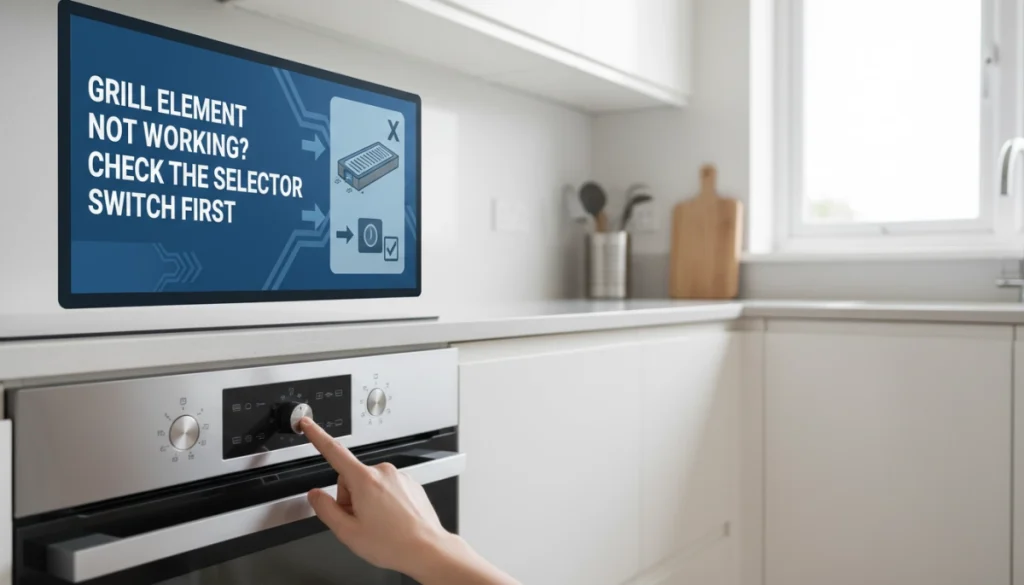
Is your grill element not working but the oven or fan still runs fine? Before you jump to replacing the heating element, there’s a common culprit many overlook: the selector switch. This small but crucial component controls your oven’s modes and often wears out due to heavy use or burnt contacts. Knowing how to check the selector switch first can save you time, money, and unnecessary parts. In this guide, you’ll discover why the selector switch is frequently the hidden cause behind a dead grill, simple tests you can do safely, and practical fixes to get your grill heating again—fast. Always unplug your appliance before you start, and let’s dive in!
Common Symptoms of a Faulty Grill Element or Related Issue
Have you noticed that your grill is not heating up even though the indicator lights are on or the fan is running? This is a common sign of a faulty grill element or a related issue. Other symptoms to watch for include partial heating, where only the inner or outer part of the grill works, making your cooking uneven. Sometimes, the grill may only work intermittently or when the oven is positioned in certain ways, which can be frustrating and confusing.
You might also experience unusual noises or strange smells when using the grill mode. Another red flag is if your circuit breaker trips whenever you select the grill setting. These issues often point to problems like a failing grill element, a malfunctioning selector switch, or wiring faults. Recognizing these common symptoms early can save you time and frustration when troubleshooting your electric oven grill.
Why Check the Selector Switch Before the Grill Element?
The selector switch plays a crucial role in your oven by directing power to different functions like grill, bake, and fan. When the grill mode isn’t working, it’s often because the selector switch isn’t properly sending power to the grill element.
Common failure reasons for the oven selector switch include high current loads, which can cause internal arcing and burnt contacts. These issues can prevent the grill element from heating up even though the element itself might still be fine. Repair professionals often find that a faulty selector switch is wrongly diagnosed as a grill element failure. Checking the selector switch first can save you time and money by pinpointing the true cause.
For more detailed insights into common appliance failures and repairs, you can also explore why dryers stop drying for similar troubleshooting approaches.
Initial Quick Checks (No Tools Needed)
Before diving into testing or replacing parts, start with some simple checks that don’t require any tools. First, verify the power supply: make sure the oven’s plug is fully inserted, the breaker hasn’t tripped, and any isolation switch is turned on. Loose power can cause the grill not heating up even if everything else looks fine.
Next, inspect visible wiring and connections behind the control panel or at the plug, if accessible. Look for any signs of damage, frayed wires, or loose connectors—these can interrupt the electrical flow to the grill element or selector switch.
Also, double-check you’ve selected the correct grill mode on the selector switch and that the thermostat is set high enough to call for heat. Sometimes it’s as simple as the oven being set to a different function or the temperature dial being too low.
Finally, do a quick visual inspection of the grill element itself. Look for obvious signs like burn marks, cracks, or broken coils that could indicate a faulty element. This step can save time by ruling out clearly damaged parts before moving on to deeper testing.
For more on basic electrical safety and inspecting oven wiring, see our detailed wiring harness guide.
Other Potential Causes of Grill Not Working
If your grill isn’t heating properly, the issue isn’t always the grill element or selector switch. Here are some other common causes to consider:
- Faulty grill element: Although often visible—burn marks or breaks—a damaged grill element remains one of the top reasons for grill failure.
- Defective thermostat or energy regulator: If the thermostat isn’t regulating temperature correctly, it can prevent the grill from heating or cause uneven heat distribution. Problems with the energy regulator can also affect power flow to the grill.
- Blown thermal cut-out or fuse: Safety components like thermal cut-outs or fuses may blow to protect the oven from overheating. If triggered, these will stop the grill from working until replaced.
- Wiring or control board issues: Less common but still possible, faults in wiring or the oven’s control board can disrupt electrical flow and prevent the grill from operating. For detailed troubleshooting on control boards, check out our guide on control board malfunctions.
When diagnosing a grill that’s not heating up, keep these factors in mind alongside testing the grill element and selector switch to avoid unnecessary part replacements.
How to Test the Selector Switch Step-by-Step
Before you start testing the oven selector switch, make sure safety first: unplug the oven and, if possible, discharge any capacitors to avoid shocks.
Tools You’ll Need:
- Multimeter
- Screwdriver
Accessing the Selector Switch:
Remove the control panel or rear cover—this depends on your oven model. You might need to check your user manual for specifics, but usually, a few screws hold the panel in place.
Visual Inspection:
Once you have access, look carefully at the selector switch for any burnt marks, melted plastic, or signs of arcing. These are clear signs the switch might be faulty.
Continuity Testing:
Set your multimeter to continuity mode or the lowest resistance setting. Test the selector switch by checking different positions:
- Switch Off Position: The multimeter should show no continuity (infinite resistance).
- Grill Position: You should get continuity, meaning the circuit is complete and power flows through the grill element.
- Other Positions (Bake, Fan, etc.): Check continuity here too, as each position connects different circuits.
Interpreting Readings:
- Continuity present when the switch is on means that part of the switch is working.
- No continuity when it should have continuity indicates a faulty or burnt contact.
- Intermittent or fluctuating readings suggest the switch is unreliable and probably needs replacing.
If you detect any irregularities, it’s likely the selector switch is at fault rather than the grill element itself. This simple test helps avoid misdiagnosing the grill not heating up issue as an element failure.
For more details on removing control panels and understanding oven wiring, you can refer to our guide on how to read appliance wiring.
Testing the Grill Element for Comparison
Before jumping to replace the grill element, it’s smart to test it for continuity to see if it’s really faulty. Here’s a quick way to check the grill element terminals:
- Unplug the oven for safety before testing.
- Use a multimeter set to the ohms (Ω) scale.
- Disconnect the grill element terminals.
- Place the multimeter probes on each terminal of the element.
- A good grill element usually shows a resistance reading between 20 and 100 ohms.
| Test Result | What It Means |
|---|---|
| 20–100 Ω | Grill element is likely OK |
| Infinity (no reading) | Element is broken/open circuit |
| 0 Ω or very low | Possible short circuit |
Live testing the element while powered is not recommended unless you have experience, as it involves high voltages and can be dangerous. Always prioritize safety and use the continuity test as the safer alternative.
For more details on using a multimeter safely, you can check this multimeter oven diagnostics guide.
Replacing a Faulty Selector Switch
If your grill element isn’t working and you’ve confirmed the selector switch is faulty, the next step is replacement. Start by finding a compatible replacement using your oven’s exact model number. This ensures the new selector switch fits perfectly and functions correctly.
Here’s a simple step-by-step for removal and installation:
- Unplug the oven and ensure it’s completely disconnected from power.
- Remove the control panel or rear cover to access the selector switch (this varies by model).
- Before disconnecting any wires, label each wire or take clear photos to make reconnection easier.
- Unscrew and gently remove the faulty switch.
- Install the new selector switch by reversing the removal steps. Double-check that all wires are connected securely.
Replacing the oven selector switch yourself can save money compared to a professional repair, which can be costly due to labor. However, if you’re unsure about the wiring or the switch compatibility, consulting professional guidance or a repair service is a safer bet.
For more detailed tips on locating the right replacement parts, check out this guide on discovering the perfect replacement and avoid common mistakes.
When to Call a Professional
If you don’t have a multimeter or aren’t comfortable with live testing, it’s best to call a professional. Testing the oven selector switch or grill element safely requires some experience to avoid electric shock or causing further damage.
Gas ovens and those with advanced electronic controls also call for expert handling. Unlike simpler electric models, these systems can have complex wiring and sensitive components that need specialist knowledge.
Finally, if you’ve replaced parts like the grill element or selector switch but the grill is still not heating up or work only intermittently, it’s wise to get a pro involved. Persistent issues often point to hidden wiring faults or control board problems you may not spot on your own.
For detailed troubleshooting steps and repair guidance, you can also explore this electric oven troubleshooting resource to help decide when professional help is the right call.
Prevention Tips to Extend Oven Life
To keep your oven grill and selector switch in good shape, follow these simple prevention tips:
- Set the selector switch before the thermostat: Always choose your cooking mode first, then adjust the temperature. This reduces stress on the oven mode switch and prevents premature wear.
- Reverse the selector switch before changing modes: When switching between grill, bake, or fan settings, move the selector switch back to the off position before selecting a new mode. This avoids electrical arcing and burnt oven switch contacts.
- Avoid switching modes while the oven is heating (under load): Changing modes when the grill element is hot can cause selector switch faults or element damage. Be patient and switch only when the oven is off or cooling.
- Do not overload the oven: Overuse or heavy loads increase current draw, which strains the grill element and selector switch, leading to faults or uneven heating.
- Perform regular cleaning and visual inspections: Keep the oven interior clean and check for any signs of damage or burnt marks on the grill element and selector switch. This helps spot problems early and prevent bigger failures.
For more detailed maintenance ideas, see our general tips to extend appliance life to keep your oven running smoothly for years.