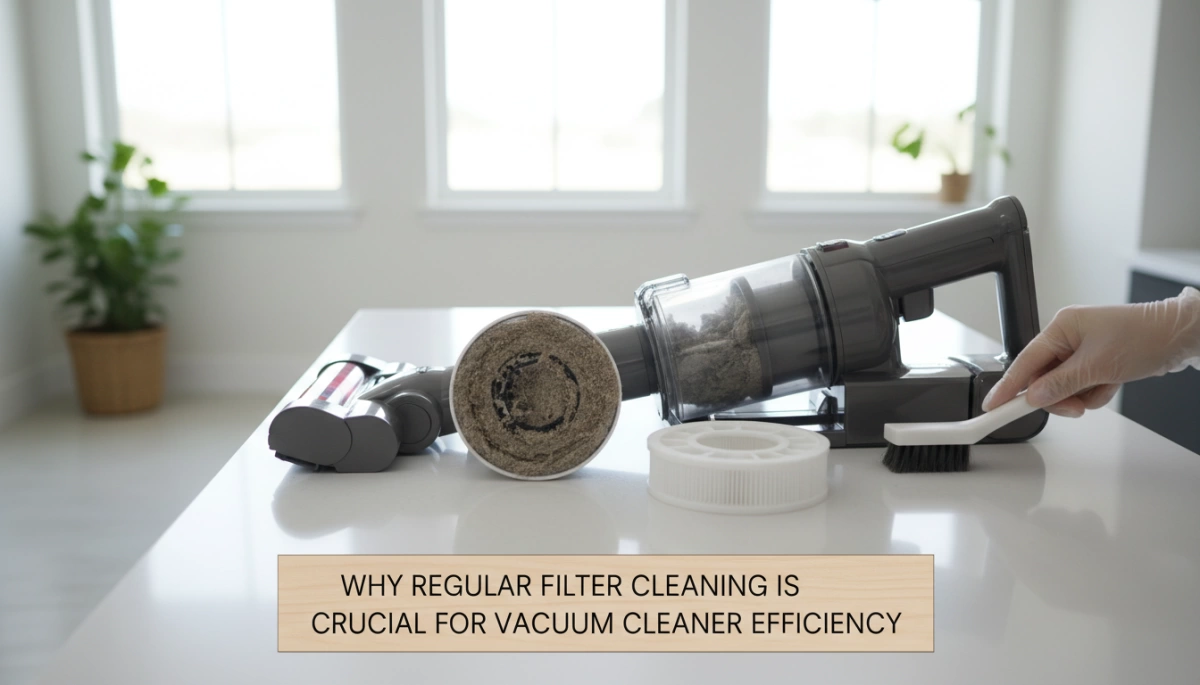
How Vacuum Filters Work and Why They Get Dirty
Vacuum filters play a crucial role in keeping your vacuum cleaner running smoothly and your home’s air clean. Typically, vacuums have different filters like pre-motor filters, post-motor filters, and HEPA filters, each designed to trap various particles. The pre-motor filter catches larger dust and debris before air reaches the motor, protecting it from damage. The post-motor filter, often a HEPA filter, traps tiny allergens and dust before air is released back into your room, helping to improve indoor air quality.
As you vacuum, the airflow draws in dust, hair, and dirt. Over time, these particles clog the filters, causing clogged vacuum filter effects such as reduced suction and poor vacuum cleaner performance. Airflow becomes restricted, making the motor work harder and increasing the chance of overheating.
Filters come in a few common types:
- Foam filters: Soft and washable, they catch larger dust particles.
- Pleated filters: Designed with folds to increase surface area for trapping dirt.
- Washable HEPA filters: High-efficiency filters that trap microscopic allergens and can be rinsed under water.
Certain household factors speed up filter buildup, including:
- Pets that shed hair and dander
- Thick carpet fibers that hold dust
- Dry climates that cause more airborne dust
Regular vacuum filter maintenance is essential because dirt quickly accumulates, harming your vacuum’s efficiency and your home’s air quality. Keeping your filters clean restores vacuum suction power and protects the motor.
The Direct Impact of Dirty Filters on Efficiency
A dirty vacuum filter can seriously reduce your machine’s suction power, making it harder to pick up dirt, dust, and debris effectively. When filters clog, airflow is restricted, forcing the motor to work overtime. This extra strain not only increases the risk of overheating but can also lead to motor burnout if ignored. As your vacuum struggles, it consumes more energy, driving up your electricity bills.
Beyond performance, a clogged vacuum filter can cause dust and allergens to recirculate back into your home, worsening indoor air quality. This is especially problematic for allergy or asthma sufferers who rely on clean filters to trap tiny particles. Regular vacuum filter maintenance is key to preventing these issues and restoring vacuum suction power, ensuring your cleaner runs smoothly and efficiently. For a deeper dive into filter types and their roles, understanding HEPA filter maintenance is a helpful place to start.
Additional Benefits of Regular Filter Cleaning
Keeping your vacuum filter clean does more than just maintain suction power—it brings several important benefits that improve your overall vacuum cleaner experience.
| Benefits | Details |
|---|---|
| Extended vacuum lifespan | A clean filter protects the motor and other parts, reducing wear and preventing overheating or damage. This means your vacuum lasts longer without costly repairs. |
| Improved cleaning results | Clean filters restore full suction power, making your vacuum more effective. You’ll spend less time going over the same spot and get better debris pickup on carpets and floors. |
| Cost savings | By reducing motor strain and improving efficiency, you cut down on energy use and avoid frequent repairs or early filter replacements—saving money on bills and maintenance. |
| Health benefits | Clean filters trap dust and allergens better, reducing the amount recirculated into your home. This is especially important for allergy or asthma sufferers, helping improve indoor air quality. |
Regular vacuum filter maintenance is a simple way to protect your investment and keep your home cleaner and healthier. For tips on specific filter types like HEPA filters, check out this detailed guide on HEPA and pre-motor filters cleaning.
Signs That Your Vacuum Filter Needs Cleaning
Knowing when to clean your vacuum filter is key to keeping it running smoothly. Here are some clear signs your vacuum filter needs attention:
- Noticeable drop in suction power — if the vacuum isn’t picking up debris like before, a clogged filter could be the culprit.
- Unusual odors or burning smells — clogged filters can cause your vacuum motor to overheat, creating strange smells.
- Vacuum running hotter or louder than normal — harder motor work due to dirty filters leads to excess heat and noise.
- Dust escaping from exhaust — poor filtration means dust and allergens blow back into your home, hurting your indoor air quality.
- Reduced performance on carpets and hard floors — a dirty filter reduces airflow, making cleaning less effective on all surfaces.
Paying attention to these signs helps you maintain vacuum cleaner performance issues and prevents costly repairs. Cleaning your vacuum filter regularly not only restores vacuum suction power but also protects your vacuum motor from strain. If you want to dive deeper into appliance maintenance tips, check out troubleshooting guides like this one on fixing a refrigerator that’s not cooling properly for general appliance care advice.
How Often Should You Clean Your Vacuum Filter?
Knowing how often to clean your vacuum filter depends largely on your usage and environment. For light use—like occasional vacuuming in low-traffic areas—cleaning the filter every 2-3 months usually suffices. If you vacuum frequently or have pets shedding fur and dander, it’s best to clean filters monthly to maintain peak vacuum cleaner performance. Homes in dusty or dry climates may also need more regular vacuum filter maintenance to prevent clogs.
Some brands have specific recommendations. For example, Dyson suggests cleaning their filters every 1-3 months, depending on the model. Robot vacuum filters often require cleaning every 2-4 weeks since these devices run daily and collect fine dust continuously. You can find detailed advice for robot vacuums in our guide on robot vacuum not charging issues, which also touches on routine maintenance tips.
It’s important to know when to replace your vacuum filter instead of just cleaning it. Washable filters should be replaced every 6-12 months, or sooner if they show wear and can’t be rinsed properly. Non-washable filters, like some HEPA types, need regular replacement as per manufacturer instructions—usually every 3-6 months. Damaged or permanently clogged filters won’t restore suction power no matter how much you clean, so timely replacement protects your vacuum motor and keeps cleaning effective.
Regular vacuum filter maintenance not only restores suction power but also helps prevent vacuum overheating and other performance issues. Sticking to a cleaning and replacement schedule is a simple step to extend vacuum cleaner lifespan and ensure healthier indoor air quality.
Step-by-Step Guide to Cleaning Your Vacuum Filter
Keeping your vacuum filter clean is key to maintaining vacuum cleaner performance and restoring vacuum suction power. Follow these simple steps to clean your vacuum filter regularly and protect your vacuum motor.
- Unplug your vacuum cleaner: Always start by disconnecting the vacuum from the power source to avoid any accidents.
- Locate and remove the filter(s): Check your vacuum’s manual to find pre-motor, post-motor, or HEPA filters. Remove them carefully.
- Tap off loose dust outdoors: Take the filter outside and gently tap it to knock off dust and debris. This prevents clogged vacuum filter effects inside your home.
- Rinse washable filters with cool water only: For washable vacuum filters—foam, pleated, or HEPA—rinse under cool running water. Avoid hot water to prevent damage to the filter material.
- Air-dry completely for 24+ hours: Let the filter dry fully before reinstalling. A damp filter can lead to mold or poor vacuum cleaner performance issues.
- Avoid rough scrubbing: Be gentle when cleaning to preserve the filter’s structure and effectiveness.
Regular vacuum filter maintenance like this extends vacuum cleaner lifespan and improves indoor air quality vacuum users rely on daily. For more maintenance tips, consider reviewing other essential cleaning advice related to vacuum parts and air filters.
By keeping your filters clean, you ensure your vacuum runs efficiently and protects against overheating and motor damage.
Pro Tips to Keep Filters Cleaner Longer
Keeping your vacuum filter cleaner for longer is all about good habits. Here are some easy tips to help maintain vacuum filter efficiency and reduce buildup:
- Empty the bin or canister frequently. A full bin makes your vacuum work harder, which clogs the filter faster.
- Clean the brush roll regularly. Hair and debris wrapped around the brush can push dirt into the filter and reduce suction power.
- Avoid vacuuming large debris. Big pieces can block airflow and damage your filter and motor over time.
- Use the vacuum in well-ventilated areas. Proper airflow helps prevent overheating and filter clogging, improving overall vacuum cleaner performance.
Following these simple steps supports better vacuum filter maintenance and helps protect your vacuum motor from strain. For more tips on keeping your vacuum running smoothly, you can explore detailed advice like those found in our guide to extend appliance lifespan.



Leave a Reply