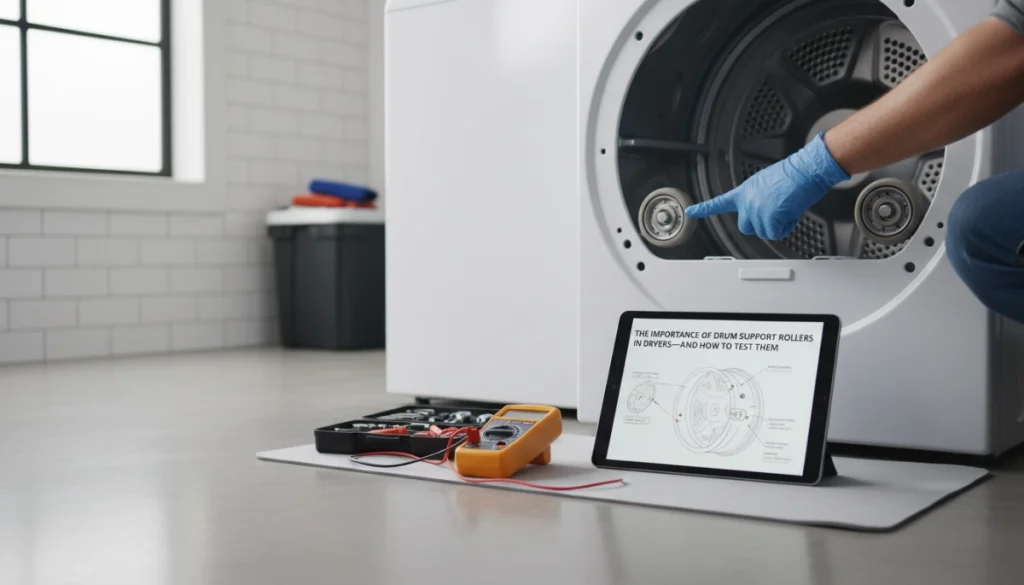
Are you tired of that annoying thumping or squeaking coming from your dryer? The culprit might just be the drum support rollers—small but vital parts that keep your dryer drum turning smoothly. If these rollers fail, you risk noisy operation, uneven drying, or even bigger appliance damage down the line. In this post, you’ll discover why drum support rollers are so important, how to spot when they’re worn out, and simple ways to test them yourself. Whether you’re a DIY enthusiast or just looking to save on costly repairs, understanding these components can keep your dryer running quietly and efficiently. Let’s get started!
What Are Dryer Drum Support Rollers?
Dryer drum support rollers are small wheels, usually between two and four per dryer, that play a crucial role in supporting the weight of the dryer drum. These rollers help the drum spin smoothly and quietly during cycles. Typically, you’ll find them mounted on the rear bulkhead of the dryer, though some models include additional front glides for extra support.
Made with a rubber or plastic tread wrapped around a metal core, these drum rollers come equipped with internal bearings that allow them to rotate freely. This design reduces friction and wear as the drum turns. The rollers work closely with other parts like the drive belt, idler pulley, and motor to ensure the drum moves efficiently without strain.
By supporting the drum’s weight and enabling smooth rotation, dryer drum rollers are essential to keep your dryer running quietly and effectively. Without these sturdy support wheels, your dryer could experience uneven tumbling and increased wear on the motor and belt.
Why Drum Support Rollers Are Essential
Dryer drum support rollers play a crucial role in keeping your dryer working smoothly. They enable the drum to rotate quietly and evenly, ensuring your clothes tumble properly without getting stuck or damaged. By supporting the drum’s weight, these rollers reduce strain on the drive belt, motor, and drum bearings, which helps prevent premature wear on these parts.
If the rollers fail or wear out, you’ll often notice problems like a noisy dryer, thumping sounds from flat spots on the rollers, or even the drum not spinning smoothly. These issues force the motor to work harder, leading to higher energy use, overheating, and eventually motor failure or drum seizure. In most dryers, drum rollers last between 5 and 10 years, but heavy usage can shorten their lifespan significantly.
Keeping your drum rollers in good shape not only avoids costly repairs but also improves your dryer’s overall efficiency, saving you energy and money over time. For more tips on keeping your dryer in shape, check out this guide on energy-saving maintenance for appliances.
Common Signs of Worn or Faulty Drum Support Rollers
If your dryer drum support rollers start wearing out, you’ll notice some clear signs. A common one is a thumping noise caused by flat spots on the rollers. These flat spots make the drum hit unevenly as it spins. Another giveaway is a squealing sound, which usually means the roller bearings are dry or failing. Worse still, you might hear a grinding noise, indicating metal-on-metal contact as the roller struggles to turn.
Visually, watch for a wobbly drum or uneven spinning—these suggest the rollers aren’t supporting the drum properly. You might also see black marks on your clothes, caused by deteriorating roller treads rubbing against the fabric. Other related issues include longer drying cycles and even dryer overheating, as a strained motor works harder due to poor roller function.
Keeping an eye on these symptoms helps you avoid bigger problems like motor damage or drum seizure. For more on general appliance care and avoiding overheating risks, check out this useful guide on preventing lint fires in dryers.
How to Test Drum Support Rollers
Before you start, safety first: always unplug your dryer and make sure it’s cool to avoid any accidents.
Begin with preliminary checks by running an empty cycle. Listen closely for any unusual noises like thumping or squealing. Then, try spinning the drum manually. Notice if there’s any resistance, roughness, or wobble—that’s often a sign of worn dryer drum rollers.
If you suspect an issue, you’ll need to access the rollers by disassembling the dryer. Typically, this involves:
- Removing the top and/or front panels
- Taking off the drive belt
- Carefully lifting the drum out of the cabinet
Once the drum is out, inspect each drum support roller closely. Look for:
- Flat spots or cracks on the rubber/plastic tread
- Excessive wear or missing tread material
- Any signs of damage on the metal shaft
Spin each roller by hand. They should rotate smoothly without noise or resistance. Also, check the shaft for any play (wiggle) or scoring marks, which indicate the bearings inside may have failed.
For this job, basic tools are usually enough:
- Screwdriver
- Putty knife (for clips)
- Flashlight (to see inside tight spots)
Testing your dryer drum rollers carefully helps catch worn or faulty parts early, preventing that annoying thumping dryer sound or dryer not spinning smoothly issues. For more on diagnosing appliance issues, you might find this guide on how to diagnose unusual appliance noises useful.
When and Why to Replace Drum Support Rollers?
It’s time to replace your dryer drum rollers if any of them fail inspection—look for flat spots, cracks, or rough rotation. Replacing all rollers at once is best to keep wear even and avoid future noise or damage.
Benefits of Replacing Drum Support Rollers:
| Benefit | Description |
|---|---|
| Quieter Operation | Stops thumping, squeaking, and grinding sounds |
| Longer Dryer Life | Reduces stress on motor, belt, and drum bearings |
| Better Efficiency | Ensures smooth drum rotation for faster drying cycles |
When choosing replacement rollers, consider OEM parts for guaranteed fit and durability. Aftermarket options can be cheaper but may vary in quality. For a detailed comparison on part choices, check out this guide on OEM vs aftermarket parts.
Replacing worn dryer drum rollers is a simple repair that can save you from costly motor failures and improve your dryer’s performance.
Step-by-Step Guide to Replacing Drum Support Rollers
Replacing dryer drum support rollers might seem tricky, but with the right tools and clear steps, it’s manageable. Here’s how to do it:
Tools and Parts Checklist
- Screwdrivers (Phillips and flathead)
- Putty knife or panel removal tool
- New drum roller kit (rollers, tri-rings or clips)
- Flashlight for better visibility
- Optional: Socket wrench set
Disassembly Process (Model Variations)
- Safety First: Unplug your dryer and let it cool completely.
- Remove Panels: Depending on your model, remove the top and front panels. Use a putty knife to release clips if necessary.
- Take Off the Belt: Loosen the tension pulley and slide off the drive belt from the drum and motor pulley.
- Lift Out the Drum: Carefully lift the drum out of the dryer cabinet to access the rollers mounted at the rear bulkhead or front glides.
Fitting New Rollers
- Position each new roller in its bracket.
- Secure with clips or tri-rings included in your roller kit – these hold the roller shaft firmly.
- Spin each roller by hand to ensure smooth rotation without noise or resistance.
Reassemble Dryer and Route Belt
- Place the drum back into the dryer housing, aligning it correctly on the new rollers.
- Refit the drive belt around the drum and pulleys, ensuring proper tension from the idler pulley.
- Reattach the front and top panels.
Test After Replacement
- Plug the dryer back in and run it empty for a short cycle.
- Listen for any unusual noises; the drum should rotate smoothly and quietly without thumping or squeaking.
- Check that clothes tumble evenly and drying times are normal.
Following this guide will save you from noisy dryer issues caused by worn dryer drum rollers and extend your dryer’s life. For ongoing care, consider regular maintenance like lint cleaning and inspecting rollers during vent cleaning to avoid future problems.
For detailed tips on maintaining appliance parts, you might find this DIY guide to cleaning refrigerator components helpful, as maintaining parts plays a big role across home appliances.
Maintenance Tips to Prolong Drum Support Roller Life
Keep your dryer drum rollers running smoothly with some simple maintenance steps. First, regularly vacuum lint around the rollers to prevent buildup, which can cause extra friction and wear. Next, avoid overloading your dryer—too much weight puts stress on the rollers and other parts. Also, try to balance your loads evenly to reduce uneven wear on the drum rollers.
Make it a habit to inspect the rollers whenever you clean your dryer vent. This is a great time to spot early signs of roller wear like flat spots or cracks. Depending on your dryer model, you may also want to apply light lubrication to the roller bearings—just check your user manual for recommended lubricants and methods to avoid damage.
Following these simple tips will extend the life of your dryer drum rollers, helping prevent noisy dryer issues and costly repairs down the line. For more in-depth maintenance advice, you can refer to general tips on how to extend appliance lifespan, which applies well to dryers too.
Frequently Asked Questions About Drum Support Rollers
How long do dryer drum rollers usually last?
Typically, drum support rollers last between 5 to 10 years, depending on your dryer’s usage and maintenance. Heavy loads or infrequent care can shorten their lifespan.
Can I use temporary fixes like lubrication instead of replacing worn rollers?
While applying a little lubricant might reduce squeaking for a short time, it doesn’t fix worn-out rollers with flat spots or damaged bearings. For a smooth, quiet dryer drum rotation and to avoid motor strain, it’s best to replace faulty drum rollers rather than relying on temporary fixes.
Should I repair the rollers myself or hire a professional?
If you’re comfortable with DIY dryer repair and have basic tools, replacing drum rollers is manageable by following step-by-step guides. However, if your dryer model is complex or you’re unsure about disassembly, consulting a professional can save time and avoid damage. For guidance on when to call an expert, check out advice on when to call a professional for dryer repairs.
How much does drum roller replacement typically cost?
The price for dryer drum rollers varies by brand and model but generally ranges from $15 to $50 for a set. Labor costs add up if you choose professional repair, often bringing total expenses to $100 or more. Opting for high-quality OEM parts can improve durability compared to cheaper aftermarket rollers.
If you’re aiming to extend your dryer’s life and avoid recurring issues, regular maintenance and timely replacement of worn dryer drum rollers are essential. For more detailed advice on choosing parts, see our guide on discovering the perfect replacement dryer drum rollers.