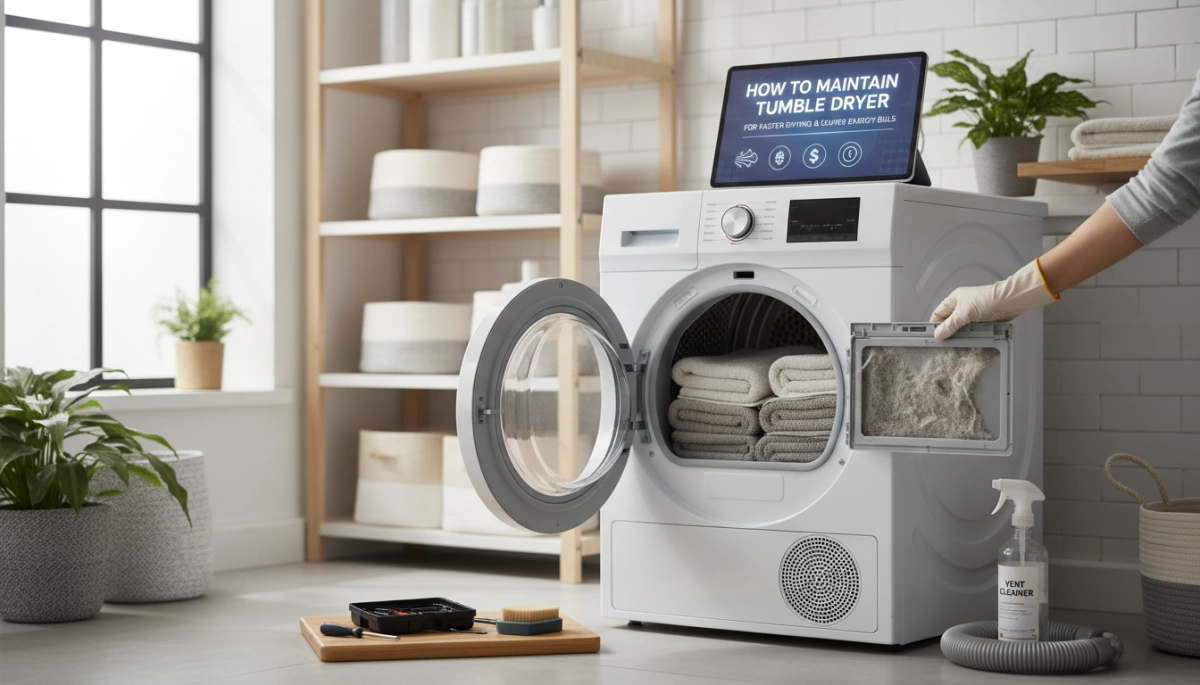
If your tumble dryer feels slower than it used to, or your energy bills keep creeping up, maintaining your tumble dryer for faster drying and lower energy bills is the game changer you need. Keeping things clean and running smoothly not only speeds up drying time but also saves you money and extends your dryer’s lifespan. In this guide, you’ll discover simple, practical tips to tackle lint buildup, optimize airflow, and adopt energy-smart habits—so you can get your laundry done quicker without the extra cost. Ready to stop wasting time and energy? Let’s jump in!
Understanding How Tumble Dryers Work and Why Maintenance Improves Efficiency
To keep your tumble dryer running efficiently, it helps to understand the basics of how it works. Whether you have a vented, condenser, or heat pump model, your dryer relies on effective airflow, heat circulation, and moisture removal to dry clothes quickly and use less energy.
- Vented dryers pull in air, heat it, then blow the warm, moist air outside through an exhaust vent.
- Condenser dryers heat the air and condense moisture into a water tank you need to empty regularly.
- Heat pump dryers recycle warm air, using less energy by operating at lower temperatures.
Blockages like lint buildup, clogged vents, or dirty filters can disrupt this airflow, causing your dryer to work harder. Poor drying habits—such as overloading the drum or ignoring the lint trap—restrict the hot air circulation and moisture removal, leading to slower drying times and higher energy bills.
By keeping airflow clear and practising good dryer maintenance habits, you help your machine dry clothes faster, reduce wear and tear, and save on electricity. A well-maintained tumble dryer is an energy-efficient tumble dryer.
Essential Daily and Per-Load Maintenance Habits
Keeping your tumble dryer running efficiently starts with daily care and simple habits after every load. Here’s what I recommend for faster clothes drying and lower energy bills:
- Clean the lint filter after every load: Always remove the lint trap and clear away fluff. Do this by hand or with a soft brush to stop blockages. For deep cleaning, soak the filter in warm soapy water once a month to remove any greasy residue that can build up and restrict airflow.
- Empty the water tank promptly (for condenser and heat pump dryers): These models collect moisture in a container that needs regular emptying. Don’t let it overflow—that can slow drying and even cause leaks.
- Shake out and untangle wet clothes before loading: This simple step improves airflow between items, helping clothes dry evenly and more quickly without extra energy use.
Adopting these easy maintenance habits reduces dryer lint buildup, keeps airflow smooth, and prevents unnecessary energy waste. For tips on avoiding lint fires and additional safety checks, check out our guide on preventing lint fires in dryers.
Regular Cleaning Tasks for Optimal Performance
To keep your tumble dryer running efficiently and reduce energy costs, regular cleaning is a must. Here’s a simple schedule to follow:
- Monthly: Clean the condenser unit or heat exchanger. For condenser and heat pump dryers, this part collects moisture and needs rinsing under water if your model allows. This stops blockages and keeps air flowing freely, which helps faster clothes drying and saves energy.
- Monthly or Quarterly: Wipe the drum interior to remove lint and detergent residue. Also, check and clean the moisture sensors inside the drum. Dirty sensors can misread dampness, leading to longer drying cycles and higher electricity bills.
- Annually: Inspect door seals for wear and tear. Worn seals let out heat and air, making your dryer work harder. Replace them if needed—learn more about the role of door seals in appliance efficiency here. Also, clean the exhaust hose and external vent to clear any lint buildup that causes dryer vent blockage and slow drying.
Following this regular cleaning routine enhances your dryer’s performance, saves on energy, and prolongs its lifespan.
Deep Cleaning the Dryer Vent System
Clogged dryer vents are a common cause of slow drying and higher energy bills. When lint, dust, and debris build up inside the vent duct, airflow gets restricted. This forces your tumble dryer to work harder and longer, wasting energy and increasing the risk of overheating or even a fire hazard.
Step-by-step guide to cleaning the dryer vent:
- Unplug your dryer to ensure safety before starting.
- Disconnect the vent duct from the dryer and the wall or exterior vent.
- Use a dryer vent cleaning brush kit to loosen lint and debris inside the duct. Insert the flexible brush and gently push and twist it along the vent.
- Vacuum the loosened lint inside the duct and around the vent openings.
- Check the outdoor vent flap to make sure it opens freely and is not blocked by lint, leaves, or other debris.
- Reattach everything securely before running your dryer again.
For longer or more complex vent systems, or if you notice persistent drying problems despite cleaning, it’s best to call a professional. They have specialized tools to thoroughly clean and inspect dryer vents, ensuring maximum airflow and safety. Learn more about when to seek expert help with professional dryer maintenance.
Regularly maintaining a clean dryer vent reduces energy use, speeds up drying times, and lowers the risk of costly repairs — all key to keeping your tumble dryer running efficiently and your energy bills down.
Best Practices for Energy-Efficient Drying
To get the fastest clothes drying times and reduce dryer energy costs, start with your washing machine. Always use the highest spin speed available to remove as much water as possible before drying. This cuts down on drying time and saves electricity.
When loading your tumble dryer, aim for a full drum but avoid overloading it. Overloading restricts airflow and slows drying, making the dryer work harder and consume more energy. Sorting clothes by fabric weight also helps – dry heavier items like towels separately from lighter pieces for even drying.
Choosing the right cycle matters too. Sensor or auto-dry settings are your best bet since they stop the cycle as soon as clothes are dry, preventing wasted energy. If your dryer has eco or lower heat options, use them to save energy without sacrificing performance.
Adding dryer balls is a simple trick to speed up drying. They separate clothes inside the drum, improving airflow and reducing drying time. Also, drying similar items together and removing them promptly once dry avoids rewrites, which waste power.
By following these best practices for an energy efficient tumble dryer, you’ll enjoy faster clothes drying and lower electricity bills.
Troubleshooting Common Issues That Affect Drying Speed and Costs
If your clothes are still damp after a full cycle, the first things to check are overloads, clogged dryer lint filters, and blocked dryer vents. Overstuffing the drum restricts airflow, making the dryer work harder and take longer. Make sure the lint trap is clean — lint buildup reduces airflow and drying efficiency. Also, inspect the vent for any blockages or kinks that could be causing poor air circulation. Faulty tumble dryer sensor dry functions can also result in damp clothes, as the machine may not correctly detect moisture levels.
Unusual noises or overheating during cycles might signal belt or motor issues. A worn or slipping belt can cause strange sounds and reduce drum movement, affecting drying performance. Overheating could indicate a malfunctioning thermostat or motor strain, both of which need attention to prevent energy waste and possible damage.
If you’ve checked these common problems and your dryer still isn’t drying efficiently, it’s time to seek professional help. A trained technician can diagnose and fix more complex faults, ensuring your dryer runs safely and lowers electricity bills dryer over time.
For more detailed appliance troubleshooting guidance, you can also refer to reliable resources like those covering home appliance repair techniques.
Long-Term Tips for Savings and Sustainability
For lasting savings and a greener home, consider upgrading to a heat pump tumble dryer. These models use less energy by recycling heat during drying, making them a top choice for energy efficient tumble dryers. Over time, a heat pump dryer can significantly reduce your electricity bills compared to traditional vented or condenser dryers.
Complementing your tumble dryer use with alternative drying methods can also help. Whenever possible, air drying clothes outdoors or indoors on racks reduces wear on your machine and cuts energy costs. Even partial air drying before using the tumble dryer speeds up drying time and lowers energy use.
Consistent dryer maintenance pays off in the long run. Regular upkeep means shorter drying cycles, fewer breakdowns, and better heat circulation—all contributing to lower energy bills. Sticking to a dryer maintenance schedule not only protects your appliance but also helps save you money by improving efficiency over time.
For more detailed advice on keeping your appliances energy smart and in top shape, check out these energy-saving maintenance tips.



Leave a Reply