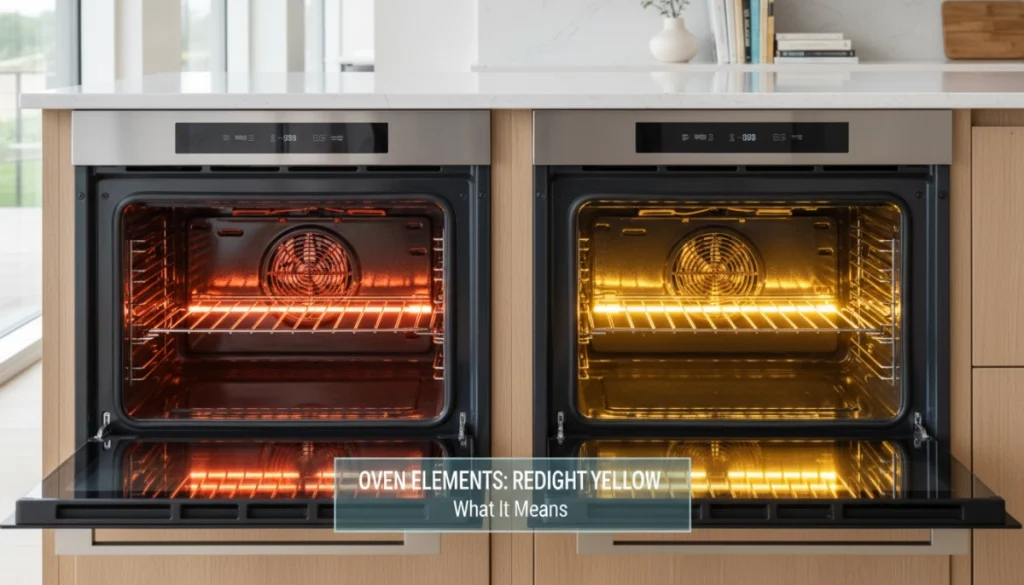
Ever noticed your oven elements that glow red-orange during preheat but then spot a bright yellow or even white-hot flash that throws you off? If you’re wondering what these color shifts really mean, you’re not alone. Oven elements that glow red-orange vs. bright yellow can reveal a lot about your oven’s health—from normal operation to warning signs of overheating or damage. In this post, you’ll learn why these colors matter, when to stay calm, and when it’s time to take action for safety and reliable cooking. Let’s get to the bottom of those glowing coils!
How Electric Oven Heating Elements Work
Electric ovens use heating elements—usually metal coils—to generate heat through electrical resistance. When electricity flows through these coils, they heat up and start to glow. This glow is called incandescence, a natural effect where the element emits light due to its high temperature.
There are two main types of oven elements:
- Bake elements: Located at the bottom of the oven, they provide steady, even heat for baking by cycling on and off to maintain your set temperature.
- Broil elements: Found at the top, these deliver intense, direct heat used for broiling and browning.
During preheat, the elements glow steadily to raise the oven’s temperature. Once the desired heat is reached, they cycle on and off, glowing only when additional heating is needed. This cycling helps keep your oven temperature stable without overheating.
The color of the oven heating element glow depends on how hot the coil is, influenced by the electrical current and resistance inside the coil itself. Understanding these basics helps explain why your oven elements glow red-orange normally and what changes in glow color might mean for your oven’s performance.
The Science Behind Glow Colors: Temperature and Blackbody Radiation
Oven heating elements glow because they get hot enough to emit visible light—a process explained by blackbody radiation. This means the color you see directly relates to the temperature of the coil. Typically, electric oven coils reach temperatures between 1,000°F to 1,600°F (about 540°C to 870°C) during normal operation.
At lower temperatures, the coil glows a dull red. As the heat rises, the glow shifts to a brighter red-orange, which is the usual color you should expect from a healthy bake element red orange glow or broil element glowing in action. This red-orange color reflects normal electrical resistance while efficiently heating the oven.
When the heating element gets even hotter, it can start glowing yellow or white-hot. This bright yellow glow is uncommon during regular oven preheat glow cycles and usually means the element is too hot—often caused by coil thinning, electrical issues, or trapped grease igniting. A yellow or white-hot glow is a clear warning sign of potential oven element failure signs, indicating uneven heating or the risk of arcing and damage.
Understanding this color-temperature link helps you spot when your oven’s heating element is working fine or when it’s at risk of burnout or malfunction. For more details on heating element behavior and replacement tips, you might find our guide on oven heating elements very helpful.
What a Normal Red-Orange Glow Means
When your electric oven coil glows a steady red-orange during preheat, it’s a good sign that everything is working properly. Both bake elements and broil elements normally show this kind of glow when heating up. During the preheat phase, you’ll notice the element cycling on and off, glowing bright red-orange while active, then dimming or turning off as the oven reaches the set temperature.
A uniform, bright orange-red glow across the entire heating element indicates healthy operation and even electrical resistance. This consistent color means the coil is heating evenly without hot spots or damage. Once the oven hits the desired temperature, the element will turn off or cycle less often to maintain a steady heat level.
In contrast to unusual colors like bright yellow, this normal glowing color is what you want to see for efficient and safe oven performance. If you want to confirm your oven’s temperature matches the glow, using an oven thermometer can help verify proper function. For more on safe oven use and heating cycles, you might find useful tips on troubleshooting self-cleaning oven issues in related guides.
What a Bright Yellow or White-Hot Glow Means
If your oven element glows bright yellow or white-hot, that’s usually a warning sign. Normally, oven heating element glow should be a steady red-orange color. When you see localized bright spots or sections that shift to yellow or even white, it often means the coil is overheating or failing.
Common causes include:
- Thinning coil: Over time, parts of the coil can wear out, causing those spots to heat unevenly and glow brighter.
- Grease ignition: Built-up grease can catch fire or burn, creating hotter patches on the element.
- Poor electrical connections: Loose or corroded connections can cause arcing, leading to those abnormal hot spots.
These issues can cause uneven heating in your oven, risking burnt food and inconsistent cooking results. Worse, they may escalate into more severe problems like element meltdown, electrical arcing, or even a fire hazard.
If you notice a bright yellow or white-hot glow, it’s best to turn off your oven immediately and inspect the element. For safety tips and troubleshooting on heating issues, checking out guides on why your oven isn’t heating properly can also help you understand related problems before they get worse.
Other Glow Issues to Watch For
Sometimes, your oven element’s glow might not look quite right, even if it’s still working. Here are a few glow issues to watch for:
- Uneven or patchy glowing patterns: If parts of the heating element glow dimmer or not at all, it could mean damage or a failing coil. This uneven heating affects cooking performance and may lead to hotspots.
- No glow despite oven running: When the element doesn’t glow at all but the oven is powered on, there could be an electrical fault or a broken element coil. This is a clear sign the heating element isn’t working properly.
- Constant glowing without cycling off: Normally, oven elements turn on and off to maintain the set temperature. If your heating element (bake or broil) keeps glowing nonstop, it could mean a thermostat or control problem. This constant heat risks element burnout and uneven cooking.
Monitoring these signs early helps prevent more serious oven element failure or safety issues like arcing or fire hazards. If you notice these unusual glow patterns, it’s a good idea to inspect your oven element carefully or consult a professional. For more maintenance tips and warnings about oven odors and safety, check out useful guides like this detailed explanation on why oven smells appear during heating.
How to Diagnose Your Oven Element
Diagnosing oven element issues is simpler than you might think. Start by preheating your oven and watching the oven heating element glow closely. A healthy bake element should glow a consistent red-orange, while any unusual colors like bright yellow or white-hot spots suggest trouble. Use an oven thermometer to verify if the temperature matches the setting, as unexpected dips or spikes can indicate a faulty heating element.
Always prioritize safety before any inspection: switch off the oven power at the breaker to avoid electric shock. Once powered down, check the element for visible damage such as cracks, blistering, or thinning coils. Uneven glowing or no glow at all during operation also points to potential failure signs. For more detailed guidance on pinpointing unusual heating behaviors, consider the troubleshooting advice in this oven repair guide.
Using these simple tests helps you decide if your oven coil needs replacing or if further expert help is needed.
When to Replace the Heating Element
Knowing when to replace your oven element is key to keeping your appliance safe and efficient. Clear signs include yellow hotspots or white-hot patches on the coil, which indicate the element is overheating or thinning. Uneven heating during cooking and any visible damage like cracks, breaks, or severe discoloration are also red flags.
If you notice these issues, it’s usually best to replace the element promptly to avoid further damage or even a fire hazard. Many oven heating element replacements can be done DIY if you’re comfortable turning off power and following instructions carefully. Always unplug the oven first and double-check safety before handling.
Expect typical oven elements to last around 5-10 years depending on use and care. Replacement parts are generally affordable, but professional installation may add to the cost if you’re unsure. For guidance on selecting and installing parts, you can find detailed advice on how to find the perfect replacement oven element to match your model.
Replacing your faulty heating element restores even heat, improves oven efficiency, and keeps your kitchen safe from hazards associated with a faulty heating element or overheating coil.
Prevention and Maintenance Tips
Keeping your oven elements glowing the right red-orange color depends a lot on simple care and maintenance. Here are some straightforward tips to help prevent issues like a heating element yellow hot or uneven glowing element:
- Regular cleaning to prevent grease buildup: Grease or food spills can coat oven elements, causing hotspots that may lead to localized yellow glows or even element failure. Clean the oven interior and coils gently but thoroughly to avoid this. For a step-by-step cleaning approach, check out this detailed guide on DIY oven cleaning.
- Avoid dropping items or slamming racks on elements: Physical damage like dents or breaks in the coil often causes uneven glow or coil thinning, speeding up burnout. Treat your oven racks and elements gently when removing or adjusting them.
- Oven temperature calibration tips: If your oven runs too hot, the elements can glow brighter than normal, even yellow hot. Use an oven thermometer to verify accuracy and recalibrate the thermostat if needed. This helps avoid overheating and extends the lifespan of your coil.
By sticking to these easy practices, you’ll reduce the chance of faulty heating element signs showing up and keep your oven safely performing well longer. Regular maintenance is the best way to protect your appliance from damage and costly repairs. For more appliance upkeep advice, see our page on general preventive maintenance tips.