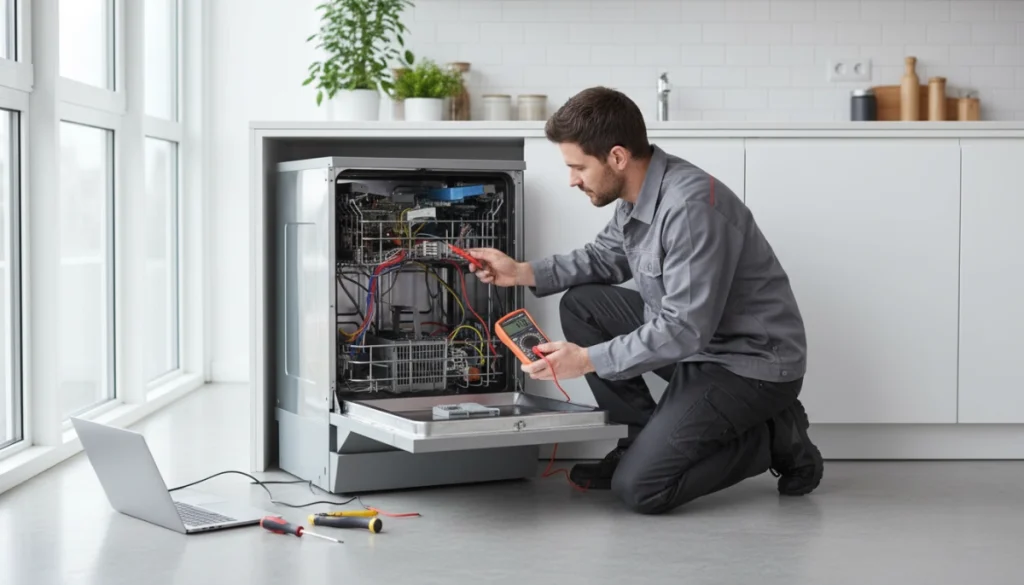
Safety Precautions Before Starting
Before you begin troubleshooting appliance electrical issues, safety is your top priority. Always unplug the appliance first to completely cut off power. Next, turn off the power at the circuit breaker to ensure no electricity flows to the outlet or wiring you’ll be working on.
Wear proper personal protective equipment (PPE) such as insulated gloves and safety glasses to protect yourself from electric shocks and debris. Keep water far away from electrical components, as moisture greatly increases the risk of short circuits or injury.
Never bypass safety features or attempt to work on live circuits—this is dangerous and can lead to severe injury or worse. Always confirm power is off before touching any electrical parts.
If you’re working on gas-electric appliances like ovens or dryers, be extra cautious. These have both electrical and gas connections, so ensure the gas supply is shut off, and follow manufacturer instructions carefully for safe handling.
By following these fundamental electrical safety tips, you protect yourself and prevent further appliance damage during troubleshooting.
Essential Tools for Electrical Troubleshooting
Having the right tools makes troubleshooting appliance electrical issues much easier and safer. Here are the essentials you’ll need:
- Multimeter: Choose between digital and analog models for measuring voltage, current, and resistance. A multimeter is key for testing power flow and continuity in wires and components.
- Non-contact voltage tester: This handy tool detects live electrical currents without touching wires, helping you quickly identify if a circuit is energized.
- Continuity tester: Use this to check if electrical pathways are complete inside switches, cords, or heating elements.
- Screwdrivers and pliers: Basic tools for opening appliance panels, disconnecting wires, and tightening or loosening connections.
- Circuit tester and outlet analyzer: These devices help verify that outlets are wired correctly and identifying potential faults causing appliances not turning on.
- Flashlight and inspection mirror: For better visibility inside tight or dark appliance areas.
Having these tools on hand will streamline your home electrical troubleshooting and help you pinpoint issues confidently. If you’re dealing with a specific appliance like an oven, tools like a multimeter are indispensable for tasks like an oven heating element test.
Common Electrical Issues in Household Appliances
Appliance not turning on or no power is one of the most frequent complaints. This can stem from a faulty power cord, a tripped circuit breaker, or a dead outlet. Sometimes, you might notice intermittent operation or flickering, which often points to loose connections or worn-out switches.
Tripping circuit breakers or blowing fuses are serious signs that your appliance is drawing too much power or there’s a short circuit. Overheating, burning smells, or sparks are red flags indicating electrical problems that shouldn’t be ignored—they can lead to fire hazards.
Unusual noises like buzzing or humming often mean a motor or capacitor is struggling, while damaged power cords or plugs are common culprits in appliance failures. Faulty outlets or GFCI trips can also disrupt power flow, especially in appliances near wet areas like kitchens or laundry rooms.
If you’re dealing with refrigerator electrical problems, checking the power source and door seals can help, or for washers and dryers not starting, inspecting the lid switch is a good step. For more about refrigerator issues, you might find this guide on how to fix a refrigerator that’s not cooling useful.
Staying aware of these common electrical issues helps in quick troubleshooting and keeps your appliances running safely.
Step-by-Step Troubleshooting Guide
When troubleshooting appliance electrical issues, following a clear, step-by-step process saves time and ensures safety. Here’s a simple guide to help you pinpoint common problems:
Step 1: Verify the power source
Test the outlet by plugging in another device. If that device doesn’t work either, the issue may be with the outlet or circuit.
Step 2: Inspect the power cord and plug
Look closely for visible damage like cuts, fraying, or bent prongs. A faulty power cord is a common cause of appliances not turning on.
Step 3: Check and reset the circuit breaker or GFCI outlet
A tripped circuit breaker or a popped GFCI outlet can cut power to your appliance. Reset them and see if the appliance powers up.
Step 4: Test for voltage at the outlet and appliance receptacle
Use a non-contact voltage tester or multimeter to confirm power is reaching both points safely.
Step 5: Examine internal switches, fuses, and thermal protectors
These components often fail and cause intermittent operation or prevent startup. Inspect and replace them if faulty.
Step 6: Use a multimeter to check continuity
Check the continuity of power cords, switches, and heating elements to ensure there are no open circuits causing malfunctions.
Step 7: Identify overloaded circuits and redistribute load
If a circuit breaker keeps tripping, your circuit may be overloaded. Spread appliances across different circuits to avoid this.
For a visual approach, using a flowchart or decision tree can help guide through symptoms and solutions systematically, making troubleshooting straightforward and effective.
This structured troubleshooting process covers most home appliance electrical issues and helps you find the root cause quickly. For specific appliance problems like ovens, consider checking detailed troubleshooting guides on oven heating issues to complement these steps.
Appliance-Specific Troubleshooting Tips
Different appliances have unique electrical issues that often cause common problems. Here’s a quick guide to help you troubleshoot specific appliances:
- Refrigerators and freezers: Compressor problems or a faulty defrost timer often cause the appliance not turning on or cooling properly. If you notice the fridge isn’t cooling or hear strange noises, checking these parts is a good start. For help with frost buildup and timers, see our guide on how to defrost a freezer manually.
- Washing machines and dryers: Lid switches or motor capacitors can fail, preventing the machine from starting or causing intermittent operation. A washer or dryer not starting is often traced back to these parts.
- Dishwashers: Door switches and float switches are common culprits for power issues or failure to run during a cycle. If your dishwasher won’t start or stops mid-cycle, inspect these switches for continuity.
- Ovens and stoves: Problems with igniters, thermostats, or heating elements can cause ovens not to heat or to overheat. Testing these components with a multimeter will often reveal faults.
- Microwaves: Electrical faults involving the door interlock or a blown magnetron fuse are common causes when a microwave has no power or stops heating. Always handle microwave repairs carefully due to high-voltage components.
- Small appliances: Toasters, blenders, and similar devices usually have problems with faulty switches or damaged cords. Checking the power cord and internal switch continuity often fixes issues like failure to power on.
Knowing these appliance-specific issues helps you perform targeted electrical troubleshooting, saving you time and avoiding unnecessary part replacements. For detailed part functions, understanding thermostatic controls can improve your oven troubleshooting skills with reliable insights.
When to Call a Professional
Sometimes, electrical problems in appliances go beyond simple fixes. You should call a professional if you notice signs like charred wires, persistent circuit breaker tripping, or if the issue involves high-voltage components. These situations can be dangerous and require expert handling to prevent accidents or damage.
If you don’t have the right experience or tools—such as a reliable multimeter or voltage tester—it’s safest to avoid DIY repairs. Also, tampering with your appliance could void the warranty or cause potential code violations that affect insurance coverage.
When looking for help, choose a qualified electrician or certified appliance repair technician. Check their credentials and reviews to ensure they understand your appliance model and local safety regulations. For more guidance on making the right repair decisions, consider resources like this wise choice investment guide for appliance repairs.
Prevention and Maintenance Tips for Appliance Electrical Issues
Preventing electrical problems in your appliances starts with simple, regular maintenance. Inspect power cords frequently for cracks, frays, or other damage—replacing faulty power cords promptly can prevent hazards. Keep cords clean and free from dust or debris to avoid overheating.
Avoid using extension cords for major appliances like refrigerators or washing machines. These appliances draw high current, and extension cords may not handle the load, causing tripped circuit breakers or even overheating.
Using surge protectors helps shield your appliances from sudden voltage spikes, especially in areas prone to electrical storms or unstable power supply. This can extend the lifespan of sensitive components, including motors and control boards.
It’s wise to schedule professional electrical inspections periodically to check your home’s outlet wiring and appliance connections. An electrician can spot overloaded circuits and recommend proper adjustments, ensuring your circuits don’t trip frequently due to overloaded circuits.
For older homes, consider upgrading outdated wiring or electrical panels. Older systems may not meet today’s electrical demands and can cause persistent appliance faults or safety hazards. If you ever notice frequent tripped circuit breakers or burning smell appliance issues, consulting with a professional is essential.
To maintain your refrigerator’s electrical health, check out this DIY guide to cleaning refrigerator coils, which also helps avoid compressor-related electrical problems.
By following these maintenance tips, you can reduce the chances of appliance electrical issues and keep your home running smoothly and safely.