
If your tumble dryer suddenly stops heating properly, the culprit might be its heating element starting to fail—and catching those early signs can save you from costly repairs or a full breakdown. In this post, you’ll discover exactly how to spot subtle warning signals like longer drying times, inconsistent warmth, or unusual smells before your dryer quits on you entirely. Ready to learn how to diagnose these issues safely and keep your laundry routine running smoothly? Let’s get into the key tumble dryer heating elements failure signs you shouldn’t ignore.
Common Signs of Heating Element Failure
If your tumble dryer is running but producing no heat or only very little warmth, it’s often a clear sign of a dryer heating element failure. You might notice your clothes take much longer to dry or even remain damp after a full cycle. This no heat in tumble dryer issue is frustrating and wastes time.
Another common sign is inconsistent dryer heat—the drum feels warm at the start but cools down unexpectedly during the cycle. You may also hear unusual noises or detect a burning smell, which could mean there’s a fault or excessive lint buildup around the heating element.
Finally, if your dryer frequently trips the thermal cut-out or blows circuit breakers during operation, this often points to a faulty dryer heater element needing attention.
Recognising these early signs can save you from bigger problems and keep your laundry routine running smoothly.
Early Warning Signs to Watch For
Sometimes, a faulty dryer heating element doesn’t fail outright but shows subtle signs first. You might notice your tumble dryer takes a bit longer to dry clothes than usual, stretching out over weeks or months. This gradual drop in performance often hints at early heating element failure.
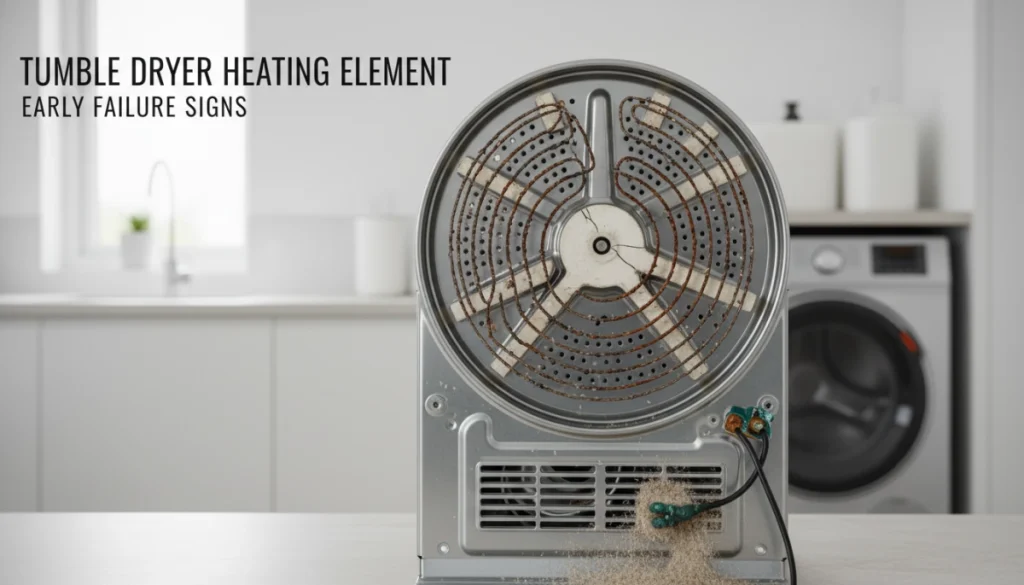
If you’re able to access the element, look closely for visible signs like dark spots, blistering, or coils that look broken or damaged. These are clear indicators your dryer heating element is on its way out.
Keep an eye on the drum exterior too—if it feels unusually hot or you notice strange vibrations during a cycle, it could mean restricted airflow is causing the element to overheat. Plus, if your dryer’s thermostat frequently resets just to bring heat back, that’s another red flag for a faulty dryer heater.
Catching these early warning signs can save you from a full breakdown and costly repairs later on. For more appliance care tips, check out general maintenance advice to extend your dryer’s lifespan.
Other Potential Causes of No Heat (To Rule Out First)
Before blaming a dryer heating element failure, it’s important to check some common issues that can cause your tumble dryer not heating properly. The most frequent culprit is a clogged lint filter, vents, or condenser. Blockages here restrict airflow, causing the dryer to overheat or not produce enough warmth. Regular cleaning can prevent this—many clogged dryer vent symptoms mimic heating element problems.
Next, consider a faulty thermal fuse, thermostats, or overload cut-out. These safety parts can blow or fail, cutting off power to the heating element to prevent damage. Problems like a thermal fuse blown dryer often cause complete loss of heat without affecting drum rotation.
Also, check your power supply. Loose connections or incorrect voltage can make the dryer run without heating. Sometimes, an overloaded drum or incorrect cycle settings cause longer drying times, making it seem like a heater issue.
To get a more accurate understanding of such faults, understanding the vital role of thermostatic controls in dryer heating can be very helpful.
How to Safely Diagnose a Faulty Heating Element
When your tumble dryer is not heating properly, it’s important to diagnose the heating element safely and effectively. Here’s how to do it without risking damage or injury:
- Safety first: Always unplug the dryer and make sure it’s completely cool before starting any checks. Handling electrical parts while the appliance is powered can be dangerous.
- Basic checks: Begin by cleaning the lint filters and vents thoroughly. Blocked airflow can cause your dryer heating element to fail or overheat. Run the dryer on different cycles to see if heating improves or if the problem persists.
- Visual inspection: Accessing the heating element depends on your dryer model—usually, this means removing the back or front panel. Look for visible signs of damage like broken coils, dark spots, or blistering. Be gentle and follow your model’s instructions to avoid other issues.
- Testing with a multimeter: Use a multimeter to check the heating element’s continuity and resistance. A continuous circuit means the element is intact; if it shows an open circuit or unusual resistance, the element is faulty. For detailed steps on using a multimeter on heating elements, see our guide on multimeter dryer element test.
- When to avoid DIY: If you’re unsure or uncomfortable with electrical parts, or if the problem isn’t clearly the heating element, it’s best to call a professional. Diagnosing and repairing faulty dryer heaters can be complex and unsafe for non-experts. For advice on when to get expert help, check out our tips on when to call a professional.
Following these steps can help you confirm if the heating element is causing your dryer’s no heat issue without unnecessary risks.
Preventing Heating Element Failure
Keeping your tumble dryer’s heating element in good shape starts with regular maintenance. Always clean the lint filter after every use to prevent lint buildup, and schedule a thorough vent cleaning at least once a year to ensure proper airflow. Poor ventilation can cause your dryer to overheat, which leads to dryer heating element failure over time.
Avoid overloading the drum, as this puts extra strain on the heating system and slows drying times. Also, use the correct cycle settings based on the type and size of the load—this helps prevent the element from working harder than needed.
Watch out for signs that your dryer is overdue for servicing, such as longer drying times, inconsistent heat, or unusual noises. Regular check-ups can catch small issues before they cause a faulty dryer heater or no heat in tumble dryer problems. For tips on keeping other appliances in top condition, check out this detailed guide on cleaning and maintaining home appliances.
When to Replace the Heating Element
Knowing when to replace the tumble dryer heating element can save you time and prevent further damage. If your dryer is not heating despite basic troubleshooting, or if the heating element shows clear signs of failure like broken coils or burned spots, it’s often time for a replacement.
Cost Considerations vs. Professional Repair
Replacing the heating element yourself can be cost-effective, especially if you’re comfortable with basic appliance repairs and have the right tools. However, if you’re unsure or your dryer has additional electrical faults, hiring a professional ensures the job is done safely and correctly. Sometimes, repair costs, including parts and labour, make replacing the entire unit or calling an expert the smarter option. For guidance on when to hand over repairs, check out our detailed advice on when to call a pro.
Brief Overview of Replacement Process
The replacement involves unplugging the dryer, accessing the heating element panel (often at the back or inside the drum), disconnecting wires, and swapping the faulty component with a new one. Always handle with care to avoid damaging other parts. After installation, test the dryer on a cycle to confirm it’s heating properly. For those unfamiliar, detailed tutorials or professional help are advisable, as incorrect replacement may cause further faults or safety hazards.
Choosing Compatible Parts
Always choose the right heating element designed for your dryer model. Using incompatible parts can lead to poor performance or damage. Purchase components from reputable sources and verify model numbers carefully. For help selecting the correct replacements, you might find our guide on discovering the perfect replacement very useful.
Replacing a faulty dryer heating element promptly helps restore your appliance’s efficiency and prevents energy waste from prolonged drying cycles.