Understanding the Causes of Mold and Odors in Appliances
Mold and odors in appliances happen mainly because of trapped moisture, leftover organic residue like food particles or detergent, and warm, dark environments where air circulation is poor. These conditions create the perfect breeding ground for mold and mildew.
Humidity is a big factor too—when indoor humidity rises above 50-60%, mold growth accelerates quickly. Appliances such as washing machines, refrigerators, and dishwashers often hold moisture after use, especially in gaskets, seals, or drip pans, making them vulnerable spots for mold.
A common myth is that “new appliances don’t get moldy.” Unfortunately, even brand-new washers or fridges can develop mold if moisture and residue aren’t managed properly. Knowing these causes helps you take early action to protect your appliances and avoid unpleasant musty smells later on.
Early Warning Signs You Can’t Ignore
Knowing the early warning signs of mold and odors in appliances can save you from bigger problems later. One of the first things you’ll notice is a musty or earthy smell, especially in washing machines, refrigerators, or dishwashers. This smell often signals mold growing inside seals, gaskets, or hidden corners.
Look closely for visible black or green spots on rubber seals, door gaskets, or even the interior surfaces. These spots are clear signs of mold or mildew buildup. You might also spot increased humidity around your appliances, which makes mold thrive even faster.
If your clothes, dishes, or stored food start to carry lingering odors, don’t ignore them. These faint but persistent smells usually mean there’s mold or bacteria growing inside the appliance, affecting its performance and your home’s air quality.
For fridges, keep an eye on moisture or mustiness around the door seals and drip pans. If you want to learn how to check your appliance’s temperature control to keep mold at bay and food fresh, check this guide on signs your refrigerator thermo is faulty.
General Prevention Strategies for All Appliances
Stopping mold and odors starts with simple daily habits. Here’s how to keep all your appliances fresh and clean:
Control Moisture
- Wipe spills immediately to prevent trapped moisture.
- Ensure proper drainage in appliances like washing machines and dishwashers.
- Use dehumidifiers in damp areas (e.g., laundry rooms) to lower humidity below 50-60%, slowing mold growth.
Improve Airflow
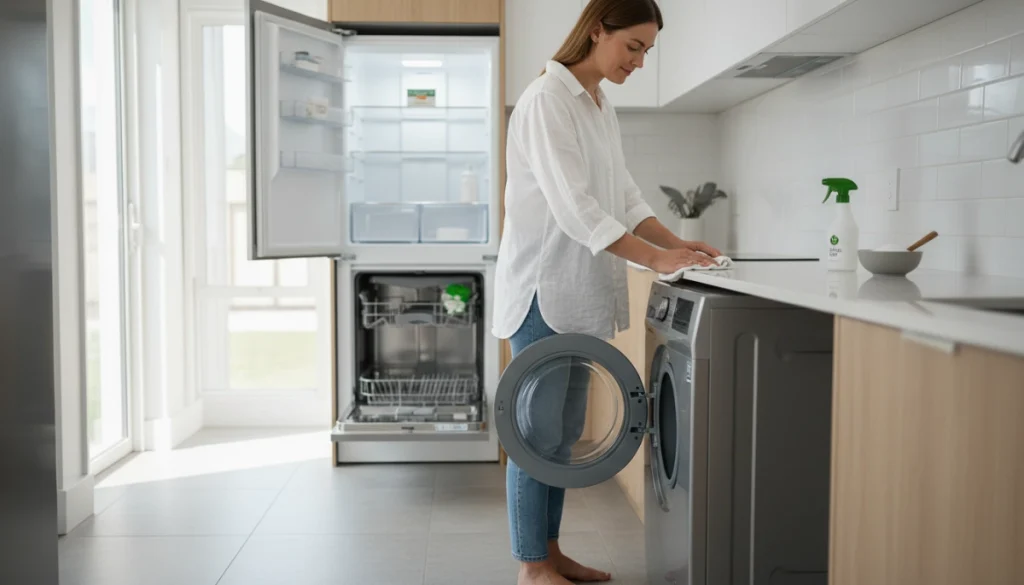
- Leave appliance doors ajar after use whenever it’s safe to do so. This helps dry out interiors and stops musty smells.
- Ensure enough space around appliances for good ventilation.
Regular Maintenance Schedule
| Frequency | Task |
|---|---|
| Weekly | Wipe down seals, gaskets, and surfaces |
| Monthly | Deep clean interiors with natural cleaners (white vinegar, baking soda) |
Natural Deodorizers and Cleaners
- White vinegar: Great for killing mold spores and deodorizing without harsh chemicals.
- Baking soda: Absorbs odors; sprinkle inside or use it with water for a gentle scrub.
- Avoid bleach alternatives unless dealing with tough mold spots, as overuse can damage some surfaces.
Proper Detergent Use
- Use the correct amount of detergent to avoid residue buildup, which feeds mold.
- Prefer detergent formulas designed for your appliance type (e.g., HE detergents for front load washers).
Following these tips helps keep mold away and freshens your whole appliance lineup. For fridge-specific advice on preventing mold and odors, check out this detailed guide on cleaning and maintenance of refrigerators and freezers.
Appliance-Specific Prevention and Cleaning Tips
Washing Machines: To prevent mold in washing machines, especially front load washers prone to mildew, always leave the door open after cycles to air out moisture. Clean the rubber gasket and detergent dispensers weekly to remove trapped grime and organic residue. Running a hot cycle with vinegar or baking soda monthly helps break down buildup and eliminate odors. Also, remove wet clothes promptly to avoid musty smells and mold growth.
Dishwashers: For musty dishwasher smells, regularly clean the filter and spray arms to ensure proper drainage and rinsing. Running an empty cycle with vinegar monthly dissolves limescale and detergent buildup. Wiping down door seals and leaving the door ajar after use promotes drying and prevents odor-causing mold. Avoid overloading to improve water circulation and thorough cleaning.
Refrigerators: To combat mold in refrigerators and that familiar musty smell in fridges, cover all food and discard expired items weekly. Clean drip pans and seals routinely to stop moisture accumulation. Keep your fridge between 37-40°F for optimal food preservation and reduce mold risk. Ensure enough spacing inside the fridge to allow airflow. Placing an open box of baking soda helps absorb odors effectively. For more on keeping your fridge fresh and mold-free, see our detailed tips on how to fix a refrigerator that’s not cooling properly.
Other Common Culprits: Don’t forget appliances like dryers, coffee makers, and microwaves. Prevent mildew in dryers by emptying lint traps and vents regularly. Descale coffee makers and microwaves often, and wipe their interiors clean after each use to prevent odor buildup.
These appliance-specific steps, combined with regular maintenance, play a big role in appliance moisture control and natural mold prevention.
Step-by-Step Guide to Deep Cleaning Moldy Appliances
When tackling mold in washing machines, refrigerators, or dishwashers, safety should be your top priority. Always unplug the appliance, wear rubber gloves, and ensure the area is well-ventilated to avoid inhaling mold spores or harsh cleaning fumes.
Natural Cleaning Method: Vinegar Soak and Scrub
Vinegar is a powerful natural mold remover and deodorizer. For washing machine mildew or musty dishwasher smells, soak a cloth in white vinegar and wipe down seals, gaskets, and interiors. You can also run an empty hot cycle with a cup of vinegar to help break down mold and residue inside front load washers or dishwashers. Scrub stubborn spots gently with a soft brush to avoid damaging surfaces.
Tougher Mold Cases: Bleach or Commercial Cleaners
If mold persists, use diluted bleach or store-bought mold removers specifically designed for appliances. Always follow manufacturer guidelines and never mix bleach with vinegar or other cleaners, as dangerous fumes can form. Apply carefully to affected areas like refrigerator drip pans or rubber seals, let it sit for 10–15 minutes, then rinse thoroughly.
Drying Thoroughly to Prevent Recurrence
After cleaning, dry all surfaces completely. Mold thrives in moisture, so leaving doors open to air out appliances or using a fan can speed up drying. Consider dehumidifying the laundry room or kitchen area to control moisture and prevent mold from coming back.
Maintaining regular cleaning routines combined with these deep cleaning steps will keep your appliances fresh, odor-free, and mold-free. For detailed maintenance tips, check out this guide on extending the lifespan of your appliances.
Long-Term Habits and When to Call Professionals
Keeping mold and odors out of your appliances takes more than a one-time fix—it’s about building lasting habits. Start with a monthly maintenance checklist:
- Wipe down seals, gaskets, and surfaces
- Run cleaning cycles with vinegar or baking soda
- Check drip pans, filters, and detergent dispensers
- Air out appliances by leaving doors open when not in use
- Remove expired food and damp laundry promptly
- Use dehumidifiers in damp areas to control appliance moisture
If you notice persistent smells like a musty dishwasher odor or visible black mold spots that return despite regular cleaning, it’s time to call in the professionals. Extensive mold growth not only damages the appliance but can affect your health, so professional deep cleaning or mold remediation is worth considering.
For ongoing issues, consider upgrading to mold-resistant appliance models. Many new washers, refrigerators, and dishwashers now come with better ventilation designs and materials that resist mildew buildup, making maintenance easier over time. For more specific appliance care tips, such as troubleshooting noisy fridges and maintaining stable temperatures, check resources like this guide on the vital role of thermostatic controls.
By adopting these habits and knowing when to seek expert help, you can keep your appliances fresh, efficient, and mold free for the long haul.