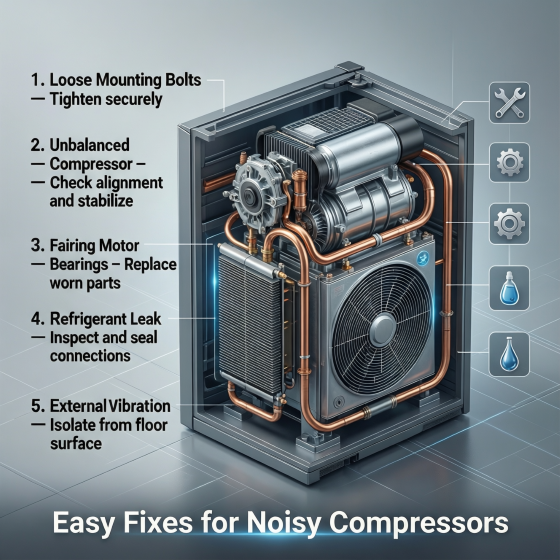

If your refrigerator compressor is making loud or unusual noises, you’re not alone—and you’re definitely not powerless to fix it. While a soft humming or gentle click is totally normal, noisy fridge compressors with buzzing, rattling, or knocking often point to underlying issues that can be tackled with simple troubleshooting. In this post, you’ll learn how to quickly distinguish a harmless sound from something that needs attention, discover the most common causes behind a noisy compressor, and get practical, step-by-step fixes that can save you a service call. Ready to quiet that annoying fridge hum and keep your kitchen peaceful? Let’s get started!
Normal vs. Abnormal Refrigerator Noises
It’s normal for your fridge to make some noise while running. Typical sounds include a soft humming or occasional clicking as the compressor and fans cycle on and off. These low-level noises usually mean your refrigerator is working as it should.
However, certain sounds signal a problem. A loud refrigerator noise like persistent buzzing, grinding, rattling, or knocking is a red flag. For example, a noisy fridge compressor that hums loudly without stopping may indicate mechanical issues. Similarly, a fridge buzzing sound that doesn’t follow the usual cycle or a rattling noise could point to loose parts or compressor problems.
Recognizing the difference between normal and abnormal noises helps you spot issues early. If your refrigerator vibration feels stronger than usual or the compressor knocking sound grows, it’s time to investigate. Ignoring these signs can lead to bigger repairs down the line.
Keep an ear out for consistent or strange noises beyond the ordinary hum—these are your first clues that your fridge might need troubleshooting.
Common Types of Noises and What They Mean
When your fridge compressor starts making unusual sounds, it helps to know what they could mean. Here’s a quick guide to common noisy refrigerator compressor sounds and their likely causes:
- Buzzing: Often a steady, low hum or buzz. This usually indicates the compressor running normally but can mean the condenser fan is struggling or there’s an electrical relay issue if the buzzing is louder or more persistent.
- Clicking: A repetitive clicking noise can point to the compressor trying to start but failing. This often happens because of a faulty start relay or a failing compressor motor.
- Rattling: This sound can come from loose parts inside or outside the fridge, like the drain pan vibrating or the compressor mounting bolts coming loose. It may also be due to the fridge not being level, causing extra vibrations.
- Grinding: A harsh grinding noise is usually a serious red flag, often linked to failing motor bearings, a faulty evaporator fan or condenser fan, or compressor issues that require immediate attention.
Timing clues also matter: noises that last only when the compressor cycles on or off could be normal, while constant or loud sounds point to potential problems. Understanding these distinctions can help you decide when to take action and whether a simple fix might work or a professional call is needed. For more detailed insights about the compressor and related parts, check out our guide on the vital role of thermostatic controls in fridges.
Top Causes of a Noisy Refrigerator Compressor
A noisy fridge compressor can be annoying and a sign that something needs attention. Here are the main culprits causing that loud refrigerator noise:
- Dirty coils: When condenser coils get covered with dust and grime, the compressor works harder, causing humming loudly or buzzing sounds. Cleaning condenser coils regularly helps reduce noise and improves efficiency.
- Faulty fans: Both the condenser fan and evaporator fan can cause noises like rattling or grinding if they’re damaged or blocked. This creates extra vibration and stress on the compressor.
- Leveling issues: If the refrigerator feet aren’t properly levelled, it can lead to excessive compressor vibration and a persistent buzzing or knocking sound.
- Loose parts: A refrigerator drain pan that’s loose or any unsecured parts inside can vibrate or rattle along with the compressor’s operation.
- Airflow restrictions: Blocked air vents or overcrowded fridge contents limit airflow, forcing the compressor to work harder and louder.
- Relay problems: The compressor start relay can wear out, causing clicking noises or excessive humming when the compressor struggles to start up.
Addressing these common causes through cleaning, inspection, and adjustments often restores a quiet compressor and smooth fridge operation. For more detailed part checks, you might want to explore guides on troubleshooting refrigerator components.
Step-by-Step Troubleshooting Guide
When dealing with a noisy fridge compressor or other loud refrigerator noise, follow a careful step-by-step process to find the problem without risking damage or injury.
Safety first:
Unplug the refrigerator before inspecting any parts.
Avoid touching electrical components unless you’re sure it’s safe.
1. Level the refrigerator feet:
Uneven flooring or unlevel refrigerator feet often cause rattling or vibration noises. Use a level tool and adjust the feet until the fridge sits firmly and evenly.
2. Inspect accessible parts:
Check for loose items like the refrigerator drain pan or condenser fan blades. Sometimes screws or brackets get loose, rattling against the compressor or frame.
3. Clean condenser coils:
Dirty fridge coils worsen compressor stress and noise. Carefully vacuum or brush the coils located usually behind or beneath the fridge to improve airflow and reduce buzzing or humming sounds.
4. Test fans:
Listen for evaporator fan noise or condenser fan problems. Fans may get obstructed or wear out, causing clicking or grinding noises. Make sure they spin freely and quietly.
5. Ensure clearance around the fridge:
Proper space improves airflow and prevents overheating that can lead to noisy compressor operation. Leave at least a few inches between the fridge and walls or cabinets.
Following these steps can fix most noisy fridge compressor issues and avoid costly repairs. For deeper issues, professional checking might be needed. For more detailed insights on fridge compressor problems and repairs, resources like the wise investment in appliance repair can guide you further.
DIY Fixes for Common Noisy Compressor Issues
Fixing a noisy fridge compressor doesn’t always mean calling a pro. You can try some simple DIY steps to quiet things down safely and quickly.
Level your refrigerator feet
Uneven flooring or unbalanced feet cause extra vibrations and rattling noises. Use a spirit level and adjust the refrigerator feet until it’s perfectly level. This often stops the fridge rattling noise right away.
Clean condenser coils and fans
Dirty fridge coils and dusty condenser fans force the compressor to work harder, making it louder. Unplug the fridge, then gently clean the coils and fans with a brush or vacuum. This improves airflow and reduces humming loudly or buzzing sounds.
Secure the drain pan
A loose refrigerator drain pan can vibrate against the compressor, causing weird knocking sounds. Check if the drain pan is properly fixed in place and tighten it if needed.
Use anti-vibration pads
Placing anti-vibration pads under the fridge feet helps absorb excess vibration. This is a simple trick to reduce refrigerator vibration fix issues without any tools.
Reposition refrigerant lines
Sometimes, noisy compressor problems come from refrigerant lines touching other parts of the fridge. Carefully move or add cushioning around these lines to stop rattling or buzzing.
By taking these steps, many common noisy fridge compressor problems can be solved at home quickly. If noises persist, it might be time to check deeper issues or call a professional.
Signs of a Failing Compressor and When to Call a Professional
If your noisy fridge compressor keeps buzzing or making a compressor knocking sound without stopping, it’s a clear warning. A failing compressor often causes persistent loud refrigerator noise that doesn’t go away with simple fixes. Overheating is another sign—if the fridge feels unusually warm around the compressor area or the motor runs constantly, it’s time to pay attention.
Poor cooling performance is a big red flag too. If your fridge isn’t keeping food cold enough despite running non-stop, the compressor might be losing power. You might also notice strange odors from inside the fridge, which can hint at electrical issues or burned-out components.
Considering repair costs is important. Compressor repairs can be pricey and sometimes aren’t worth it compared to replacing the fridge. Check your warranty before spending money on professional service—it might still cover the compressor or related parts.
In short, call a professional if you notice:
- Persistent fridge buzzing sound or knocking
- Overheating near the compressor
- Poor cooling despite normal use
- Unusual smells from the fridge
- Repeated electrical issues or frequent repair needs
Ignoring these signs can lead to total compressor failure, so it’s best to act quickly for a quiet, efficient refrigerator.
Preventing Noisy Compressor Problems
Keeping your refrigerator compressor quiet starts with regular upkeep. Here’s what helps prevent noisy fridge compressors and keeps things running smoothly:
- Regular Maintenance: Clean the condenser coils every few months to avoid dirty fridge coils causing the compressor to work harder, which leads to noisy operation. Also, check for loose parts like the refrigerator drain pan or fan blades.
- Proper Installation: Make sure your fridge is level. Uneven feet can cause vibration and rattling noises. Ensure there’s enough space around the fridge for proper airflow and cooling.
- Avoid Overloading: Don’t overfill your fridge. Crowded shelves block air circulation, making the compressor work overtime and often resulting in louder humming or buzzing.
- Annual Professional Inspections: Bringing in a technician once a year to inspect key parts like the compressor, evaporator fan, and relay can catch issues early before they turn noisy or costly.
By staying on top of these steps, you can reduce the chances of loud refrigerator noise and avoid premature wear on your appliance’s noisy compressor.
Frequently Asked Questions About Noisy Refrigerator Compressors
Is a noisy fridge compressor safe?
Most compressor sounds like humming or light buzzing are normal. But loud rattling, knocking, or grinding can signal problems. If you hear these, it’s best to turn off the fridge and check. Running a failing fridge compressor could cause more damage or higher energy bills.
How long does a fridge compressor usually last?
A typical refrigerator compressor lasts 10 to 20 years. Proper maintenance like cleaning condenser coils and keeping fans in good shape helps extend its life. If your compressor is older and making noise, it might be wearing out.
Can I temporarily quiet a noisy compressor?
You can often reduce noise by ensuring the fridge is level, tightening loose parts, and cleaning dirty condenser coils. Anti-vibration pads can help cut down on rattling too. But these are short-term fixes. Persistent loud compressor noise usually needs a proper repair.
Are loud noises normal when a new fridge runs?
New refrigerators can be a bit noisy at first as the compressor and fans adjust. Buzzing and humming are common and usually stop after a few days. If loud noises continue, inspect for installation problems like poor leveling or restricted airflow.
How much does compressor replacement cost?
Replacing a refrigerator compressor can be expensive, often costing several hundred dollars or more, including labour. Sometimes repairs aren’t worth it if the fridge is old. Check your warranty before paying for compressor repairs or replacement.
If you keep your fridge maintained and watch for unusual sounds early, you can avoid many noisy compressor problems. Regular checks and simple fixes go a long way to keep your refrigerator quiet and reliable.