If your washing machine is struggling to drain, pump problems could be the culprit—but is it a simple blockage or a serious motor failure? Knowing the difference can save you time, money, and frustration. In this guide, you’ll learn how to identify pump issues quickly, spot the signs that separate clogged pumps from faulty motors, and take confident steps to fix the problem yourself or know when to call in a pro. Let’s cut through the confusion and get your washer draining like new again.
Common Symptoms of Washing Machine Pump Problems
If your washing machine is not draining properly, it’s often a sign of pump problems. You might notice water staying in the drum or draining very slowly after the cycle ends. Unusual noises during the drain cycle—like humming, buzzing, grinding, or thumping—are another clear warning that the drain pump could be struggling.
Leaking water around the base of your washer is also common with pump issues, indicating a possible blockage or damaged pump seal. For digital washing machines, error codes such as OE on LG or ND on Samsung often point directly to drainage problems connected to the pump.
Finally, if your machine stops mid-cycle or refuses to spin, the pump might be failing to drain water properly, triggering safety stops. These symptoms combine to signal that your washing machine’s pump may need attention, whether from a clog or a motor fault.
Blockage vs. Motor Failure: Key Differences
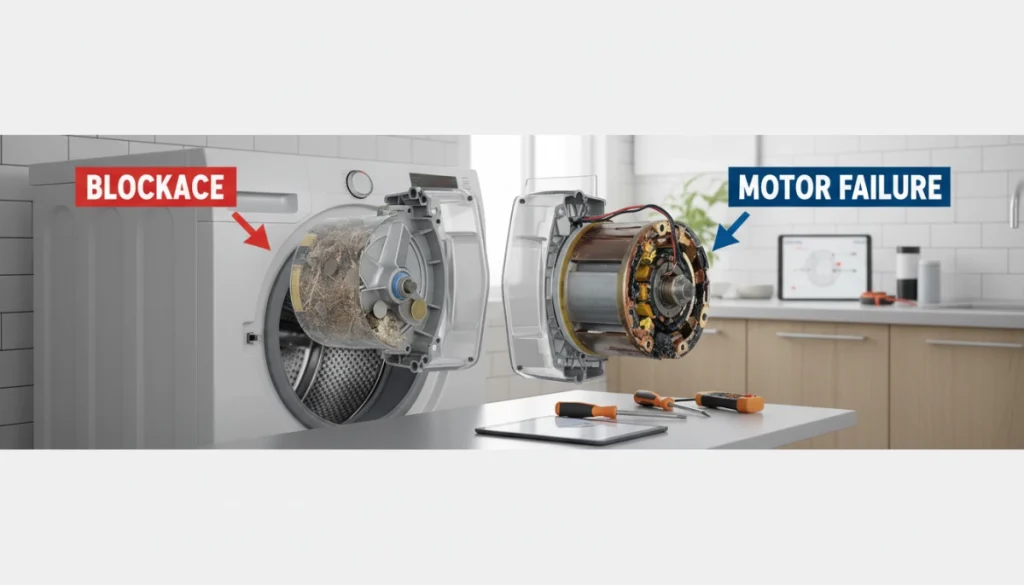
When your washing machine won’t drain properly, it’s crucial to know whether you’re dealing with a drain pump blockage or a faulty washer pump motor. Here’s a quick way to tell the difference:
| Symptoms | Likely Cause | Noise Level | Drainage Behavior | Fix Difficulty |
|---|---|---|---|---|
| Humming sound, sometimes | Blockage | Intermittent humming | Slow or partial drainage | Easier (clear filter, hose) |
| with no pumping action | May clear temporarily | |||
| Constant humming or buzzing | Motor Failure | Loud, consistent | No drainage at all | Harder (pump motor replacement) |
| No movement, possible smell | Complete failure |
Blockage usually causes intermittent humming, but the pump can’t push water out effectively. You might hear gurgling or notice slow draining that clears when you clean the filter.
In contrast, motor failure typically results in continuous buzzing or humming with no water movement and sometimes a burning electrical smell. This means the pump motor isn’t working at all and often needs replacing.
Understanding this helps you avoid wasting time clearing debris when the pump motor itself is the root cause. For quick checks on whether it’s a wiring or motor problem, consider basic electrical testing methods to save costs before ordering new parts.
For more detailed info on electrical issues and repair parts, see our guide on choosing between generic vs. OEM parts.
Signs of a Blocked Drain Pump
If your washing machine shows slow or partial drainage, it’s often a sign of a drain pump blockage. You might hear gurgling or bubbling sounds during the drain cycle, which usually mean water is struggling to pass through a clog. Checking the pump filter area can reveal visible debris like lint, coins, or small clothing items that are stuck and blocking water flow.
Sometimes, you might fix the problem temporarily by manually draining water, but if the blockage remains, the symptoms will come back. Regularly inspecting and cleaning the filter helps avoid persistent washing machine drainage problems and keeps your washer working smoothly. For deeper maintenance tips, see our guide on how to defrost a freezer manually, which covers similar appliance care basics.
Signs of Pump Motor Failure
If your washing machine isn’t draining despite hearing a humming sound from the pump, this could indicate the pump motor is running but the impeller isn’t turning—common with a faulty washer pump motor. A strong burning electrical smell is another clear warning that the motor is overheating or failing. In some cases, the pump may make no noise at all, which often means the motor isn’t receiving power or has completely stopped working. For those comfortable with basic electrical checks, performing a continuity test on the pump motor can confirm failure if the test fails, showing a broken circuit inside the pump. These signs strongly point to the need for replacing the drain pump motor rather than just clearing a blockage.
Step-by-Step Troubleshooting Guide
Before you start, safety first: unplug your washing machine and turn off the water supply. This prevents any accidents while you work on the pump.
-
Check and clear the drain hose
Look for kinks or clogs in the washer drain hose. A bent or blocked hose can stop water from flowing out, causing drainage problems.
-
Locate and clean the pump filter
The pump filter catches debris but can get clogged. Front-load and top-load washers have different access points—usually near the bottom front or back. Cleaning this filter often fixes slow drainage and pump noise issues like humming or buzzing.
-
Inspect the sump hose for obstructions
The sump hose connects the washer’s tub to the drain pump. Any blockages here affect pumping efficiency and can cause water not to drain properly.
-
Manually test the impeller for free movement
Remove the pump cover and check the impeller (the little fan that pushes water out). It should spin freely. If it’s stuck or damaged, drainage will be slow or nonexistent.
-
Listen during a drain cycle
Turn the machine on drain or spin cycle and listen for unusual pump noises. Humming without movement often indicates motor issues or blockages.
-
Basic electrical test (if comfortable)
Use a multimeter to check pump motor continuity. No continuity generally means a faulty pump motor, but only attempt this if you’re familiar with electrical testing.
-
When to suspect related issues
If the pump seems fine but the washer still won’t drain or spin, check components like the lid switch or control board. These can sometimes stop the pump from running.
If you want to be thorough with cleaning parts like filters or hoses to prevent buildup, check out this helpful guide on cleaning and maintaining household appliances.
Following these steps will help you pinpoint whether you’re dealing with a blocked drain pump or a faulty washer pump motor.
How to Fix a Blocked Pump (DIY Steps)
Fixing a blocked washing machine pump yourself is usually straightforward if you have the right tools and a bit of patience. Here’s what you need and how to get the job done:
Tools Needed
- Screwdriver (usually Phillips or flat-head)
- Bucket or shallow pan (to catch water)
- Pliers or tweezers (for small debris)
- Towels (to handle any spills)
- Flashlight (to see inside tight spaces)
Clearing the Filter and Hoses
- Unplug the washing machine and turn off the water supply to stay safe.
- Locate the pump filter, often behind a small door at the machine’s base (varies by model).
- Place your bucket under the filter compartment to catch any water.
- Carefully unscrew or pull out the filter—expect some water to spill.
- Remove any visible debris like coins, lint, or fabric fibers clogging the filter.
- Check the drain hose for kinks or clogs by detaching it if possible and flushing it with water.
- Inspect the sump hose (connecting the tub to the pump) for blockages and clear as needed.
Removing Common Debris
- Watch out for pesky objects such as coins, socks, lint, and buildup that often cause pump blockages.
- Use pliers or your fingers to pull out stuck items carefully.
- Flush parts with water to wash away smaller bits.
Reassembling and Testing
- Once clean, reinstall the filter and hoses securely.
- Ensure everything is tightened to prevent leaks.
- Plug the machine back in, turn on the water, and run a short drain or spin cycle.
- Listen for normal pump noise and watch for proper drainage.
If the pump is still humming but not draining, it might be a motor failure rather than a blockage. For further troubleshooting, a simple test of the pump motor’s continuity can help identify this issue. For more on understanding appliance wiring and safe electrical checks, check out this guide on how to read appliance wiring.
DIY fixes for a clogged pump filter and clear hoses often solve common washing machine drainage problems without a call to a technician. Regularly clearing the pump and hoses can prevent future blockages and save you hassle and repair costs.
Replacing a Faulty Drain Pump Motor
When it comes to replacing a faulty washer pump motor, DIY is possible if you’re comfortable working with small appliances and have some basic tools. Before starting, check your washing machine’s model to get the right replacement pump—pumps vary between brands and between top-load and front-load machines.
Tools and Parts Needed
- Model-specific drain pump motor (check your washing machine manual or online parts store)
- Screwdrivers (Philips and flathead)
- Pliers
- Bucket or towels (for any leftover water)
- Multimeter (optional, for testing electrical connections)
Step-by-Step Removal and Installation
- Unplug the machine and turn off the water supply to ensure safety.
- Remove the access panel:
- For front-load washers, this might mean removing the back or front panel.
- For top-load washers, usually lift the top lid or back panel.
- Locate the drain pump; it’s typically near the bottom and connected to the drain hose.
- Disconnect the pump wires and clamps holding the pump and hoses in place. Keep a towel handy to catch water.
- Remove the faulty pump motor carefully.
- Install the new pump motor by reversing these steps:
- Attach hoses securely.
- Connect electrical wires.
- Reattach the panel.
- Test the machine before full reassembly to ensure proper drainage and no unusual noises.
Safety Precautions
- Always unplug the washing machine before starting any repair.
- Avoid touching electrical parts when the machine is plugged in.
- Handle the pump motor and hoses gently to avoid damage.
- If you’re unsure about any step, consider calling a professional technician.
Replacing a faulty drain pump motor can fix persistent drainage problems and stop issues like the washing machine not draining or humming noises caused by motor failure. For detailed appliance part guides, it’s helpful to refer to resources like spare part storage best practices which can aid in sourcing the right components.
When to Call a Professional Technician
Sometimes washing machine pump problems go beyond simple blockages or easy fixes. You should call a professional technician if you notice signs of electrical issues like burning smells, flickering lights, or no power at all. Complex failures involving the control board or issues alongside the pump motor often need expert diagnostics and repair.
Check your warranty status before attempting any major repairs, as professional service might be covered, saving you money. Average costs can vary: clearing a drain pump blockage is usually affordable, while replacing a faulty washer pump motor can be more expensive.
For detailed advice on when to bring in a pro and what repair costs to expect, see this helpful guide on when to call a professional for home appliance repair. Also, understanding the warning signs can prevent further damage, so don’t hesitate to seek expert help if you’re unsure.
Preventing Future Pump Problems
Keeping your washing machine’s drain pump in good shape starts with regular care. Here’s how to avoid common pump problems like blockages and motor failure:
- Regular filter cleaning: Make it a habit to clean the pump filter every few weeks. A clogged or dirty filter is a frequent cause of washing machine not draining issues and can strain the pump motor.
- Pocket checks before loading: Small items like coins, hairpins, or tissues can easily block the drain pump or filter. Always check and empty pockets before tossing clothes in.
- Proper detergent use: Using the right amount and type of detergent helps prevent lint buildup and residue that can clog the pump impeller or drain hoses.
- Annual maintenance: Give the entire drainage system a thorough check-up once a year. This includes cleaning the pump filter, inspecting the drain hose for clogs or kinks, and testing the pump motor if you notice unusual noises or drainage problems.
Following these simple steps reduces the risk of washing machine pump noise, drain pump blockage, and faulty washer pump motor issues, helping your machine run smoothly longer.