
Louvered Pergolas Worth Buying: 7 Facts That Change How You Shop
A Louvered Pergola Is Not Just a Fancy Shade Sail
Here is the misconception that pushes people toward products they regret: most first-time buyers assume a louvered pergola is basically a decorative shade structure — something that looks good on the patio and blocks afternoon sun. That framing leads to comparing $400 fabric shade sails against $1,800 aluminum pergolas as if they belong in the same category.
They do not.
A well-built aluminum louvered pergola with integrated drainage functions closer to a weatherproof outdoor room. The louvers rotate to control ventilation and light. The frame handles wind loads. The drainage system routes rainwater through the posts so your patio stays dry while it is actually raining. You can sit out during a steady downpour and feel completely comfortable.
Once you shift from “shade structure” to “outdoor room you can use year-round,” the price difference between categories starts making obvious sense. That is the right mental model to carry into this comparison.
What Adjustable Louvers Actually Control — And Why the Pivot Point Matters
How Louver Rotation Changes What You Feel Underneath
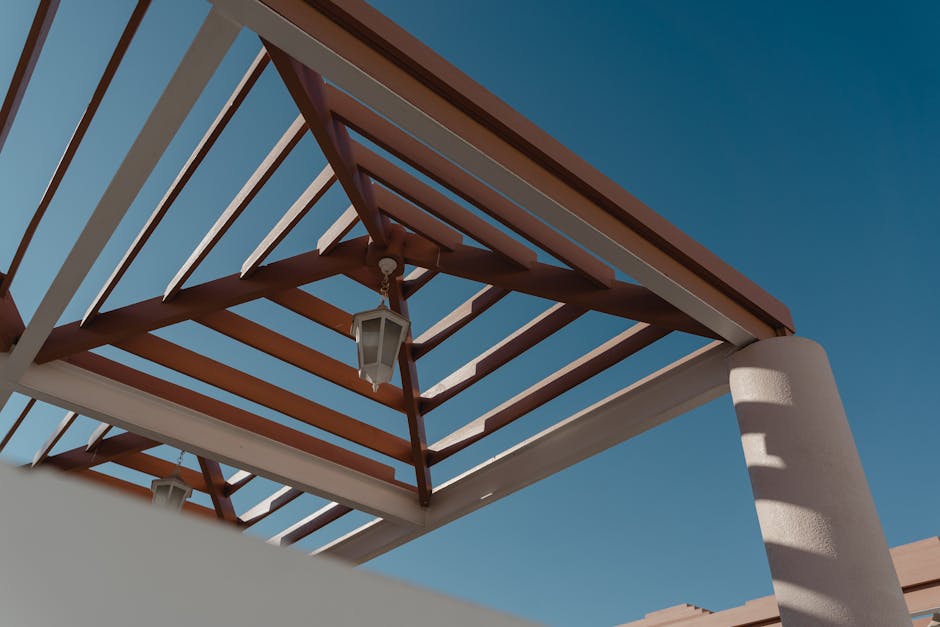
The louver blades on a quality aluminum pergola rotate through roughly 0–135 degrees. At fully open (flat, horizontal), you get maximum sun exposure and free airflow. At 90 degrees (vertical), the blades block direct overhead sun while letting air move freely underneath — the right setting for a hot but breezy afternoon. At 135 degrees (angled toward the drainage channels), the blades shed rain like a pitched roof and push water toward integrated gutters running along the main beams.
On a humid summer afternoon, partially open louvers drop the temperature beneath the structure noticeably by allowing convective airflow while still cutting direct glare. Close them in cooler months and you trap more radiant solar heat. You are adjusting the structure’s thermal behavior based on what you need on a given day — that is a meaningfully different experience from a static roof or a fixed shade sail.
Manual adjustment (a crank handle or removable rod) works fine for most households in the $1,800–$2,500 price range. Motorized systems appear above $4,000. Adjusting manually takes about 30 seconds. It is not a friction point.
The Louver Pivot Problem Nobody Mentions
Most pergola marketing focuses on frame thickness and overall dimensions. What rarely appears in the specs: the pivot point mechanism — the hinge connecting each louver blade to the frame rail. Budget pergolas use plastic pivot points that crack under UV exposure within two to three years. Once a pivot fails, the blade sticks in one position or flops open and will not hold its angle.
Quality pergolas use aluminum or coated metal pivots. These outlast the rest of the structure. If the pivot material is not listed in the spec sheet, ask the seller before ordering. No clear answer is itself an answer.
Why an Integrated Drainage System Is Non-Negotiable
An integrated drainage system is the feature that separates genuinely usable pergolas from frustrating ones. Without it, rain falls off the louver edges directly onto furniture and seating, or sheets off the sides and creates puddles exactly where guests walk. You end up inside despite owning an “outdoor room.”
A proper drainage system routes water from the louver blades into channels along the main beams, then down through hollow vertical posts, exiting at each post base. The better designs seal at every joint so water does not drip from connections midway. If a pergola’s product page does not explicitly describe through-post drainage, assume it does not have one. This spec is too important to guess at.
GarveeLife 12×20 Louvered Pergola: The Right Call for Large Patios
What 240 Square Feet Actually Looks Like in Real Life
The GarveeLife 12×20 louvered pergola at $2,499.99 covers 240 square feet — enough for a full outdoor dining setup with a six to eight person table, comfortable walkways around the furniture, and a side area for a bar cart or grill station. This is not a cozy corner shade cover. It is a room-sized structure that fundamentally changes how you use the outdoor space beneath it.
The reinforced aluminum frame uses thicker extrusion profiles than standard aluminum pergolas in this price bracket. You notice this immediately during assembly — the components have real weight, and the joints feel solid rather than springy. Competing models like the Purple Leaf 12×20 and the Yoleny 12×20 sit in the same price range but use thinner beam profiles that feel more flexible under load.
Frame Build and Weather Resistance
Aluminum is the correct frame material for a structure this size. Steel frames rust at welded joints within a few years regardless of initial powder coating — especially in humid or coastal climates. Aluminum does not rust. The gray powder coat finish on the GarveeLife applies over the aluminum and resists UV fading reasonably well. Gray also ages more gracefully than white, which yellows visibly within three to five years of sun exposure in warmer climates.
The structure handles moderate wind and snow loads. GarveeLife does not publish exact load ratings, which is a legitimate frustration. For reference, the reinforced beam design performs better under load than standard aluminum pergolas with thinner extrusions, based on the structural geometry alone. If you are in a region with heavy winter snowfall, contact GarveeLife directly for guidance on whether additional support posts are recommended for your snow load conditions.
Installation Reality and What Buyers Actually Report
With a 4.4/5 rating across verified buyers, the GarveeLife 12×20 earns consistent praise for weather performance and build quality. The friction point is installation time. This is a full-day project for two adults — not an afternoon solo job. GarveeLife provides video guides that help considerably with the beam alignment steps, which the written manual handles less clearly.
The drainage system performs as described: water enters the louver channels, travels through the main beams, and exits cleanly at the post bases. Buyers in rainy climates — Pacific Northwest, Southeast, Mid-Atlantic — specifically call this out as the deciding feature. One recurring assembly tip from owners: pre-drill some connection points before final tightening to simplify alignment during the beam installation phase.
For patios in regions with real rainfall, this is the most complete option at this price point. In desert climates where rain is rare, the drainage system becomes less critical, and you could look at non-louvered alternatives for less money. But for anything east of the Rockies, the drainage capability earns its place in the price.
Tip: Three Things to Confirm Before You Order Any Pergola
This applies regardless of which model you choose. The most common return reason for large pergolas is not product quality — it is pre-purchase planning failures.
- Map the footprint physically before ordering. Drive stakes into the ground and run string to mark the exact perimeter. Walk through it. Sit in an imaginary chair. Confirm you have two to three feet of clearance from any walls, fences, or roof overhangs. A 12×20 looks manageable in product photos and feels substantially larger once it is staked out on your actual patio.
- Check your local permit threshold. Many municipalities require permits for permanent outdoor structures over 200 square feet. A 12×20 (240 sq ft) consistently crosses that threshold. A 10×20 (200 sq ft exactly) sits right at the line — sometimes exempt, sometimes not. A five-minute call to your local building department answers this definitively and costs nothing. Permits typically run $50–$200 and are not a big deal when planned for in advance.
- Assess your anchor surface before the pergola arrives. Both GarveeLife and Garvee models require anchoring posts to a solid surface. Existing concrete patio: standard concrete anchor bolts work fine. Pavers over sand base: plan to pour concrete footings at each post location before installation. Wood deck: have a contractor or structural engineer confirm the framing handles the point loads at each post. This step gets skipped most often and causes the most expensive downstream problems.
Garvee 10×20 Louvered Pergola: The Smarter Pick for Mid-Sized Spaces
How Does the 10×20 Differ From the 12×20 in Practice?
The Garvee 10×20 at $1,799.99 shares the same core design as the larger GarveeLife — adjustable aluminum louvers, through-post drainage, reinforced frame — but covers 200 square feet instead of 240. That 40-square-foot difference translates to roughly the width of one dining chair on each long side of the structure.
For a patio with a four to six person dining table, a single hot tub surround, or a seating lounge without a full dining setup, the 10×20 is proportionally correct. Oversizing a pergola for a smaller outdoor space makes the structure feel out of scale with the surroundings — a common aesthetic mistake that is hard to reverse once the pergola is anchored.
Is a 5.0 Rating From 3 Reviews Meaningful?
The Garvee 10×20 pergola’s perfect rating comes from only three verified buyers. That is not enough data to claim it outperforms the GarveeLife. What it does tell you is that the product shipped as described, assembled without significant problems, and performed to expectations. Early signal, not statistically robust conclusion. Treat it as a reasonable starting point, not a guarantee.
The Garvee brand produces a range of outdoor structures including pergolas, sheds, and storage solutions. Early buyer notes indicate responsive customer support on assembly questions, which matters more than most buyers expect on a project of this scale.
Who Should Buy the 10×20 Over the 12×20?
Buy the 10×20 if your usable patio space is under 180 square feet, if staying at or under 200 square feet keeps you under the permit threshold in your area, or if the $700 price difference meaningfully affects your overall project budget. Buy the 12×20 if coverage, long-term flexibility, and room to add outdoor furniture matter more than cost savings. Larger pergolas almost never feel too big once you are using them regularly. Undersized ones feel cramped from day one.
Side-by-Side Specs: GarveeLife 12×20 vs. Garvee 10×20
| Spec | GarveeLife 12×20 | Garvee 10×20 |
|---|---|---|
| Price | $2,499.99 | $1,799.99 |
| Coverage Area | 240 sq ft | 200 sq ft |
| Frame Material | Reinforced Aluminum | Reinforced Aluminum |
| Louver Type | Adjustable, manual | Adjustable, manual |
| Drainage System | Integrated, through posts | Integrated, through posts |
| Finish Color | Gray powder coat | Gray powder coat |
| Buyer Rating | 4.4/5 (6 reviews) | 5.0/5 (3 reviews) |
| Ideal Use Case | Large patios, full outdoor rooms | Mid-sized patios, budget-aware buyers |
| Permit Risk (typical) | Often triggers permit (240 sq ft) | At the threshold — confirm locally |
| Cost per Sq Ft | ~$10.42 | ~$9.00 |
For context on pricing: premium European brands like Azenco, Corradi, and Pergola Concepts charge $5,000–$15,000 for comparable aluminum louvered coverage with similar drainage integration. Both Garvee models are budget-tier by that comparison. The trade-off is that European brands publish detailed wind and snow load ratings, offer longer warranty terms, and typically provide professional installation support. If structural certification matters for your application, that tier is worth the jump. For most residential patios, the Garvee line delivers the core experience without the premium price.
Where the Louvered Pergola Category Is Headed
Features Already Appearing in the Next Price Tier
European markets show the near-term direction for this category. Brands like Renson and Weinor are shipping louvered pergola systems with LED lighting channels built directly into the louver blade edges, bioclimatic algorithms that auto-adjust blade angle based on real-time temperature and sun position, and rain sensors that close the roof automatically when precipitation starts. Some models integrate solar collection surfaces into the louver blades themselves.
These features appear today in the $8,000–$15,000 range. They will move into the $3,000–$5,000 bracket within this decade as manufacturing scales. Powder coat technology is also improving at every price point — higher-temperature bake processes produce finishes that hold color significantly longer than older coatings, particularly on white frames that previously yellowed within a few years of UV exposure.
Why the Frame You Buy Now Has Long-Term Value
An aluminum pergola frame properly anchored and maintained should last 15–20 years. The accessories attached to it — LED strips, ceiling fans, motorized louver actuators, even future smart home integration — can be added or upgraded without replacing the structure. Buying a solid frame now and evolving it as technology improves is a reasonable long-term strategy.
Outdoor living in the U.S. is shifting from seasonal use toward year-round expectation in most climates. The structures that enable that shift — genuine weatherproof outdoor rooms, not seasonal accessories — are becoming standard rather than exceptional. The aluminum louvered pergola available for under $2,500 today is early-adopter infrastructure for how most households will use their outdoor spaces by the end of this decade. The category will keep improving. The foundation you anchor now will still be standing when it does.