
ATV Rear Storage Bags: What Actually Holds Up on the Trail
Nearly 70% of ATV storage bags sold online are returned or replaced within two riding seasons. The problem isn’t rider abuse — it’s that most bags are engineered for product photos, not prolonged exposure to mud, vibration, and UV.
This guide covers what separates functional trail gear from expensive trash, which specs actually predict durability, and which bags are worth your money right now.
What Most Riders Get Wrong When Buying ATV Storage Bags
The biggest mistake: buying based on looks and price alone. ATV rear rack bags live a punishing life. Hours of direct sun, constant vibration from rough terrain, regular contact with mud, water, and dust. A bag that photographs beautifully can disintegrate after three trail rides.
Here’s how it typically plays out. You buy a $22 bag with decent reviews, strap it to your Polaris Sportsman 570, and head out. By the end of the first muddy ride, the zipper has started to bind. By the third outing, the mounting straps are fraying where they contact the metal rack. By summer’s end, the seams are splitting at the corners.
The Mounting System Is More Important Than the Bag Material
Most buyers focus on fabric and ignore attachment hardware. This is backwards. A bad mounting system turns a decent bag into a trail hazard — bags that shift during aggressive cornering, vibrate against the rack and abrade through the bottom, or bounce off entirely on rocky terrain.
Look for bags with at least four mounting points: two on each side, plus a front retention strap. Ratchet buckles hold better than cam buckles for serious off-road use. Elastic bungee-style retention systems work fine on groomed trails, but they loosen under sustained vibration and are nearly useless when the terrain gets rough.
The contact surface between bag and rack matters too. Bags with padded or rubberized bases stay put and resist abrasion. Bare nylon against bare metal rack equals a worn-through bag bottom by the end of the season.
Waterproofing Ratings: What the Labels Actually Mean
Most ATV bags are labeled “water-resistant” — not waterproof. There’s a real difference. Water-resistant handles light rain without immediate soaking. Waterproof (IPX4 or above, or with welded seams) means gear stays dry through a downpour or a shallow creek crossing.
If you ride wet conditions, ignore marketing language and look for taped or welded seams, waterproof zippers (YKK Aquaguard is the benchmark), or roll-top closures. An alternative that serious trail riders actually use: a quality dry bag inside a water-resistant carrier. The combination covers almost any condition at reasonable cost.
PVC-coated fabrics outperform standard 600D polyester in rain resistance. Ripstop nylon with a DWR (Durable Water Repellent) finish is a step above that. Plain untreated polyester is the lowest tier — adequate for desert or dry-climate riding, problematic everywhere else.
Volume: The Number You’re Consistently Underestimating
Riders routinely underestimate storage needs. A straightforward day ride sounds minimal until you actually pack: 2–3 liters of water, a basic tool kit, first aid supplies, rain layer, snacks, recovery strap. That’s 25–35 liters without trying hard.
Most rear rack bags for standard ATVs run 20–45 liters. Anything under 20L fills up fast. If you’re doing multi-day rides, hunting trips, or overlanding with your ATV, plan for 40L-plus or add saddlebags. The riders who complain most about storage bags are the ones who bought the smallest option because it was $10 cheaper.
The Six Specs That Predict Durability
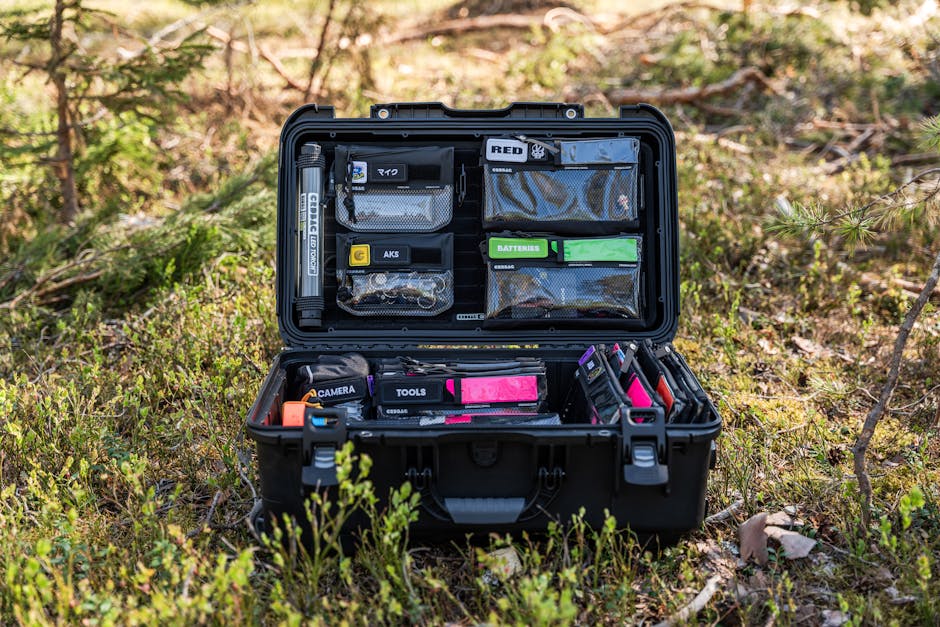
Cut through the marketing. These are the numbers and details that actually tell you whether a bag survives two seasons or two months.
- Fabric weight: 600D polyester is the floor. 900D or 1000D polyester, or Cordura nylon, handles abrasion significantly better. PVC-coated options add water resistance but can crack in sustained cold below -10°C.
- Zipper specification: YKK is the standard worth paying for. Generic no-name zippers fail first, always. On main compartments, look for #8 or #10 gauge coil — they handle dirt ingestion and heavy use better than lighter gauges used on clothing zippers.
- Strap count and hardware: Four minimum. Metal hardware outlasts plastic by a wide margin. Strap width should be at least 1 inch — narrow straps cut into the bag fabric at contact points and loosen faster under vibration cycles.
- Seam construction: Double-stitched with reinforcement at stress points — zipper ends, strap attachment zones, and corners. These are the failure points on every budget bag. If a product photo doesn’t show reinforced stitching at attachment points, assume it isn’t there.
- Rack compatibility dimensions: Standard ATV rear racks (Polaris, Honda, Yamaha, Can-Am, Kawasaki, Arctic Cat, CFMOTO) typically measure 12×16 to 15×20 inches. Measure your rack. Then check the bag’s stated coverage against your measurement before ordering.
- Interior organization: Total volume matters less than how it’s divided. A large main compartment plus two or three zippered exterior pockets means fast access to frequently used gear without unpacking everything. One cavernous unorganized bag is less useful than you’d think.
Compatibility Across ATV Platforms
Universal fit is genuinely achievable across the major platforms — Polaris Sportsman, Honda Fourtrax, Yamaha Grizzly, Can-Am Outlander, Kawasaki Brute Force, Arctic Cat, and CFMOTO all use rear racks in a similar dimensional range. “Universal” still requires checking actual measurements, though. A bag sized for a full-size ATV will be sloppy on a youth model or a compact sport quad. And side-by-sides (UTVs) are an entirely different category — they use bed storage or cab-mounted bags, not rear rack solutions. If you’re shopping for a UTV, you need a different product.
Cold-Weather and UV Longevity
Two environmental factors most bag manufacturers don’t advertise clearly: UV degradation and cold-temperature brittleness. Standard polyester loses tensile strength after prolonged UV exposure — bags used in high-altitude or desert environments where UV index runs 9–11 regularly will degrade faster than bags used in shaded forest riding. PVC coatings crack below about -15°C, making them unreliable for winter ATV use in northern climates. Bags with Cordura nylon construction handle both extremes better than PVC-coated polyester alternatives.
MYDAYS ATV Rear Rack Bag: The Practical Pick for Most Riders
The MYDAYS ATV Rear Rack Cargo Bag is the no-argument choice for riders who want a capable, genuinely universal bag without paying for features they don’t need. It fits across all major platforms — Polaris Sportsman, Honda Fourtrax, Can-Am Outlander, Kawasaki Brute Force, Arctic Cat, CFMOTO — and at $43.19, it sits at the price point where quality and value actually meet rather than just compete.
The 5.0/5 rating is across 12 reviews — a small sample. But uniform perfect scores on a utilitarian product typically mean no obvious failures: no seized zippers out of the box, no straps snapping on first outing, no seams blowing out on arrival. It’s a positive signal, not a guaranteed track record.
Build Details and Practical Dimensions
The bag uses a multi-compartment layout with a roomy main pocket and multiple exterior zippered pockets for tools, snacks, and items you need without digging. The mounting system uses adjustable buckle straps that clamp to standard rear rack tubing without tools or permanent modifications — useful if the bag moves between machines.
The black finish is a practical call. It doesn’t highlight trail mud and doesn’t fade visibly under sustained UV the way tan or camo colorways do. Reinforced stitching at strap attachment points addresses the failure zone that eliminates most budget bags. This isn’t a custom-fit bag for a single model — it’s built for range — so riders with non-standard or modified rack setups should measure carefully before ordering and use the adjustable straps to manage any slack.
When to Look Elsewhere
Riders who regularly do creek crossings or sustained heavy rain should add a quality dry bag liner inside the main compartment, or look at bags with fully welded seams like those from companies such as Ortlieb or OGIO Enduro. The MYDAYS bag is weather-resistant, not waterproof — functional in light to moderate rain, not rated for submersion or driving rain at 40mph. Budget $10–15 extra for a 20L dry bag insert if you ride wet regularly. It’s the right tool for the job at that price point.
ATV Storage Options: What the Comparison Actually Looks Like

Before committing to a rear rack bag, know where it fits relative to other ATV storage categories. Each format has a genuine use case — buying the wrong type is an expensive mistake.
| Storage Type | Typical Volume | Best Use Case | Price Range | Main Drawback |
|---|---|---|---|---|
| Rear Rack Bag | 20–45L | Day rides, general gear | $30–$80 | Raises center of gravity on steep terrain |
| Saddlebags (pannier-style) | 15–30L per side | Balanced load, longer rides | $50–$150 | Can restrict leg clearance and egress |
| Tank Bag | 5–15L | Valuables, navigation, quick-access items | $20–$60 | Limited volume, mount compatibility varies |
| Front Rack Bag | 10–20L | Frequently accessed tools or first aid | $25–$60 | Reduces visibility, adds steering weight |
| Hard Case (Kolpin, Pelican) | 20–40L | Electronics, camera gear, full waterproofing | $80–$250 | Expensive, semi-permanent mount required |
| Soft Saddlebag Sets (Kemimoto, Hornet Outdoors) | 30–60L combined | Multi-day trips, maximum total volume | $60–$130 | Heavier install, more strap management |
How to Stack Storage Without Overloading
For most day-trip riders, a rear rack bag covers the bulk of the load. Pair it with a small tank bag if you need fast access to a phone, GPS, or snacks without stopping, and you’ve handled most scenarios without overcomplicating your setup or pushing your ATV’s weight distribution toward the back.
Hard cases from Kolpin or Moose Racing justify the premium when you’re carrying gear that absolutely cannot get wet or absorb impact — action cameras, rangefinders, sat-communication devices, medical supplies. For tools, recovery gear, and clothing, soft bags are lighter and more practical. The combination of a rear rack soft bag plus a lockable hard case on the front rack is what serious backcountry riders run for extended trips.
Weight distribution note: loaded rear rack bags shift the ATV’s balance rearward. On steep downhill terrain, this reduces front wheel traction and steering response. Keep heavier items as low and as far forward in the bag as possible, and be deliberate about load placement if you’re running technical descent trails.
Marine Storage Has the Exact Same Problem
Why T-Top Life Jacket Storage Gets Ignored Until It Matters
Most boaters store PFDs under seats or jammed into lazarette lockers — which means they’re inaccessible in the two seconds you actually need them. US Coast Guard regulations state that life jackets must be “readily accessible” at all times. Stuffed under a seat cushion doesn’t meet that standard, and a boarding officer will tell you so directly.
T-top storage bags solve the access problem by keeping PFDs mounted at eye level on the hardtop or T-top frame — visible, dry, and retrievable in seconds. It’s the simplest compliance fix on a center console, and it costs less than a single USCG fine.
Is the MYDAYS T-Top Bag Worth It at $36?
For most center console and bay boat owners, yes. The MYDAYS T-Top Life Jacket Storage Bag handles 4 to 6 Type II inherently buoyant life jackets in a zippered bag designed to mount to standard T-top tube framing via adjustable straps. At $35.99 with a 4.3/5 rating across 68 reviews — a real sample size — it holds up better than the number of reviews suggests it should at this price. Consistent feedback: installs cleanly on standard 1.5–2 inch round T-top tubing, keeps PFDs organized and accessible, and handles sun and saltwater spray without the material degrading in a single season.
Two Things to Check Before You Order
First: your T-top tube diameter. Most production T-tops use 1.5 to 2 inch round tubing, but custom fabricated tops and older builds sometimes run larger diameters or square-section tubing where standard bags won’t mount cleanly. Measure before ordering. Second: your jacket type. Type II foam inherently buoyant jackets are bulky — six fills this bag solidly. Type II auto-inflatable jackets compress much smaller, so you can fit more and still have room. The bag’s job here is organization and UV protection more than waterproofing, and it handles that job well.
The Verdict

For ATV rear rack storage under $50, the MYDAYS bag is the right call — universal fit, solid construction at the price point, and no glaring design failures. Add a dry bag liner for wet riding conditions and you’ve covered the one gap.
- MYDAYS ATV Rear Rack Cargo Bag — $43.19 | Universal fit (Polaris, Honda, Can-Am, Kawasaki, CFMOTO) | Best for: day rides, trail gear, most ATV platforms
- MYDAYS T-Top Life Jacket Storage Bag — $35.99 | 4–6 Type II PFDs | Best for: center console boats, USCG accessibility compliance
- Kolpin / Moose Racing hard cases — $80–$250 | Best for: electronics, cameras, gear requiring full waterproofing
- Hornet Outdoors / Kemimoto saddlebag sets — $60–$130 | Best for: balanced load distribution on multi-day or hunting trips