
Blackout Curtains That Work: NICETOWN PM2.5 vs. Linen Pinch Pleat
Harvard sleep researchers established that light as low as 10 lux — roughly the output of a dim nightlight — suppresses melatonin enough to measurably disrupt sleep cycles. Most curtains labeled “room darkening” transmit 15 to 40 lux at 7 a.m. in summer. If you wake up earlier than you want to and can’t figure out why, your bedroom curtains are the prime suspect.
Two NICETOWN panels compete directly in this space: the PM2.5-filtered heavy blackout curtain at $83.96 for two 62″ × 95″ panels, and the linen-textured 395 GSM pinch pleat drape at $79.99 for two 40″ × 96″ panels. Similar price. Vastly different performance. Here’s exactly how they stack up.
The Specs Side by Side
Numbers first. Opinions after.
| Specification | NICETOWN PM2.5 Blackout (Silver Grey) | NICETOWN Linen Pinch Pleat (Stone Grey) |
|---|---|---|
| Price (2 panels) | $83.96 | $79.99 |
| Buyer rating | 4.2 / 5 — 23 reviews | 4.9 / 5 — 20 reviews |
| Panel dimensions | 62″ wide × 95″ long | 40″ wide × 96″ long |
| Fabric weight | Heavy-duty multilayer (GSM undisclosed) | 395 GSM double-sided linen texture |
| Construction | 3-layer: face fabric + thermal interlining + PM2.5 membrane | Single-body woven fabric, no separate lining |
| Header type | Flat panel (standard curtain rod) | Pinch pleat with hooks |
| Blackout level | Full shading — 99%+ light block | Room darkening — approximately 85–95% |
| PM2.5 particle filter | Yes — inner membrane layer | No |
| Noise absorption | Yes — explicitly marketed | Passive only (fabric mass) |
| Sliding glass door fit | Not specified | Yes — hooks slide on track |
| Total width per pair | 124 inches | 80 inches |
That bottom row is where the comparison breaks open. A standard 72″ wide window needs at least 108″ of curtain width to cover with proper overlap. The PM2.5 pair delivers 124″ — 16″ of extra room to stack past the frame on both sides. The linen pair delivers 80″ — leaving you 28″ short of that same window. On most windows, this single spec determines whether the curtains actually block light or just reduce it.
Which One Blocks More Light — And by How Much
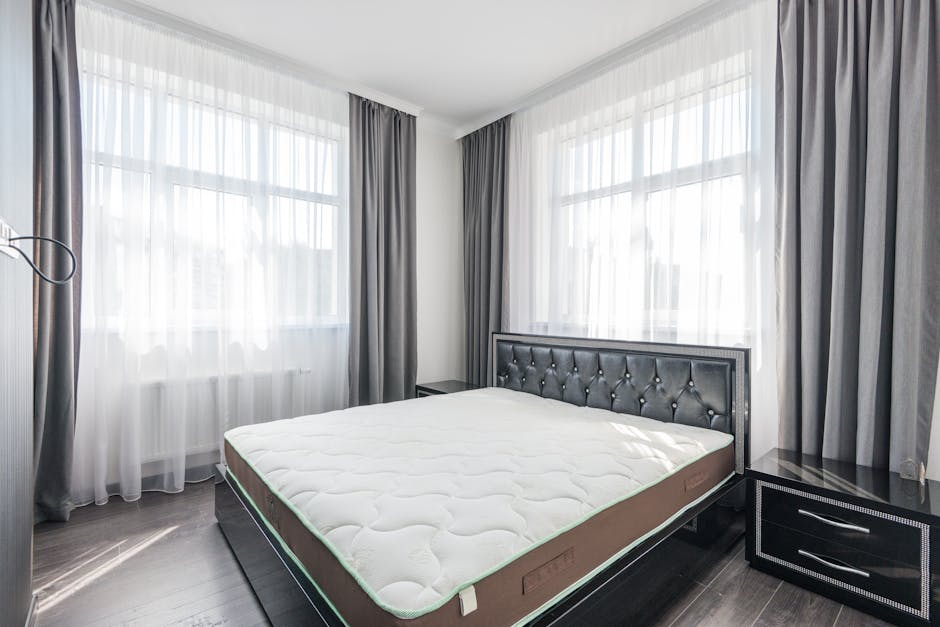
The PM2.5 blackout curtain wins here. Not close.
Three Layers vs. One: Why Construction Determines Everything
NICETOWN’s PM2.5 blackout panel uses a three-layer system: a decorative outer face, a dense thermal interlining, and an inner PM2.5-filtering membrane. The interlining layer is the key. It adds physical mass between you and the window that stops light transmission rather than just reducing it — the same principle used in professional studio blackout liners. No single-layer fabric, regardless of GSM, achieves the same result when hit by direct midday sun through the weave.
For reference: Deconovo’s blackout panels and RYB HOME’s thermal curtains use nearly identical triple-layer builds and carry the same full-shading designation. They test at 99%+ light block in lab conditions. Single-fabric panels — including premium options at 400 GSM from brands like H.VERSAILTEX — test at 85–95% in the same conditions. That 5–15% gap sounds small on paper. In a dark bedroom at 5:30 a.m. on a summer morning, it’s the difference between seeing the furniture and not seeing it.
Panel Width and the Coverage Math Nobody Talks About
For a 60″ wide window: two PM2.5 panels at 62″ each = 124″ combined — a 2.07× coverage ratio that gives you enough fabric to stack well past both sides of the frame, eliminating edge gaps entirely. Two linen panels at 40″ each = 80″ combined — a 1.33× ratio that barely covers the glass with zero room for frame overlap.
To get proper coverage on a 60″ window with the linen panels, you need three panels. At current pricing, that’s about $120 for one window. The PM2.5 pair covers the same window for $83.96 — and blocks more light. The cost advantage of the linen curtain evaporates entirely on any window wider than 40″. For wide windows, 80″ and up, the math gets uglier: the linen option requires four panels at $159.98 to achieve coverage the PM2.5 pair handles at $83.96.
What “Full Shading” Means in a Real Room
NICETOWN’s full-shading rating means the fabric transmits under 1% of light in lab conditions. In an actual bedroom with a correctly installed pair — rod extending 6″ past the frame on each side, panels overlapping 4″ at center — expect 1 to 5 lux. The room appears genuinely dark. Eyes cannot adapt. That’s functional blackout, not just dim. The linen panels correctly installed in the same room: 10 to 20 lux. Clearly subdued. Not dark. Shift workers, light-sensitive migraine sufferers, and parents of infants feel that difference immediately and permanently.
Noise Reduction and the PM2.5 Claim: What’s Real, What Isn’t
Does a PM2.5 Membrane Actually Filter Particles?
Yes — with realistic expectations attached. The PM2.5 inner membrane acts as a physical barrier to particulate infiltration through window gaps and fabric porosity. In a new construction home with tight, sealed window frames, this feature has almost no practical effect. In a ground-floor urban apartment with older single-pane windows and leaky frames, it reduces infiltration of outdoor particulate matter — vehicle exhaust, diesel soot, urban pollen — that enters through curtain gap areas. It does not scrub the room’s existing air. It is not a substitute for a HEPA air purifier. But it’s also not a fictional marketing claim. Filtration happens at the curtain-window interface because that’s where infiltration physically occurs.
How Much Noise Does a Heavy Curtain Realistically Absorb?
Dense fabric converts sound energy into small amounts of heat through friction in the fibers — simple physics, not marketing. Heavy blackout panels in the 300–400 GSM range typically measure 3 to 7 dB of noise reduction for mid and high frequencies in independent tests. That’s enough to take the harsh edge off traffic noise, reduce the sharpness of voices outside, and soften early-morning city ambient sound. It won’t stop low-frequency bass, construction impact noise, or a directly aimed sound source. No curtain will.
The PM2.5 curtain’s three-layer construction gives it more total mass per square foot than the linen panel, producing marginally better acoustic absorption. In practice, most people couldn’t distinguish the difference without measurement equipment. The noise reduction gap between these two curtains is much narrower than the light blocking gap. If noise is your primary problem, both curtains help — and both leave work undone that a white noise machine handles better.
Style: The Linen Pinch Pleat Wins. Full Stop.

The linen pinch pleat looks genuinely expensive. The double-sided stone grey texture, tailored pleat header, and hook-and-track system give these panels a formal European drape quality that flat utility blackout curtains simply can’t replicate. That 4.9/5 rating reflects real buyer satisfaction with how the room looks with these hanging in it — the stone grey linen pinch pleat panels are curtains you decorate around, not curtains you hide. The PM2.5 panel in Silver Grey is clean and inoffensive, but it’s a performance product wearing basic aesthetics. If you care how your room photographs or how it reads to guests, the linen pleat wins by a comfortable margin on every metric except darkness.
Who Should Buy Which: A Clear Pick for Each Use Case
- Shift workers, light-sensitive sleepers, migraine sufferers: Buy the NICETOWN PM2.5 full blackout panels. Wider coverage, true 99%+ light block, multilayer noise absorption. This is the only option between these two that delivers functional darkness, not just shade.
- Nursery or infant bedroom: PM2.5 panels. Young children and infants are more sensitive to light-triggered early waking than adults. The noise absorption takes the edge off daytime household sound during afternoon nap windows.
- Living room or sliding glass door: Linen pinch pleat. The hook system slides on a track without binding, the aesthetic suits a shared living space, and room-darkening is sufficient when you’re watching a movie rather than trying to sleep.
- Windows wider than 60 inches: PM2.5 panels. Two panels cover 124″. The linen option needs three or four panels to match that coverage, doubling or tripling the cost for inferior light blocking.
- Staging a home or furnished rental: Linen pinch pleat. It reads upscale in listing photos, photographs without the flat utilitarian look, and sets a better first impression for design-conscious buyers or renters.
- Ground-floor urban apartment with street-facing windows: PM2.5 panels. The particle filtering and layered noise absorption both carry genuine practical value when you’re 10 feet from a city sidewalk.
- Standard 48″ window, style-conscious buyer: This is the linen pleat’s sweet spot. Two panels (80″ total) cover the window with 32″ of overlap, the aesthetics justify the price, and room-darkening is sufficient for most people’s needs at this window width.
What Blackout Curtains Actually Do to Your Sleep Biology
Melatonin — your brain’s sleep-onset hormone — starts suppressing at light exposure around 10 lux. At 100 lux (a normally lit room), melatonin production drops by roughly 50%. Summer sunrise delivers 1,000 to 10,000 lux outdoors. Through a standard room-darkening curtain, 20 to 60 lux reaches your bedroom at 5:30 a.m. Your brain’s photosensitive retinal ganglion cells interpret that signal as “morning” regardless of when you went to sleep or what the clock reads.
Why 1 Lux and 10 Lux Aren’t Close — Biologically
The numbers seem similar. The biology isn’t. At under 1 lux — what a correctly installed true blackout curtain delivers — your retinal ganglion cells don’t fire. Melatonin production continues. The cortisol awakening response stays suppressed. You don’t just fall asleep faster; you stay asleep through sunrise instead of waking progressively earlier as summer lengthens the days.
Shift workers who sleep during daylight hours experience this most dramatically. A bedroom at 10 lux during an 8 a.m. sleep period produces measurable circadian disruption over weeks: shortened sleep duration, earlier forced waking, accumulated sleep debt that compounds. A room held at under 1 lux behaves like nighttime for sleep biology regardless of conditions outside. That’s the functional difference between room-darkening and full blackout — not a marketing distinction, a physiological one.
Thermal Performance That Shows Up on Your Energy Bill
A single-pane window loses heat at roughly 10 times the rate per square foot of a well-insulated wall. A standard 3-foot-wide, 5-foot-tall bedroom window represents 15 square feet of your worst thermal boundary. A heavy lined curtain creates a trapped air buffer between glass and room that slows convective heat transfer. Thermal lining studies show 10 to 25% reduction in heat loss through the covered window in winter. In summer, blocking direct solar gain through a south- or west-facing window reduces room temperature by 4 to 8°F without additional air conditioning load. All of this only applies when the curtain actually covers the window — which circles back to panel width. A curtain with inadequate width that leaves gaps at the edges delivers none of these thermal benefits regardless of fabric quality.
Acoustic Environment: What Heavy Curtains Actually Change
Every hard surface in a bedroom reflects sound. Windows and bare walls do it most aggressively. Heavy curtains don’t just reduce incoming noise — they convert the room from a reflective acoustic environment to an absorptive one. This cuts the sharp, persistent quality of sounds inside the room and reduces reverberation. The result is a softer acoustic signature that the brain finds less alerting during sleep. Research on sleep fragmentation identifies micro-arousals — brief partial wake-ups that don’t fully wake you but do degrade slow-wave and REM sleep across a full night — as a primary driver of non-restorative sleep. A more acoustically damped room produces fewer micro-arousals. Combined with heavy curtain coverage, a rug, and upholstered furniture, the cumulative acoustic difference in a room is substantial even without a dedicated soundproofing intervention.
How to Install Blackout Curtains Without Creating Light Leaks
The best curtain panel fails if the installation creates gaps. Four mistakes ruin even true blackout fabric in a real room.
Rod Placement: Higher and Wider Than Standard Advice
Standard installation guidance puts the rod 4 to 6 inches above the window frame. Better practice: mount the rod 8 to 12 inches above the frame, as close to the ceiling as your panel length allows. This eliminates the gap between the rod and the window’s top edge where early morning light enters along the ceiling line. Extend the rod 6 to 8 inches past the frame on each side — not the commonly recommended 2 to 3 inches. The extra extension lets panels stack completely off the glass when open and cover well past the frame edge when closed. These two adjustments alone eliminate the majority of light leak complaints visible in curtain reviews across every brand, including NICETOWN’s own customer feedback.
Center Overlap: The Seam That Lets in the Most Light
Two panels meeting at center create a natural seam where light transmits directly regardless of how well the fabric itself blocks it. Fix this two ways: first, choose panels wide enough to overlap 4 to 6 inches at center when drawn — which is precisely why the 62″-wide PM2.5 panels outperform 40″ panels on most windows, independent of fabric quality. Second, use a magnetic curtain closure strip ($8–15) to keep center panels sealed together. If you’re using narrower linen panels on a wider window, hanging a third narrow panel centered behind the pair seals the seam without requiring a full additional pair purchase.
Wall Return Rods: The Fix for Side Gap Light
Even with a rod extended 8 inches past the frame, light enters from the wall side — in the gap between the curtain’s lateral edge and the wall surface. L-shaped curtain rods, called wall-return or wrap-around rods, curve back to make contact with the wall at each end. The curtain drapes along the return and eliminates the side gap entirely. These rods cost $20 to $40 more than straight rods and are worth every dollar for anyone who genuinely needs functional blackout conditions. Install them correctly with wide, overlapping panels, and the PM2.5 blackout curtain delivers on its 99% light-blocking claim — skip these steps and even the best blackout fabric in this category is just expensive window decoration.