
iPhone Belt Clip Cases: The Drop Protection Data Most Buyers Miss
Smartphone screen repairs cost American consumers an estimated $3.4 billion every year — and that figure has held stubbornly steady despite each new iPhone generation arriving with supposedly tougher display glass. Corning’s Ceramic Shield and titanium frames improve things at the margins, but the physics of a five-foot drop onto concrete have not fundamentally changed. What changes is the case. And most buyers spend more time choosing a phone than choosing the thing designed to save it.
What follows is a breakdown of heavy-duty iPhone cases with belt clip holsters — specifically what the protection specs mean, how MagSafe compatibility works inside thick cases, and where manufacturers typically overstate their claims.
This is not legal advice — consult a licensed attorney for any product liability or warranty disputes. Product claims discussed here are drawn from manufacturer specifications and publicly available testing standards.
What “Military-Grade” Drop Protection Actually Means
The phrase “military-grade” is not a regulated term. No government agency audits it. No certification body issues it. Courts have generally found that consumer product marketing claims fall under the FTC’s substantiation standard — meaning a company claiming “military-grade protection” typically needs some basis for the claim, but the phrase itself carries no defined performance threshold that a regulator would enforce uniformly.
The actual standard most rugged case makers reference is MIL-STD-810G (or the updated MIL-STD-810H), a U.S. Department of Defense test methodology originally developed for field military equipment. The relevant procedure for phone cases is usually Method 516.8: Shock — which tests how equipment survives mechanical impacts during transit or accidental drops. The standard has been used in commercial product testing for decades, but its application varies significantly by manufacturer.
How MIL-STD-810 Drop Tests Actually Work
The standard does not mandate a single drop height. Manufacturers select their own test parameters and then cite the standard. A 4-foot drop test and a 6-foot drop test can both be labeled “MIL-STD-810G compliant.” Most product pages quietly omit this detail, which means two cases citing the same standard may have been tested under meaningfully different conditions — a distinction that matters when comparing drop protection claims at similar price points.
The test also specifies the impact surface. Drops onto steel plates produce different force transmission than drops onto plywood, tile, or poured concrete. In most consumer-facing rugged case testing, drops are conducted onto a 2-inch-thick steel plate — harder than typical real-world flooring. That gives manufacturers a reasonable real-world margin, but a steel plate result does not replicate the variables of an outdoor parking lot or uneven concrete. In most states, courts have generally found that broad performance marketing claims do not constitute an express warranty for specific outcomes absent explicit written guarantees.
Independent verification matters here. Labs like Bureau Veritas and SGS conduct third-party MIL-STD-810 testing. Cases with SGS or Bureau Veritas certifications on the packaging have had their claims externally audited — worth noting when comparing products priced similarly but backed by different levels of accountability.
The Role of Corner Protection in Drop Survival
Structural analysis of phone drop events consistently shows that corner impacts account for the majority of catastrophic screen failures. A flat-back drop distributes impact energy broadly across the case back; a corner drop concentrates it at a single point — exactly where the display’s glass and LCD layers are most structurally vulnerable.
This is why reinforced corner design matters more than total case thickness. A 5mm-thick flat back provides less real-world corner protection than a 3mm case with dedicated corner air cushion cells or raised TPU bumpers. Most rugged cases in the $30–$45 range use raised corner bumpers rather than full air-cell suspension systems, which is a reasonable engineering compromise for the price.
IP Ratings vs. Drop Ratings: Two Separate Standards
IP (Ingress Protection) ratings measure resistance to dust and liquid — not impacts. IP68 means dust-tight and submersible to at least 1.5 meters for 30 minutes under controlled test conditions. It says nothing about drop protection. A case can carry an IP68 certification and still fail to prevent screen damage on a 3-foot fall. These two rating systems are completely independent, and product listings that cite both without clarification can create an impression of combined superiority that the underlying specs do not support.
Rugged iPhone Case Specs: A Direct Comparison
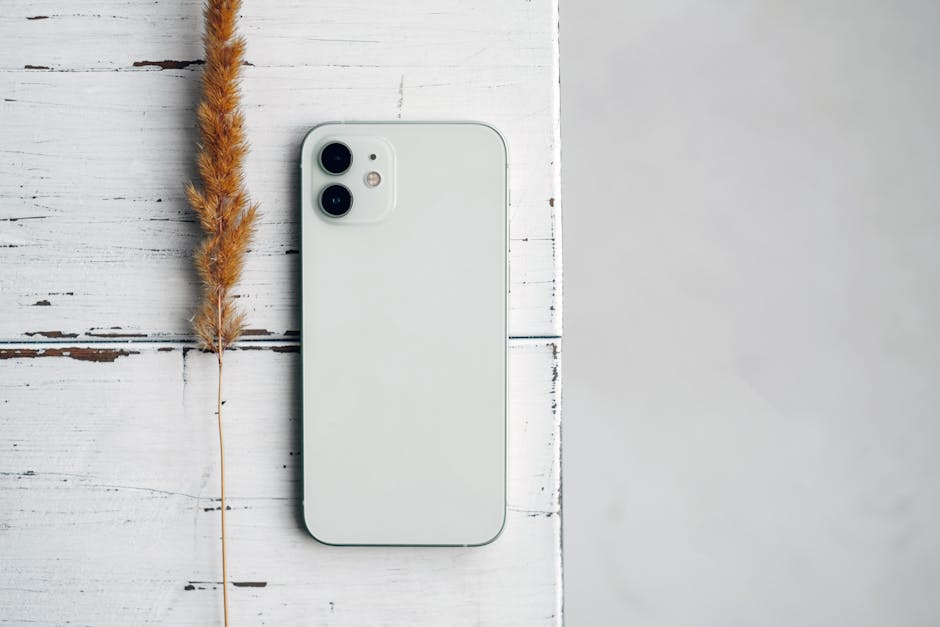
Five real rugged cases across three major brands, with 2026 retail prices. The M MYBAT PRO Maverick for iPhone 16 Pro is included as the mid-range option with an unusually complete feature set at its price point.
| Case | Price | Drop Standard | MagSafe | Belt Clip | Screen Protector | User Rating |
|---|---|---|---|---|---|---|
| M MYBAT PRO Maverick (iPhone 16 Pro) | $35.14 | MIL-STD-810G | Yes | 360° rotating | Included | 4.5/5 (657 reviews) |
| M MYBAT PRO Maverick (iPhone 17) | $35.14 | MIL-STD-810G | Yes | 360° rotating | Included | 4.2/5 (39 reviews) |
| OtterBox Defender Pro (iPhone 16 Pro) | $74.95 | MIL-STD-810G+ | No (standard version) | Included holster | Built-in port covers | 4.6/5 (3,000+ reviews) |
| Spigen Tough Armor (iPhone 16 Pro) | $23.99 | MIL-STD-810G | No | None | Not included | 4.7/5 (8,000+ reviews) |
| UAG Monarch Pro (iPhone 16 Pro) | $99.95 | MIL-STD-810G+ | Yes | Separate purchase | Not included | 4.4/5 (500+ reviews) |
A few patterns stand out immediately. OtterBox costs roughly twice as much as the MYBAT PRO Maverick and carries a substantially larger review base — over 3,000 ratings versus 657 — which produces more statistically stable reliability data. The OtterBox Defender does not include MagSafe compatibility in its standard configuration, which matters for buyers already invested in the MagSafe accessory ecosystem.
Spigen Tough Armor has the highest review count at this price range and the lowest price on the list. It is the right pick for pure drop protection without any extras. No belt clip and no MagSafe put it in a different product category entirely. UAG Monarch Pro is the premium play: excellent build quality, MagSafe compatible, but at $100 it still does not include a belt clip or screen protector.
The MYBAT PRO Maverick occupies a specific intersection: MagSafe, belt clip, screen protector, and MIL-STD-810G certification at $35.14. That feature combination at that price is uncommon in the current rugged case market.
The MYBAT PRO Maverick Verdict
For buyers who specifically need a belt clip holster, MagSafe charging support, and a bundled screen protector without spending $75 or more, the MYBAT PRO Maverick is the clearest available choice at its price. The 657-review base on the iPhone 16 Pro version provides enough data to take the 4.5/5 rating at face value. The 360° rotating kickstand is a genuine daily-use feature — useful for hands-free video calls, propped navigation, and recipe viewing without needing a separate stand accessory.
Five Reasons Belt Clip Holsters Still Make Practical Sense
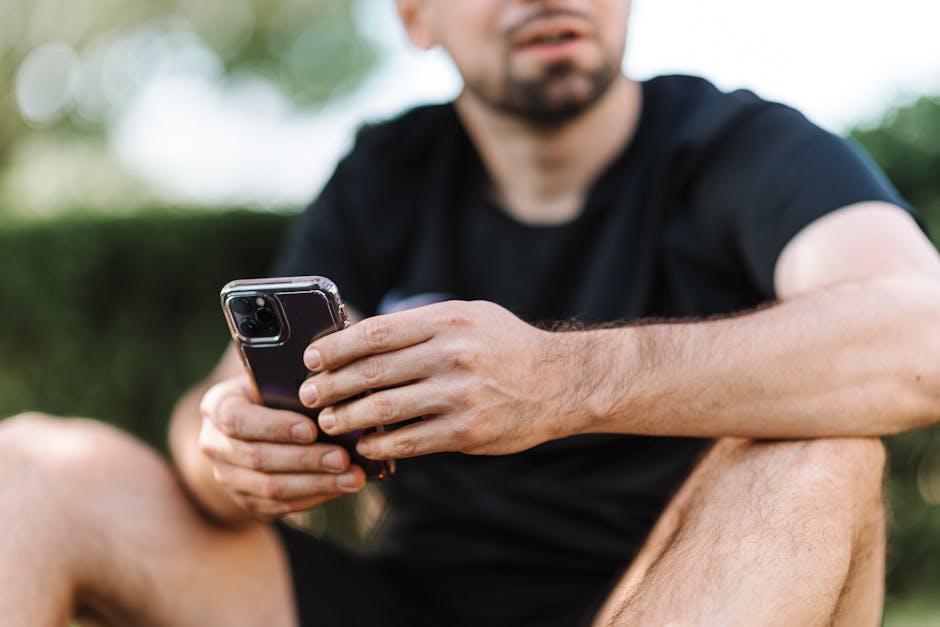
Pocket fatigue is a real ergonomic issue. The iPhone 16 Pro measures 149.6mm tall and 71.5mm wide. In a thick rugged case, that is a considerable object to fit into a front pants pocket — particularly during physical activity, long work shifts, or in clothing designed without smartphone bulk in mind. Belt clip holsters solve a physical problem that no software update addresses.
- Reduces pocket wear on the display. Screen-down pocket placement is one of the most common sources of hairline scratches on front glass. A holster eliminates pocket contact entirely — the screen never touches keys, coins, or abrasive pocket lining.
- Improves accessibility in trade and field work. Construction workers, HVAC technicians, EMTs, and warehouse staff consistently report faster phone access from a hip holster than from a pocket — particularly when wearing work gloves, where pocket retrieval means removing the glove first.
- Cuts drop risk during phone-to-hand transitions. The most common drop scenario is the retrieval moment: pulling a phone from a pocket or bag while moving. A holster with a retention clip removes this transition point entirely.
- Reduces sustained heat buildup. iPhone 16 Pro processors run warm under extended load — GPS, video recording, and intensive apps. Pocket placement traps heat against fabric. Open-air hip carry dissipates it more effectively, which matters for sustained performance in warm environments.
- Works with non-traditional clothing. Scrubs, jumpsuits, coveralls, and athletic wear often lack usable pockets. A belt clip holster works with any waistband regardless of clothing design.
Beyond ergonomics, there is a structural argument for holster cases in professional settings. A phone secured in a belt holster is unlikely to be sat on, knocked from a desk edge, or fall from a shirt pocket during forward bends. The 360° rotating mechanism on the MYBAT PRO Maverick supports both portrait and landscape orientations, which matters when the device is mounted on a vehicle belt or used as a hands-free viewing stand without removing it from the clip entirely.
The common objection — that belt clips look dated — is a style preference, not a functional argument. In trade, medical, and field environments, practical advantages consistently outweigh aesthetics. The format has persisted precisely because the underlying problem has not changed.
MagSafe and Heavy-Duty Cases: The Real Compatibility Questions
This is where most rugged case buyers get surprised post-purchase. MagSafe requires a precisely positioned magnet array to function correctly, and thick polymer cases — particularly those with metal reinforcement layers — can interfere with magnetic alignment, reduce effective charging wattage, or block NFC-based accessory pairing.
Does Case Thickness Reduce MagSafe Charging Speed?
Apple’s MagSafe charger delivers up to 15W for officially certified MagSafe accessories and up to 7.5W for standard Qi-compatible devices. A case marketed as “MagSafe compatible” without Apple’s official certification typically charges at 7.5W, not 15W. Over a full charge cycle from dead to full, the practical time difference is roughly 10–12 minutes — minor for most users, but worth knowing if speed charging is a priority.
Cases using ferromagnetic metals in the frame or structural layer create an additional complication: they can deflect the magnetic field rather than simply reducing its strength through distance and thickness. Non-ferrous materials — aluminum, titanium alloys, or pure polymer construction — do not create the same deflection issue. Most mid-price polymer rugged cases avoid metal framing for cost reasons, which incidentally benefits MagSafe compatibility.
What Happens to MagSafe Accessories With a Thick Case?
MagSafe wallets, car mounts, and PopSockets with MagSafe bases all require sufficient magnet strength to hold position under daily-use loads. The combined weight of an iPhone 16 Pro in a heavy-duty case frequently exceeds 200 grams. Most MagSafe mount manufacturers rate their products for bare phones or slim cases — something buyers typically discover only after attempting to use them with a rugged case in a moving vehicle.
For buyers relying specifically on MagSafe car mounts: verify the mount’s rated load capacity against the combined phone-plus-case weight before purchasing. Some mounts rated for “iPhone 16 Pro” assume the standard device weight of approximately 221 grams, not the case-added weight of 280–320 grams that a heavy-duty holster case typically adds.
Is Official MagSafe Certification Worth Paying a Premium For?
For casual wireless charging, the answer is typically no. For heavy MagSafe accessory users who swap between a wallet, car mount, and desk charger multiple times daily, official certification reduces compatibility uncertainty and the associated trial-and-error. The MYBAT PRO Maverick for iPhone 17 lists MagSafe compatibility at $35.14, placing it well below the certified rugged MagSafe options from UAG and OtterBox that start at $75–$100.
Built-In Screen Protectors: What the Testing Data Shows

Case-integrated screen protectors are almost always inferior to standalone tempered glass — and on ProMotion displays, the difference in touch response and optical clarity is visible to most users.
Standalone tempered glass from brands like Belkin, Zagg InvisibleShield, and Spigen GlastR EZ Fit uses 0.26mm to 0.33mm hardened glass with oleophobic coatings applied directly to the glass surface. These maintain display light transmission at 99%+ and register touch input at the same sensitivity as the bare screen. The Zagg InvisibleShield Glass Elite ($44.99) adds an impact-absorbing sublayer; the Spigen GlastR EZ Fit ($14.99) is a 9H hardness option that remains one of the better value choices in the category.
Case-integrated screen protectors work differently. The clear plastic films or flexible TPU membranes built into holster cases offer meaningful scratch resistance and prevent direct glass-to-surface contact in face-down drops. But they typically transmit 85–92% of screen light, create a small air gap that produces rainbow moire effects under certain lighting angles, and register touch input with marginally higher latency than direct-glass contact. For most users these drawbacks are minor. For precision touch work or photo editing on the ProMotion display, they are noticeable.
The screen protector included in the Maverick series for iPhone 16 Pro follows the standard built-in film model — a reasonable baseline that prevents scratches and provides face-down protection. Buyers who prioritize display clarity can remove it after installation and replace it with dedicated tempered glass; the case accommodates standard glass protectors without interference.
The single most important takeaway: MIL-STD-810G certification tells you only about drop survival probability — it says nothing about display clarity, MagSafe charging speed, or long-term material durability, and treating it as a comprehensive quality score is how buyers end up disappointed by an otherwise well-built product.