
9 Kitchen Knife Problems a $26 Chinese Chef Knife Actually Solves
It started with a butternut squash. The blade skidded, the squash rolled, and a $90 German chef knife that was supposed to “last a lifetime” turned a five-minute task into a minor emergency. You’re probably not bad at cooking. The knife is wrong for the job.
This breakdown examines the most common kitchen knife failures — what causes them, what the specs actually mean, and where budget Chinese-made knives outperform their price point. Product recommendations appear halfway through. The first two sections are pure fundamentals.
9 Warning Signs Your Current Knife Setup Is Working Against You
The pattern across verified buyer complaints for kitchen knives is consistent: users assume they need more practice when the data shows they need a different tool. The nine indicators below are drawn from the most commonly cited issues in long-form knife reviews and buyer complaint threads. Any two or more of these signals point to a tool problem, not a user problem.
- Blade deflects on dense vegetables — carrots, butternut squash, sweet potatoes. A sharp edge with correct geometry meets no deflection. This is physics, not technique.
- Tomato skin compresses before the blade cuts through — a sharp blade pierces on contact. A dull one squashes first, then drags.
- Hand or wrist fatigue after 10 minutes of continuous prep — usually caused by a handle requiring constant grip correction, not cutting volume.
- Uneven rocking motion during mincing — spine wobble during a rocking chop indicates an edge profile worn asymmetrically or a blade that left the factory with a defective curve.
- You’re pushing down harder than you’re slicing — force-cutting instead of edge-cutting is the clearest sign of edge degradation. It also multiplies hand strain and injury risk.
- The handle shifts or loosens when wet — hollow handle construction and riveted wood both fail here. Moisture absorption degrades the bond over time.
- Rust spots within 6 months of purchase — surface corrosion this fast means the steel’s carbon content is insufficient. Cheap stainless under approximately 0.4% carbon corrodes quickly under normal kitchen use.
- Visible flex in the blade under lateral pressure — normal in a fillet knife, a structural red flag in a chef knife or vegetable knife.
- Hesitation before using it on delicate work — if you don’t trust your edge control, that’s a performance metric, not a confidence issue.
What “Good Enough” Is Actually Costing You
A knife that adds 8 minutes per meal costs roughly 48 hours per year for someone cooking six days a week. That’s two full work-days of extra labor annually from one underperforming tool. The consumer case for replacing a bad knife is stronger than most people calculate.
The hidden cost compounds. Inadequate knives cause more accidents (forcing replaces precision), create more food waste (crushed cuts affect texture and presentation), and slow time-sensitive tasks like julienning or brunoise. None of that shows up on the knife’s price tag.
The Brand Recognition Trap
Wüsthof and J.A. Henckels are genuinely good knives. Global and Shun too. But brand equity doesn’t guarantee the right tool for your specific cooking style. A German-profile blade — thick spine, 20° edge angle, optimized for rocking cuts — performs measurably worse for the push-cut technique used in most Asian vegetable preparation. Buying by brand without matching blade design to actual use is one of the most reliable ways to overspend and underperform in the kitchen.
Chinese vs. Western vs. Japanese Blades — What the Data Shows
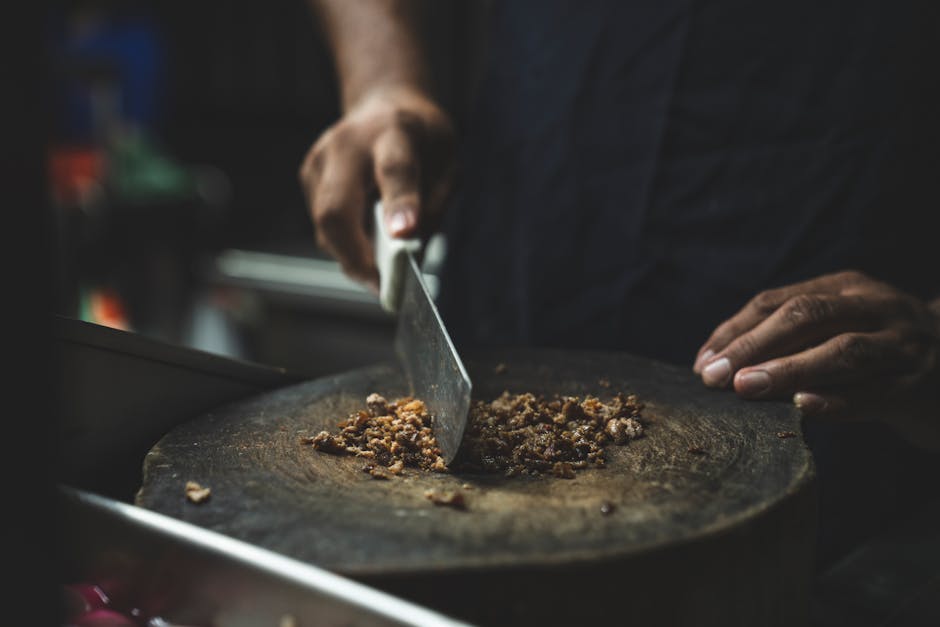
Three dominant knife philosophies compete in the home kitchen market. Each makes deliberate trade-offs in steel hardness, blade geometry, edge angle, and intended cutting motion. The right choice depends on your dominant prep style — and one category consistently outperforms on versatility metrics for mixed-use home kitchens. That same category also holds a significant price-per-performance advantage when comparing equivalent construction quality across styles.
| Blade Type | Edge Angle (per side) | Steel Hardness (HRC) | Average Weight | Primary Cutting Motion | Entry Price Range |
|---|---|---|---|---|---|
| German/Western Chef Knife | 20–22° | 56–58 HRC | 220–280g | Rock chop | $30–80 |
| Japanese Gyuto / Santoku | 15–17° | 60–64 HRC | 150–200g | Push/pull slice | $50–150 |
| Chinese Caidao / Vegetable Knife | 15–18° | 58–62 HRC | 170–220g | Push cut + chop | $20–60 |
| Heavy Bone Cleaver | 25–30° | 52–56 HRC | 400–600g | Heavy downward chop | $25–70 |
Why the Chinese Vegetable Knife Leads for Mixed-Use Prep
The Chinese chef knife — distinct from a heavy bone cleaver despite the visual similarity — has a wider, flatter blade with a lower edge angle than German equivalents. That flat profile means more of the edge contacts the board per push stroke. A German blade’s curved belly leaves the middle of the edge in the air during a forward push; a Chinese flat-profile blade doesn’t. For high-volume vegetable work, this is a measurable efficiency gain, not a stylistic preference.
The blade width doubles as a bench scraper. After dicing onions or mincing garlic, you use the flat of the blade to transfer prepped ingredients directly to the pan. Narrow-profile knives can’t do this cleanly. For volume prep, this eliminates three to four extra scooping motions per ingredient — a small saving that compounds across a full meal prep session.
The design evolved from culinary traditions that process large volumes of vegetables rapidly for wok cooking. The flat edge profile and wide blade suit this specific demand: quick, consistent push cuts followed by immediate transfer to the heat. It’s a purpose-built tool that translates exceptionally well to the mixed prep demands of most modern home kitchens. Performance varies by individual technique and maintenance routine, but at comparable price points, the caidao design delivers more task coverage per dollar than any competing category.
Steel Hardness: The Trade-off That Matters Most at Home
Japanese knives at 60+ HRC hold a sharper edge longer but chip when used on bone, frozen food, or hard squash without careful technique. German knives at 56–58 HRC resist chipping but dull faster, needing more frequent honing. Chinese knives in the 58–62 HRC range hit a practical middle zone: hard enough for good edge retention under normal home use, forgiving enough that a basic ceramic rod handles all maintenance without specialized sharpening equipment or technique.
For households without a whetstone or professional sharpening access, this trade-off strongly favors the Chinese blade’s steel specification. Maintenance cost and complexity drop to near zero.
What Full Tang Construction Reveals About Long-Term Value
The most predictive durability specs in a kitchen knife aren’t the ones featured in product photos. Edge angle and blade finish are visible and easy to market. Tang construction — how the blade steel transitions into the handle — is invisible in most promotional photos and rarely mentioned in product copy. It’s also the spec that determines whether a knife survives two years of daily use or fails at month eight.
A full tang knife has steel running uninterrupted from blade tip to handle butt. You can see it on the sides of the handle: the metal is visible as a continuous line between handle scales. Partial tang, push tang, and rat-tail tang designs all introduce a structural weak point at the blade-handle junction — exactly where torque from cutting force concentrates. These constructions are cheaper to manufacture and account for the majority of knife failures reported in long-term verified buyer reviews.
Cast Steel vs. Stamped Steel — Why Manufacturing Method Matters
Stamped blades are punched from rolled steel sheet. Fast to produce and consistent in thickness, but the manufacturing process doesn’t align the steel’s grain structure with the blade’s stress axis. Forged or cast steel goes through a thermal forming process that does align that grain. The practical result: better edge retention and higher impact resistance under repeated daily use.
The SHI BA ZI ZUO 7-inch Chinese kitchen knife uses cast steel construction with a full-length tang at $25.64. Most competing knives at this price point use stamped blanks. The cast construction, combined with a monolithic cast steel handle — not a separate material bolted to the tang — eliminates the two primary failure modes seen in budget knives: blade-handle separation and handle moisture damage over time.
The all-steel handle divides buyer opinion. Some prefer the warmth of wood or composite materials. But from a pure durability standpoint, a handle with no organic materials and no bonded joints resists the kitchen environment more reliably. Dishwasher cycling — not recommended for edge longevity, but common in practice — doesn’t degrade a steel handle the way it destroys wood or softens riveted adhesive bonds. For households where the knife regularly sees high heat or steam exposure, this is a meaningful practical advantage.
Why 7.5 Inches Is the Home Kitchen Inflection Point
Blade length is a board-clearance and leverage decision. Below 7 inches, you lose the reach needed for dense ingredients and can’t span larger cuts without repositioning. Above 8 inches, standard residential cutting boards (typically 12×18 inches) become limiting and the knife grows awkward for smaller precision tasks.
The 7.5-inch usable edge handles 95% of home prep without either constraint. The wider blade height — a characteristic of the caidao design — keeps knuckles clear of the board through the full stroke. That’s the primary ergonomic complaint about narrow Western blades at comparable lengths: knuckle clearance forces an inefficient, high-grip hand position that accelerates fatigue during extended prep sessions.
Limitations the Buyer Data Flags — Read Before Purchasing
4,190 verified reviews is a sample size large enough to surface real performance patterns reliably. The recurring limitations worth noting before any purchase decision:
- Out-of-box sharpness varies by unit. Some arrive ready to use; others need a quick hone first. Running a ceramic rod five passes per side before first use eliminates this variance entirely.
- The steel handle can become slippery when wet without a deliberate grip adjustment. Buyers using a pinch grip — index finger and thumb on the blade spine — report no slippage issues. Palm-grip users have mixed results.
- This knife is not rated for bone work. The blade geometry suits vegetables and boneless proteins. Applying it to joint bones or frozen food will roll the edge. That’s a defined use-case boundary, not a manufacturing defect.
The 4,190-Review Verdict
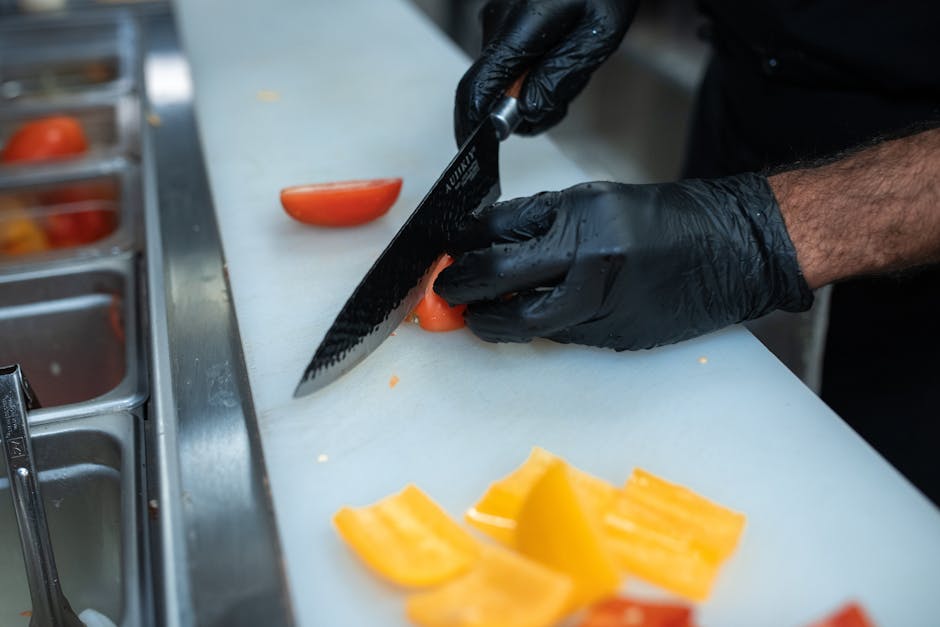
A 4.5 out of 5 rating across more than four thousand verified purchases — with no anomalous review spikes suggesting manufactured inflation — is a statistically reliable performance signal. For daily vegetable prep and boneless protein cutting, this knife consistently delivers. Performance varies by technique and care routine at any price point, but the risk of a disappointing purchase at this spec-to-cost ratio is minimal.
The Two-Knife Rule: Why This Pairing Beats a Full Block Set
Most home kitchens need exactly two knives. The rest of a 7-piece block set collects carbon dust on the counter. A chef knife handles 80% of tasks: vegetables, boneless proteins, herbs, fruit. A heavy bone cleaver handles the 20% that would damage a chef knife’s edge — bone-in cuts, frozen proteins, hard-rind squash. Bread knives, paring knives, utility knives: all situational, rarely essential in a household that cooks real food regularly.
The SHI BA ZI ZUO 7-inch bone cleaver at $25.56 pairs directly with the chef knife to complete this coverage. It carries a 4.4 out of 5 rating across 62 reviews — a smaller dataset, but consistent with the brand’s construction approach. The heavier build is designed specifically for bone-chopping impact, and it uses the same full-tang philosophy that matters when applying force levels that destroy partial-tang designs in a single hard session.
When the Cleaver Is the Right Tool
Whole chickens at the joint. Pork ribs straight through the bone. Any task where weight behind a strike replaces precision edge work. Using a chef knife on bone is the fastest way to degrade its edge — one hard strike on a joint can roll or chip a blade that would otherwise stay sharp for months. The cleaver absorbs that stress so the chef knife doesn’t have to. This division of labor is what makes a two-knife setup functionally superior to a full block of knives you don’t actually use.
Grip Consistency Between Both Knives
Both knives share the same cast steel full-tang handle profile. Buyers running both report minimal switching cost — the grip mechanics don’t require recalibration when moving from vegetable prep to bone work mid-session. A small advantage over mixing brands with different handle geometries, but one that shows up in real-use frequency and session fatigue.
The $51 Combined Cost Case
$51.20 total for the two-knife pairing. Compare that against a Wüsthof Classic 8-inch chef knife alone at $165. A Global G-2 runs $120. The Victorinox Fibrox 8-inch — the most widely cited budget reference — is $45 for one blade with no cleaver equivalent. The SHI BA ZI ZUO pairing covers both task categories at a combined price that most single-knife competitors can’t match individually.
Before finalizing any knife purchase, handling multiple options at a kitchenware retailer provides a final check that specs alone can’t replicate — balance point, grip width, and handle feel translate differently in hand than in photos. For buyers without local access to these knives, the construction quality, steel specifications, and the verified purchase record on this chef knife provide a strong basis for confidence at this price tier. For home cooks prepping four to six meals per week who want complete task coverage under $55 combined, this two-knife pairing is the specific combination the data supports.