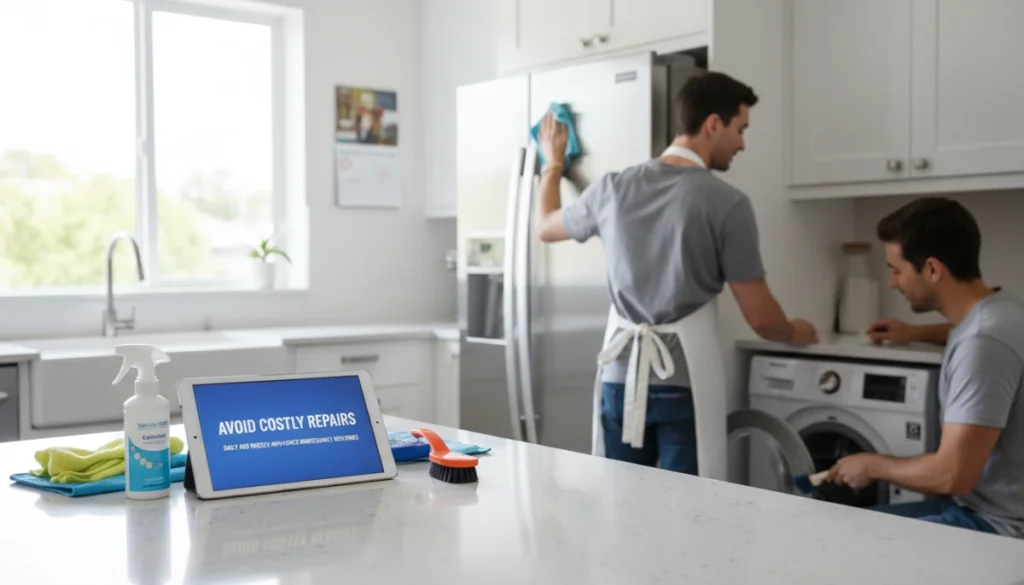
Most people think appliance repairs are just bad luck. A fridge dies. A washer floods. A dryer stops heating. You call a technician, pay $200 for a diagnostic fee, and then another $400 for a part.
That’s not bad luck. That’s neglect. The average cost of a single appliance repair call in 2026 is $350. The average cost of a replacement part is another $150. You can avoid almost all of that with 15 minutes of work per week.
Here’s the exact daily and weekly maintenance routine that will keep your appliances running for 10+ years. No special tools. No expensive products. Just a schedule and a few minutes of your time.
The One Thing That Kills Every Appliance (And How to Stop It)
Every major appliance has one weak point. For refrigerators, it’s the condenser coils. For washing machines, it’s the drain pump filter. For dryers, it’s the lint trap and vent hose. For dishwashers, it’s the food grinder and spray arms.
These parts fail because they get clogged. Not because they’re cheap. Not because the brand is bad. Because you never cleaned them.
Here’s the failure mode: a thin layer of dust on your fridge coils makes the compressor run hotter. The compressor works harder. It runs longer. Eventually, it overheats and seizes. A new compressor costs $400–$700 installed. A coil cleaning brush costs $8 on Amazon.
Weekly task: Vacuum your refrigerator condenser coils. If your fridge has front grille coils (most Whirlpool, GE, Samsung models), pull the grille off and vacuum the coils with a brush attachment. If your coils are on the back (older models), pull the fridge out and vacuum them. Takes 5 minutes. Do it every 3 months if you have pets. Every 6 months if you don’t.
Daily habit: Wipe the rubber door gasket on your fridge and freezer with a damp cloth. A dirty gasket doesn’t seal. The fridge runs more. The compressor wears out faster. A replacement gasket costs $50–$100. A cloth costs nothing.
Weekly Washer and Dryer Maintenance (The $0 Routine That Saves $500)
Your washing machine and dryer are the most repair-prone appliances in your home. The average lifespan of a washing machine is 10 years. With proper weekly maintenance, you can push that to 15.
Washing Machine: The Drain Pump Filter
Every front-load washer has a drain pump filter. It’s usually behind a small door at the bottom front of the machine. You’ve seen it. You’ve never opened it. Open it right now.
Weekly task: Place a shallow pan or towel under the filter door. Open the door. Unscrew the filter (it’s usually a twist-off cap). Pull out the filter. Rinse it under hot water. You will find coins, hairpins, lint, and sometimes socks. Put it back. Tighten it. Close the door.
If you skip this, the pump clogs. The washer won’t drain. The repair is a $200 service call to clean exactly this filter. Do it yourself in 3 minutes.
Monthly task: Run a cleaning cycle with Affresh Washer Cleaner ($6 per pack) or 2 cups of white vinegar on the hottest cycle. This kills mold and mildew inside the drum. That musty smell? That’s mold. It builds up in the rubber gasket and behind the drum. Cleaning it prevents seal failure, which is a $300–$500 repair.
Dryer: The Lint Trap and Vent Hose
You already clean the lint trap every load. That’s not enough. Lint accumulates inside the dryer cabinet and in the vent hose behind the dryer.
Weekly task: Pull the lint trap out. Use a vacuum with a crevice tool to suck lint out of the trap housing. You’ll be shocked at how much is stuck in there. Then pull the dryer away from the wall. Disconnect the vent hose from the back of the dryer. Vacuum inside the dryer’s vent opening. Reconnect the hose.
Lint buildup in the vent hose is the #1 cause of dryer fires. It also makes your dryer run 30% longer to dry clothes. That’s wasted electricity and wasted time.
Yearly task: Replace the vent hose entirely if it’s the cheap foil type. Buy a semi-rigid metal vent hose ($15–$25). It doesn’t collapse and traps less lint.
Dishwasher Maintenance: The 3-Step Weekly Routine
Dishwashers fail for one reason: food particles clog the spray arms and the drain filter. The machine can’t spray water properly, so dishes don’t get clean. You run it again. More food goes down the drain. The cycle repeats until something breaks.
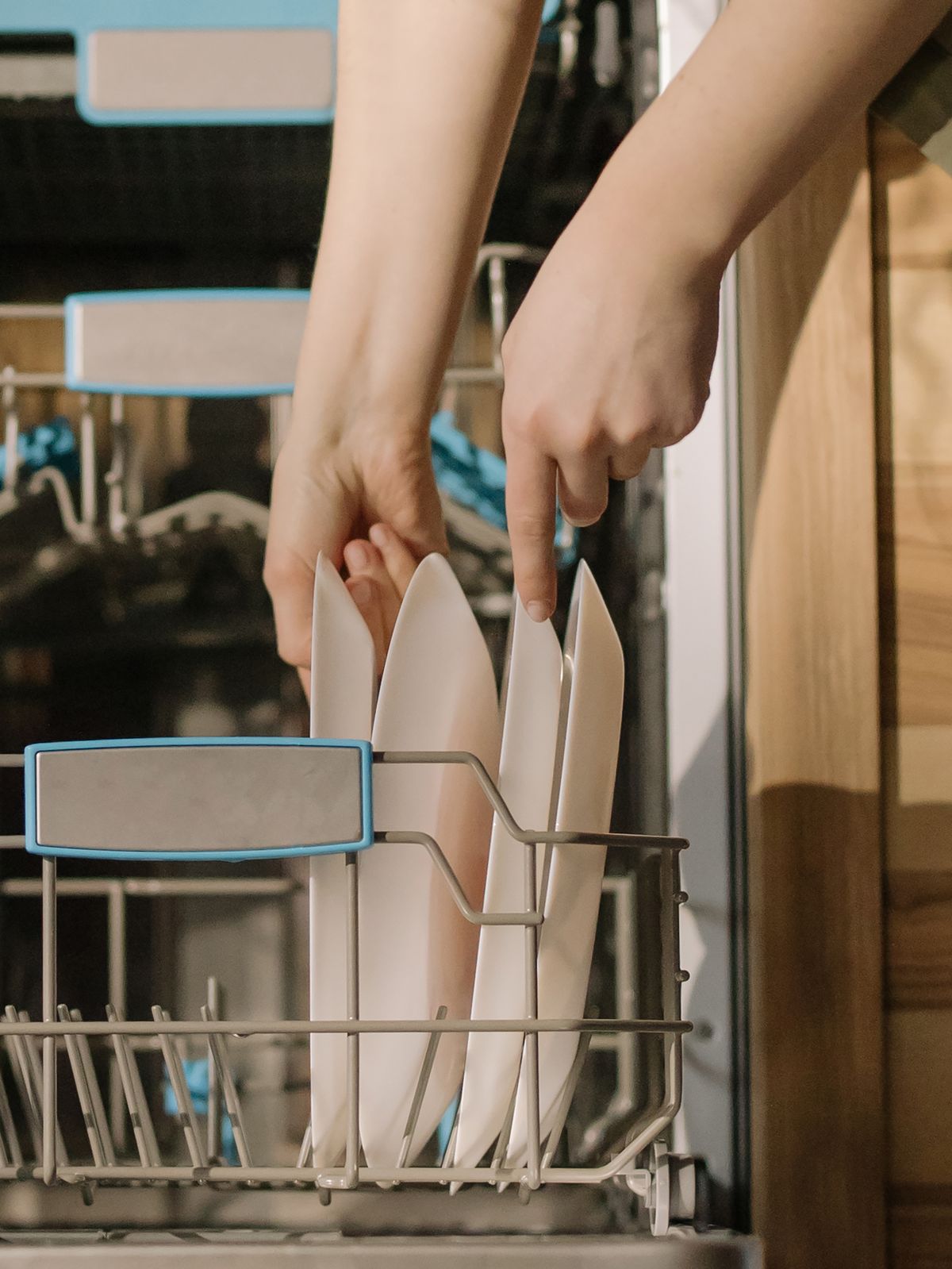
Weekly task 1: Remove the bottom rack. Unscrew the spray arm (usually a single nut or clip). Rinse it under hot water. Use a toothpick to clear the tiny holes. Reinstall it. Do the same for the upper spray arm if accessible.
Weekly task 2: Remove the drain filter at the bottom of the dishwasher. It’s a cylindrical mesh screen. Rinse it under hot water. Scrub it with a soft brush. Put it back. A clogged filter means food particles recirculate onto your dishes. It also forces the pump to work harder, leading to a $250 pump replacement.
Monthly task: Run a cleaning cycle with Cascade Dishwasher Cleaner ($5 per pack) or a bowl of white vinegar on the top rack. This removes hard water scale and grease buildup inside the machine.
| Appliance | Weekly Task | Time | Cost If You Skip It |
|---|---|---|---|
| Refrigerator | Vacuum condenser coils | 5 min | $400–$700 compressor replacement |
| Washing Machine | Clean drain pump filter | 3 min | $200 service call |
| Dryer | Vacuum lint trap housing + vent hose | 5 min | $150–$300 repair or fire |
| Dishwasher | Clean spray arms + drain filter | 5 min | $250 pump replacement |
When NOT to Do This Maintenance (And What to Do Instead)
This routine works for 95% of households. But there are exceptions.
If your refrigerator has sealed-back coils (no grille at the front, no coils on the back): Some models, like certain LG and Samsung French-door fridges, have coils sealed inside the walls. You cannot access them. Skip the coil vacuuming. Instead, make sure the fridge has 2 inches of clearance on all sides for airflow. If it’s built into a cabinet with no ventilation, that’s a design flaw. You can’t fix it with maintenance.
If you have a top-load washing machine without a drain filter: Many older top-loaders and some budget models (e.g., GE top-load washers under $500) don’t have a serviceable drain filter. Skip the filter cleaning. Instead, run a monthly cleaning cycle with vinegar to prevent odor and buildup.
If your dryer vent hose is longer than 10 feet: The standard weekly vent cleaning isn’t enough. You need a dryer vent cleaning kit ($15 on Amazon) that attaches to a drill. Use it every 6 months to push lint out of the long horizontal run. If your vent runs through the ceiling or up to a roof vent, hire a professional every 2 years. That costs $100–$150. A dryer fire costs a lot more.
If you have hard water (visible white scale on faucets): Hard water destroys dishwashers and washing machines faster than anything else. Weekly filter cleaning helps, but you also need a water softener or a descaling agent. Use Lemi Shine Dishwasher Detergent ($8 per bag) — it’s formulated for hard water. Run a descaling cycle with CLR (Calcium, Lime, Rust Remover, $10 per bottle) every 3 months.
The 15-Minute Sunday Routine (Put This on Your Calendar)
You don’t need to think about this every day. Pick one day per week. Sunday morning works. Set a 15-minute timer.
- Minute 0–3: Pull the washing machine drain filter. Rinse it. Put it back.
- Minute 3–6: Pull the dryer out. Disconnect the vent hose. Vacuum the inside of the dryer and the hose. Reconnect. Push dryer back.
- Minute 6–9: Open the dishwasher. Remove the bottom rack. Unscrew and rinse both spray arms. Clear holes with a toothpick. Reinstall.
- Minute 9–11: Remove the dishwasher drain filter. Rinse. Scrub. Reinstall.
- Minute 11–15: If it’s the first Sunday of the month, vacuum the fridge coils. If not, wipe the fridge door gasket with a damp cloth.
That’s it. 15 minutes. Once a week. Your appliances will last longer, run more efficiently, and you will never pay a $350 repair bill for something you could have prevented.
One Last Thing: The Most Expensive Mistake You Can Make
The biggest mistake isn’t skipping maintenance. It’s calling a repair technician for something simple.
If your dishwasher won’t drain, 90% of the time it’s the drain filter or the spray arm. That’s a 5-minute fix. If your washer won’t spin, it’s usually a clogged drain pump filter or an unbalanced load. If your dryer takes 2 cycles to dry a load, it’s almost always a clogged lint trap housing or vent hose.
Before you call a repair company, do the weekly routine above. You will fix the problem 8 times out of 10. The other 2 times, you can call a technician knowing you didn’t waste $150 on a diagnostic fee for a dirty filter.
Start this Sunday. 15 minutes. No excuses.